Held at College View, Neb., Nov. 21-26
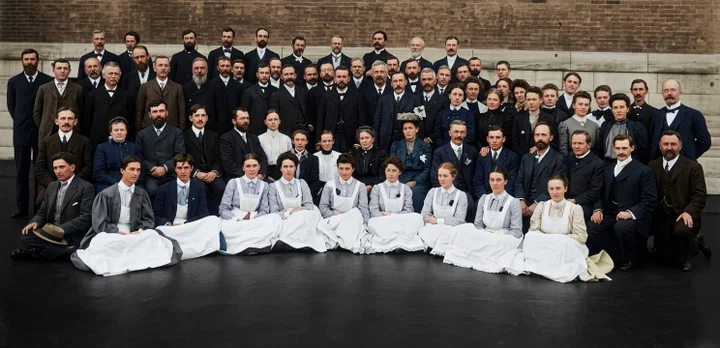
At the session of the General Conference held in Washington, D. C., May 11-31, 1905, there was organized the Medical Missionary Department of the General Conference. Before the close of the conference, the department committee decided to hold a medical missionary convention at College View in October or November. Later the date was fixed for November 21-26. Pursuant to this arrangement, there met at College View the following-named persons interested in medical missionary work:—
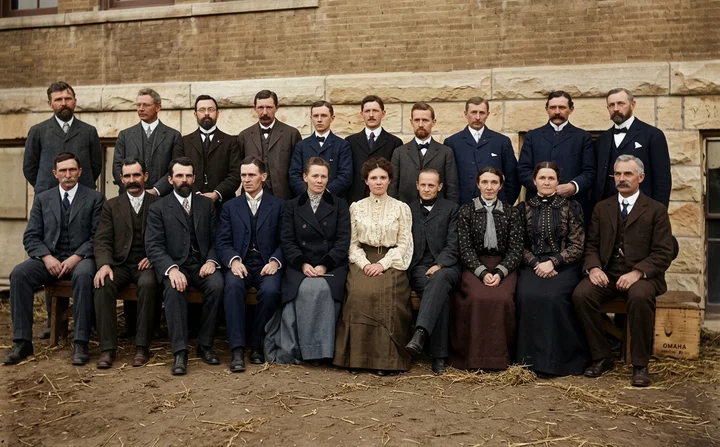
Physicians
W. A. George, M. D., Chairman Medical Council of the General Conference, College View, Neb.
H. F. Rand, M. D., Superintendent Sanitarium, Boulder, Colo.
W. R. Simmons, M. D., Superintendent Sanitarium, Chairman Medical Department Pacific Union Conference, Portland, Ore.
C. P. Farnsworth, M. D., Superintendent Sanitarium, Madison, Wis.
C. Bush, M. D., San Francisco, Cal.
Ida S. Herr, M. D., Superintendent Nurses' Training-school, Boulder, Colo.
Amy R. Humphrey, M. D., College View, Neb.
John F. Morse, M. D., Battle Creek, Mich.
G. T. Harding, Jr., M. D., Superintendent Sanitarium, Washington, D. C.
E. P. Hawkins, M. D., Chairman Medical Dept. Northern Union Conference, Montrose, Minn.
G. H. Heald, M. D., Editor Life and Health, Washington, D. C.
Lyra H. George, M. D., College View, Neb.
I. A. Dunlap, M. D., Instructor in Nurses' Training Department, College Place, Wash.
W. C. Green, M. D., Superintendent Sanitarium, Little Rock, Ark.
D. C. Ross, M. D., Superintendent Sanitarium, Keene, Tex.
Lydia E. Kynett-Parmele, M. D., Union College, College View, Neb.
M. M. Martinson, M. D., Graysville, Tenn.
Elsie M. Martinson, M. D., Sanitarium, Chicago, Ill.
M. Alice Mantz, M. D., 603 East Twelfth St., Des Moines, Iowa.
C. F. Jenkins, M. D., Lincoln, Neb.
J. E. Heald, M. D., Superintendent Sanitarium, Peoria, Ill.
F. R. Walters, M. D., Cleveland, Ohio.
William W. Worster, M. D., Superintendent Sanitarium, Connersville, Ind.
J. E. Froom, M. D., Secretary Medical Council of the General Conference, Washington, D. C.
Nurses
C. L. Burlingame, Boulder, Colo.
L. C. Christofferson, Wichita, Kan.
Mrs. L. M. Christofferson, Wichita, Kan.
Frank L. Hommel, Edmonton, Alberta, Canada.
Miss Della Coates, Edmonton, Alberta, Canada (from Sanitarium, Calcutta, India).
R. S. Irvine, Wichita, Kan.
H. C. Tarr, Nevada, Mo.
Mrs. Frank Walters, Duluth, Minn.
Zada Helen George, Battle Creek, Mich.
Mabel Hebard, 2804 Star St., Lincoln, Neb.
Nurses from College View: Nathan Aalborg, Ethel V. Ames, Esther Bergquist, Nellie L. Davis, Verna R. Garner, Hilda C. Hanson, Nellie Jenkins, Ethel M. Jones, Bertha McClellan, Luella E. Reed, Nellie Streeter, Rhoda Warner, Hilda Ackerman, Flavia Barnett, Dora Burke, Lillian Farrar, Carrie E. George, Ruth A. Jacobson, J. E. Johnson, Florence Marrs, Lena Neumann, Carrie Shipley, Lou Trease.
Ministers and Other Workers
A. G. Daniells, President of the General Conference, Washington, D. C.
G. A. Irwin, Vice-President of the General Conference, Washington, D. C.
W. J. Stone, President Indiana Conference, Indianapolis, Ind.
W. C. White, Sanitarium, Cal.
F. M. Wilcox, Treasurer Boulder (Colo.) Sanitarium.
C. C. Lewis, President Union College, College View, Neb.
I. H. Evans, Treasurer General Conference, Washington, D. C.
A. G. Haughey, President West Michigan Conference, Otsego, Mich.
E. T. Russell, President Central Union Conference, College View, Neb.
R. C. Porter, President Missouri Conference, Hamilton, Mo.
J. W. Dorcas, Business Manager Iowa Sanitarium, Des Moines, Iowa.
C. A. Burman, President South Dakota Conference, Aberdeen, S. D.
A. T. Robinson, President Nebraska Conference, College View, Neb.
H. M. J. Richards, Loveland, Colo.
W. M. Adams, President Manitoba Conference, Winnipeg, Manitoba.
W. D. Parkhurst, Grand Rapids, Mich.
L. F. Starr, President Iowa Conference, Stuart, Iowa.
H. Shultz, Lockeford, Cal.
G. B. Thompson, Chairman General Conference Sabbath-school and Young People's Department, Washington, D. C.
R. A. Underwood, President Northern Union Conference, Minneapolis, Minn.
George F. Watson, President Colorado Conference, Denver, Colo.
I. G. Weller, Denver, Colo.
Watson Ziegler, Fort Collins, Colo.
C. A. Beeson, College View, Neb.
A. E. Brown, Grant City, Iowa.
Bert Glasscock, College View, Neb.
J. S. Hart, College View, Neb.
Mrs. C. A. Johnson, Lincoln, Neb.
R. W. Maker, Clinton, O. T.
E. M. Nelson, College View, Neb.
F. J. Ogden, Union College Baker, College View, Neb.
R. W. Parmele, College View, Neb.
Elnora Reid, Dorchester, Neb.
R. M. Rockey, College View, Neb.
W. B. Shultz, College View, Neb.
Cush Sparks, 1112 South Eleventh St., Denver, Colo.
Mrs. Edith E. Bruce, Hancock, Mich.
U. C. Nelson, College View, Neb.
Charles H. Wilson, Springville, Tenn.
Mallie Dominic, College View, Neb.
Tessie Beesler, Monte Vista, Colo.
Hannah Larson, College View, Neb.
Catherine Ackerman, College View, Neb.
Anna E. Johnson, College View, Neb.
Matilda Erickson, College View, Neb.
Mary E. George, College View, Neb.
Pearl Parker, Rolf, Neb.
Anna Jenson, Hendricks, Minn.
Martina Johnson, Pittsfield, Tenn.
Oliva H. Westergren, College View, Neb.
Mrs. Leona Burman, Aberdeen, S. D.
J. H. Wheeler, Crawford, Neb.
Convention Proceedings
Dr. George called the convention to order Tuesday morning, and made a few earnest remarks concerning the need of divine guidance in this important work, and of the appropriateness of devoting the first hour to devotional service, and called on the president of the General Conference to lead the service. Elder Daniells read the fortieth chapter of Isaiah, and gave opportunity for prayer. Earnest petitions for God's blessing on the convention were followed by testimonies from nearly all present, expressive of courage, good cheer, and confidence in the leading of the Lord in this advance movement.
Elder A. G. Haughey spoke of wondering, at first, whether he, a minister, ought to attend this medical missionary convention, but later, in thinking it over, he had decided to come, and felt much pleasure in being present. Physicians expressed their great satisfaction at seeing the interest of the evangelical workers in the work of the Medical Department, as evidenced by the presence at this meeting of so many ministers.
A member directed attention to the motto above the blackboard,—“We are all brethren,”—and thought it was very significant of the present and future relations of the different departments of the third angel's message, which all rejoiced to regard as a complete and symmetrical whole.
Elder Daniells referred to the General Conference held in 1866, when there were but twenty ministers and one doctor present,—the only physician in the denomination at that time. That conference indorsed the health principles, and committed themselves to their promulgation. They decided to start a sanitarium and issue health literature. Their doctor not being a writer, a minister, Elder J. N. Loughborough, prepared their first book on physiology and hygiene. The Lord blessed and wonderfully developed that united plan, but in recent years a separating of interests has taken place between evangelical and medical departments, so that united efforts must again be entered upon heartily; but with this important difference, this convention represents the sympathetic co-operation of eighty thousand Seventh-day Adventists, whereas that one represented a body of only five thousand believers.
On Wednesday morning Elder Daniells addressed the convention more at length. A synopsis of his talk is given here:—
True medical missionary work is gospel work. The gospel is set forth in the great threefold message of Revelation 14. That message is now being given to the world by Seventh-day Adventists. This is why we as a people are so deeply interested in medical missionary work. It is a vital, essential part of our cause.
Medical missionary work has a scope and a place in our work that it has not occupied in any other religious movement since apostolic times. This phase of our work was made prominent by the pioneers of this movement in its early days. Captain Joseph Bates may be considered one of the main connecting links between the great movement of the first and second messages and the present movement under the third message. He was the first man who was prominently connected with the first angel's message to catch the light of the third angel's message, and begin the observance of the Sabbath. He was the first Seventh-day Adventist of this movement.
Now Joseph Bates was a medical missionary. He was a temperance reformer. He discarded liquors, tobacco, tea, coffee, animal food, condiments, and spices. He organized the first temperance society ever formed in the United States. He is really the father of temperance organization work in America. When he stood forth as a representative of the third angel's message, he represented true medical missionary principles.
Soon after this movement started, the light regarding healthful living and the rational treatment of disease was unfolded to Sister White by the Spirit of God. It is to the spirit of prophecy more than to any other source that we are indebted for these glorious principles. The first written document this denomination ever produced setting forth the truth regarding medical missionary interests come from the spirit of prophecy. In 1866 the pioneers began the publication of a health journal called the Health Reformer. The name was afterward changed to Good Health.
In 1866 the General Conference adopted resolutions expressing hearty acceptance of the light on “health reform as set forth in the Testimonies of Sister White as part of the work of God incumbent on us at the present time.” The same conference requested Dr. H. S. Lay to furnish articles on this subject for the papers. A few months following this conference a small sanitarium was established at Battle Creek. At the session of the General Conference held in 1867 the delegates expressed approval of this step, and made provision for the writing and printing of a small treatise on the structure, functions, and care of the human body. This book was written by Elder J. N. Loughborough, and was printed early in 1868.
Thus the medical missionary department of the cause with which we are identified was launched at a very early date in our history. In fact, it dates from the very beginning. The light has unfolded, and the work has enlarged, from the first until the present time. Through the earnest labors of Dr. Kellogg and a large company of physicians and nurses and the co-operation of ministers and laymen who love this cause, the medical missionary work has become a prominent and helpful part of our work.
As we are all well aware, the object of our medical missionary work is to minister to men the gospel as it relates to life in both sickness and health. We are not only to do what we can to help the sick to get well, but to instruct all men how to live to keep well. This calls for personal contact with the masses. It means the production and distribution of literature that will teach the people how to live. It calls for house-to-house work by nurses, and the establishment and operation of health institutions.
The true basis of this work must be the gospel of Christ. It is the legitimate work of the church. As such it must be done by conscientious Christian workers. In order to promote this phase of our message we have organized the Medical Missionary Department of the General Conference. This work and this department bear the same general relation to our cause that the Educational, Publishing, and Sabbath-school Departments bear. It will be fostered and carried forward by the denomination in harmony with the gospel principles which have guided us from the beginning of our work.
In behalf of the General Conference Committee, the ministers, physicians, and nurses of our conferences and mission fields, and our loyal people throughout the world, I extend to the officers and members of this convention our deep interest in your work, and our pledge of loyal, hearty, continued co-operation in the promotion of gospel medical missionary work in behalf of sick, suffering, sinning humanity.
Resolutions Adopted
The convention reaffirmed the following nine resolutions calling for aggressive medical missionary work, passed by the General Conference in May, 1905:—
EDUCATIONAL EFFORT
“Whereas, There is great need on the part of our people, and the world as well, of fuller knowledge of the principles of healthful living; therefore,—
“1. We recommend, That there be inaugurated a vigorous health and temperance educational campaign throughout the world:—
“(a) By the circulation of an efficient and up-to-date health and temperance literature.
“(b) By encouraging those conducting sanitariums, treatment rooms, hygienic restaurants, and food stores to continually endeavor to make their work educational gospel enterprises.
“(c) By aiding in making all our sanitariums, treatment rooms, hygienic restaurants, and food stores centers for the circulation of our health and temperance literature.
“(d) By encouraging our physicians and nurses who are doing independent, self-supporting missionary work to make their work evangelical, and to be active in the circulation of our health and temperance literature.
“(e) By inviting all our ministers to heartily unite in this campaign by preaching more frequently on health and temperance subjects, and encouraging all our churches to engage in this work.
“(f) By holding conventions for our physicians, nurses, and other medical missionary workers, where practical questions on all phases of medical missionary work may be considered, and plans of work laid.
“(g) By conducting schools of health as opportunity may make it advisable.
“2. We recommend, That our people be encouraged to utilize medical missionary and health publications as far as possible in their missionary work.
“3. Resolved, That provision be made for systematic instruction in medical missionary lines, including simple treatments, general hygiene, physical culture, and dietetics, in our schools and our general gatherings as far as consistent.”
HEALTH LITERATURE
“4. We recommend, That the publishing houses be requested to give the same attention to the publication and circulation of health and temperance literature as is given to other lines of publications.
“5. We recommend, That the literature committee be requested to make a careful study of the most pressing needs in these lines, and of the special qualifications of individuals to meet these needs, and that those whose experience and other qualifications are suitable be requested to prepare and submit manuscripts for the use of this department.”
STANDARD FOR NURSES
“Whereas, The work of the nurses' training-school is fundamental to good medical missionary work,—
“6. Resolved, That we approve of the effort that is being made to bring our training-schools for nurses to the highest possible standard.
“7. Resolved, That everything possible be done to increase the missionary spirit, zeal, and efficiency of our nurses' training-schools.
“8. Resolved, That the course of study, requirements for entering the schools and for graduation, be referred to a standing committee on training-schools for nurses, and we recommend that this committee consist of the General Conference medical missionary secretary and the superintendents of our organized nurses' training-schools.
“Whereas, The work of nursing is an important part of the great work of introducing and carrying forward the gospel of Christ; therefore,—
“9. We recommend, That our nurses' training-schools seek a closer co-operation with their respective conferences, with a view of enlisting as fully as possible the services of nurses in missionary work.”
The committee on plans and resolutions submitted to the convention a report, which, with slight modification, was adopted, as follows:—
SIMPLICITY AND ECONOMY
“Whereas, Experience in both home and foreign fields has abundantly demonstrated that successful medical missionary work is not dependent on elaborate appliances, large buildings, or prestige other than that earned by workers locally engaged; therefore,—
“10. We recommend those engaged in pioneering health enterprises to exercise simplicity and business conservatism in their initial expenses, depending more on professional skill and the application of loving personal service in the use of natural therapeutic measures.”
ORGANIZATION OF NURSES' BUREAUS
“Whereas, there is a growing demand on the part of many nurses in our denomination for the organization of a nurses' association as a means whereby closer unity of effort may be secured in methods of work and Christian co-operation; therefore,—
“11. Resolved, That immediate steps be taken for the formation of such an association in each union conference, and that a committee of seven be chosen by this convention to give study to this question and to formulate a plan for this organization.
“12. Voted, That notice be published in the REVIEW AND HERALD, union conference and State papers, requesting the trained nurses throughout the different conferences to send in their names, with both present and permanent addresses, to persons named in the published announcements, with the view of organizing a nurses' association.
“13. Voted, That the president of each union conference recommend representative nurses to attend the next session of his union conference, for the purpose of organizing a nurses' association.
“14. Voted, That Drs. W. A. George, J. E. Froom, and G. T. Harding, Jr., constitute a committee to execute these plans.”
CANADIAN FIELD
“Whereas, The Canadian field, especially Manitoba and Alberta, is greatly in need of medical missionary effort, and,—
“Whereas, Earnest appeals have come from this field for physicians; therefore,—
“15. We recommend, That several physicians be encouraged to prepare themselves for active work in the provinces named above.
“16. Resolved, That we express our gratitude to God for the marked evidences of his favor that have attended this meeting, in the clearing up of difficulties, in the establishment of a genuine brotherly feeling, in the special light that has come to us through the spirit of prophecy, and for the assurance we have of renewed prosperity in the medical missionary work as a part of the third angel's message.”
PATENT MEDICINES
“17. Resolved, That we increase our efforts to educate the people in the simple and rational treatment of disease, thus protecting them from dependence upon patent medicines, and the unscrupulous efforts of mercenary advertisers.”
FINANCIAL AID FOR HEALTH INSTITUTIONS
“Whereas, We appreciate the importance of at once beginning an energetic campaign in behalf of ‘Ministry of Healing;’ and,— “Whereas, We realize that the success of this campaign will depend quite largely on our attitude toward it; therefore,— “18. Resolved, That we, individually, as members of this convention, pledge ourselves to give our earnest moral support to this movement, that by our example others may be encouraged to engage in the sale of the book ‘Ministry of Healing.’”
ANOTHER CONVENTION FAVORED
“19. Resolved, That we request the officers of the Medical Council to arrange for the holding of another convention next year.”
PROCEEDINGS TO BE PUBLISHED
“20. Resolved, That the proceedings of this convention be published in pamphlet form, for free distribution, and that the Chairman, Secretary, and Dr. G. H. Heald be a committee on publication of the report.”
HOSPITALITY RECOGNIZED
“21. Resolved, That we express our appreciation of the generous way in which we have been entertained by the Central Union Conference, the Union College, the Nebraska Sanitarium, and the brethren and sisters of College View.”
From ten o'clock to twelve thirty, and from half-past two to half-past four in the afternoon, the convention met daily in regular sessions. The mornings were usually devoted to the reading and discussion of papers of a technical nature, the afternoons to papers on missionary topics. At eight o'clock in the morning, ministers and doctors met together for devotional service. At nine o'clock, Elder Daniells spoke in the college chapel to students and members of the convention. The evenings were devoted to well-attended public services in the chapel.
Program
TUESDAY MORNING:— Devotional exercise.
TUESDAY AFTERNOON:— Paper by M. Ellsworth Olsen, Editor of the London Good Health, “How to Reach the Masses with Health Principles.” Paper by Miss Edna Macune Kilbourn, “A Tubercular Sanitarium for Southern California.”
TUESDAY EVENING:— Sermon by Elder Daniells, on “The Work of the Holy Spirit.”
WEDNESDAY MORNING:— Talk by Elder Daniells, on “Medical Missionary Principles.”
Papers by Drs. C. Bush and W. R. Simmons, on “Conservatism in Surgery.”
WEDNESDAY AFTERNOON:— Paper by Dr. E. P. Hawkins, on “Private Institutions and Work.” Paper by Dr. F. A. Washburn, on “Medical Missionaries and Medical Ethics.”
WEDNESDAY EVENING:— Sermon by Elder G. B. Thompson, on “The Need and Operations of the Holy Spirit.”
THURSDAY MORNING:— Paper by Dr. G. T. Harding, Jr., on “Rational Treatment of Acute Mental Diseases.” Paper by Dr. M. M. Martinson, on “Therapeutics of Light.” Paper by Dr. W. A. George, on “Practical Laboratory Work in Small Sanitariums.”
THURSDAY AFTERNOON:— Discussion of the topic “The ‘Ministry of Healing’ Campaign, for the Relief of our Sanitariums.” Discussion led by Elders Irwin, White, Daniells, and Dr. Froom.
THURSDAY EVENING:— Symposium on “Medical Missionary Work.”
Dr. E. P. Hawkins spoke on present conditions in the world, and the need for such a work.
Dr. I. A. Dunlap gave an account of what is being done at Walla Walla to train young people as medical missionaries.
Dr. George spoke of the importance of a study and practise of simple living.
Elder W. C. White spoke of the talents that had been entrusted to us to be used in the promulgation of this work, and of the great responsibility resting upon us to spread the light. These talents are: light from heaven on health principles; treasures saved to this denomination by discarding liquors, tobacco, tea, and coffee—a million and a half dollars a year; physical and mental power, through habits of healthful living; health foods; and health literature.
Elder R. A. Underwood related a number of interesting experiences illustrative of the need of a knowledge of these principles by all our people,—how to prevent sickness, and how to treat sickness by simple remedies.
Elder Daniells gave some incidents of his early life, showing why he is especially interested in the health movement. He then related briefly his method of carrying on a health campaign in connection with his ministerial work in New Zealand and Australia.
A communication was read from Dr. Julia A. White, of the Loma Linda (Southern California) Sanitarium, expressing her regret that she could not be present at the convention, and her hearty approval and co-operation in the work being undertaken by the convention. This letter was read as representing the sentiment expressed in a large number of letters received from physicians all over the field.
Dr. G. H. Heald spoke briefly of the patent medicine evil.
FRIDAY MORNING:— Report of committee on plans and resolutions, with discussion.
FRIDAY AFTERNOON:— Paper by Dr. Ida S. Herr, “How to Secure Missionary Activity on the Part of Nurses Who Have Graduated from Our Sanitariums.”
FRIDAY EVENING:— The convention assembled to study recent communications from Sister White relative to certain recent developments in the medical missionary work. This meeting being insufficient for the purpose, another sitting was held Sabbath morning from eight to eleven o'clock, and another from half-past eight to eleven, Saturday night. As a result of these meetings a number who had been perplexed were enabled to take a firm stand for right as taught by the servant of God.
SATURDAY EVENING:— Paper by Prof. M. E. Kern, of Union College, on “The Effectual Co-operation of Adjacent Sanitariums and Schools in the Education of Nurses,” accompanied by extracts from recent communications from Sister White.
SUNDAY MORNING:— Paper by Dr. Howard F. Rand, and one by Dr. W. B. Holden, on “Education of Physicians in Worldly Schools.” Further consideration of report of committee on plans and resolutions.
SUNDAY AFTERNOON:— Farewell meeting.
Other Papers Received
The following excellent papers were received, but were not read for lack of time:—“The Medical Missionary, and the Principles of Medical Ethics,” by H. B. Farnsworth, M. D., of Missoula, Mont.; “Text-Books for Nurses' Training-schools,” by Ida S. Herr, M. D., of Boulder, Colo.; “Text-Books for Nurses' Training-schools,” by P. E. Marsh, M. D., of Otter Lake, Mich.; “A Knowledge of Dentistry as a Qualification for Medical Missionaries,” by J. E. Hackney, D. M. D., of St. Helena, Cal.; “The Management of Vegetarian Restaurants,” by E. G. Fulton, Manager Vegetarian Cafe, 755 Market St., San Francisco, Cal.; “Duty to Existing Health Enterprises Versus Entering Unoccupied Fields,” by J. A. Burden, Manager Loma Linda Sanitarium, Loma Linda, Cal.
The calm, earnest attendance of busy physicians throughout a six-days' convention, the evident presence of God's Spirit in every session, the freedom from all spirit of debate, and the absence of flattery and the exaltation of men, moved the entire congregation to close the convention by heartily singing, “Praise God, from whom all blessings flow.”
W. A. GEORGE, M. D., Chairman; J. E. FROOM, M. D., Secretary.