The Third Angel’s Message in the Land of the Incas
By J. W. Westphal
J. W. WESTPHAL
As one travels along the coast of Peru, he is impressed with its mountainous surface devoid of vegetation. Its mountains extend to the coast; and only in a narrow valley here and there, capable of irrigation by some small stream, does one see any sign of vegetable life. At Lima there is a rich valley producing abundantly for local need. During the winter months it is generally cloudy and cool. The rain is only a heavy mist. During my recent visit the thermometer registered forty-three degrees above zero, which is said to have been the lowest for many years.
Elder Perry came to Iquique, Chile, to meet me, where, with Elder Balada, we spent several days with the church. As the brethren are nearly all in the pampas, working in connection with the nitrate mines, but few were present. Elder Balada remained to make a public effort in the city, and one or two were expected to come in from the mines to be baptized. At Pisagua, a short distance to the north, we found one brother faithfully witnessing for the truth, and there are some others who believe the truth, and who gave us a hearty welcome. It was not advisable to hold public meetings during the few days of our stay, on account of an epidemic of the bubonic plague. The little child of one of the believers was taken to the lazaretto while we were there.
The first port in Peru from the south is Hilo, a small village fronting on the sea, surrounded with barren rocks and sand. One wonders why the people should ever locate in such a place. Several miles away is a valley where olives are raised, and from which the oil is exported. In this village a lone Peruvian brother has been observing the Sabbath for five years, and for some time has been calling for some one to come to baptize him. He was at work several leagues away. On sending him word, he lost no time in coming in, and a happy man he was. He had seen only two Adventists before, the last one three or more years ago. Several of his family and a lady are interested in the truth. We enjoyed our short stay with them, and left them greatly encouraged.
As steamers at Hilo are not frequent, and in order to gain time, we secured a rowboat to take us to Mollendo, the next port, a distance of fifty-four miles, a ride of twenty-five hours. However unpleasant a sea voyage by a large vessel may be, it does not begin to compare with this. It required several days to regain my equilibrium. We went by14train into the interior to Arequipa, the largest city in southern Peru, containing about thirty-five thousand inhabitants. It is a stronghold of Catholicism. There are about fifteen churches, one of which is a cathedral, and in connection with several there are large convents. In the cathedral were notices of indulgences, one of the conditions of which was to pray for the extermination of heretics. And this in a large measure represents the spirit that a laborer must expect to meet in this country. In the matter of religious liberty, Peru is the most backward of all South American republics. Protestant meetings may not be publicly announced. While in Lima, the archbishop was buried with military honors, the government being specially interested. A brother whom we wished to visit had moved from Iquique to Arequipa. However, our letter sent him still remained uncalled for in the post-office, and a diligent search failed to find him.
Arequipa is an important point as a center for work, as it is the principal town on the Peruvian railway to the interior of the southern part of the republic, and to many interior cities, among them Cuzco, the ancient Inca capital, Lake Titicaca, and La Paz, the capital of Bolivia.
At Pisco, a little to the south of Lima, our visit was very short. We have one sister there who has been baptized, but others are keeping the Sabbath. Brother Espinoza has done much work in this part, first as a Bible agent of the American Bible Society and later with our papers and books. As a result, there is an interest in the message in different places that ought to be followed up by steady work.
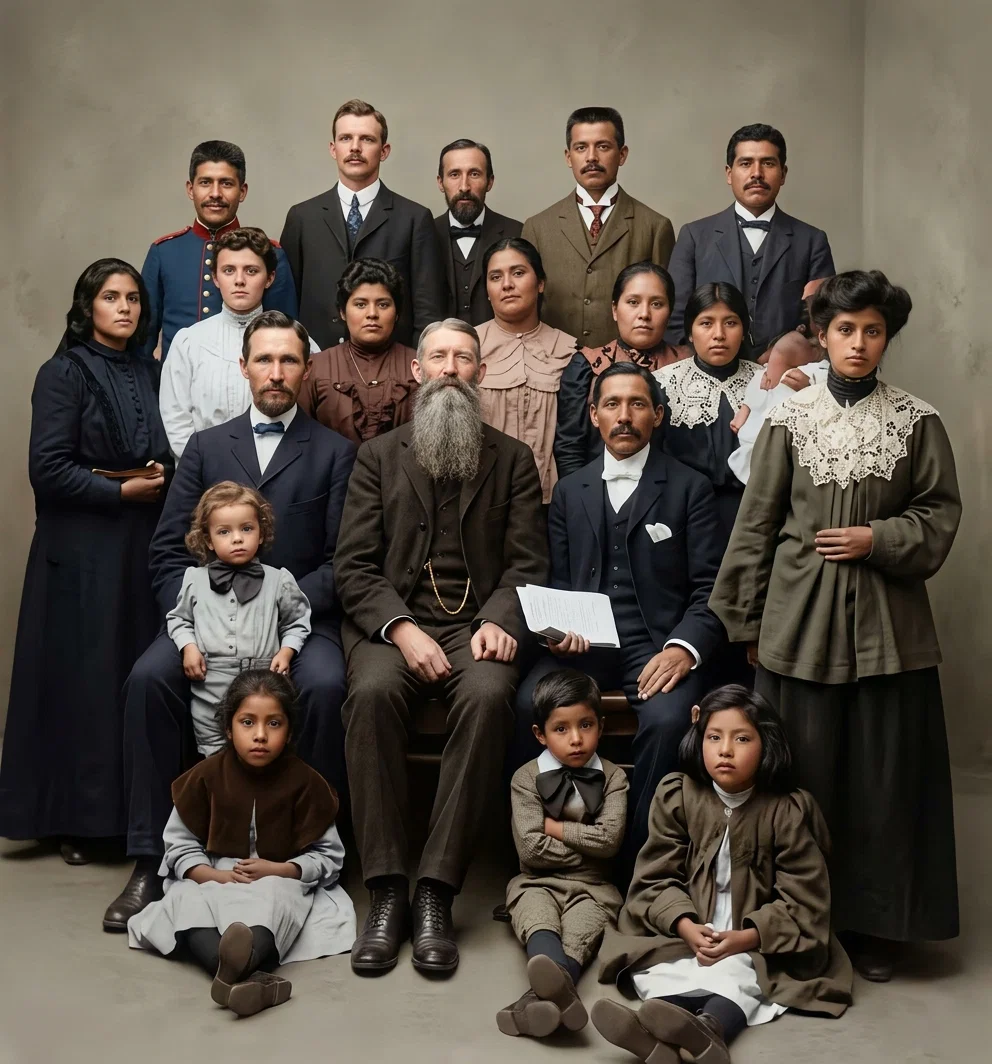
At Lima we have our only church in Peru, organized since the beginning of the year, with twenty members. A few others are keeping the Sabbath. Among the membership is an Indian and his wife, seemingly two noble souls. He has a small place several days by mule from the city, and while there recently looking after the fruit, he was very active in telling the people about the truth and in distributing the Señales de los Tiempos. This did not please the village priests, who influenced the authorities to arrest him. Fortunately, he was not at home when the officer came, and though the latter remained some hours waiting for his return, he did not make his appearance till the officer had gone. As the officer was to return the next day, he concluded that it was wise to do as Christ had sometimes done, and leave. Accordingly they at once left, and after several days’ hard traveling, with scarcely any food, they reached a place of safety. Had he remained, he thinks that the prayer for the extermination of heretics would have been answered in his case. Such instances are said still to occur in Peru. Just before this experience, he had much difficulty in securing a permit to bury his child, because he was a heretic.
Brother and Sister Perry seem of good courage in their work. He is now able to do some public work in the Spanish language.
Brother Espinoza is good help in doing pioneer work with books, tracts, and papers, and in private work with families, and is sowing the seeds of truth in many hearts in this way. He possesses the knowledge of the conditions, the adaptability, and the courage and activity to make a valuable laborer in the work in Peru. We also decided to employ Brother Beltran, a native Ecuadorian who has been a mainstay in the work in Lima for several years. Together they will shortly make as public an effort as the circumstances will permit to plant the message in Callao.
WORKERS AND BELIEVERS IN PERU
From every visible standpoint Peru is destined to be a hard field. It has about four million inhabitants, and in the interior as fanatical as can be found. Millions can not read. Nowhere have I ever seen the Indian so much in evidence. They are poor, and apparently hard working. There are already many Chinese, and it is said that fifty thousand more are to come soon. A great many of the population are at an elevation of seven thousand to fifteen thousand feet, and many of these are engaged in mining. Except east of the Andes, where the climate is not healthful, and the population is small, the country has a barren, forbidding aspect. But the message must and will go. From every nation, tongue, and tribe trophies will be gathered. From the ancient populous Inca empire, whose ruins are everywhere in evidence, and which show a state of civilization truly surprising, representatives are taking their place in the ranks of those keeping the commandments of God and the faith of Jesus. And as these various peoples are joining the ranks, they are doing their utmost in giving to others the glad news of Jesus’ soon coming. The lamps are thus being placed and trimmed ready for the Master to turn on the full current of his power and glory to finish the work of lightening the world.
I am now on my way to Ecuador on a German steamer, having been delayed some on account of a quarantine in Ecuador against Peru because of the bubonic plague. We shall be put in quarantine when we reach Guayaquil. On my return to Peru, I shall be quarantined at Callao on account of the yellow fever at Guayaquil. However, we have the assurance that each of them will be short.
It is only another sign of the times, and urges us on to hasten the work. Men’s hearts are failing them for fear and for looking after those things that are coming on the earth.
Remember our work in these dark lands before the throne of grace.