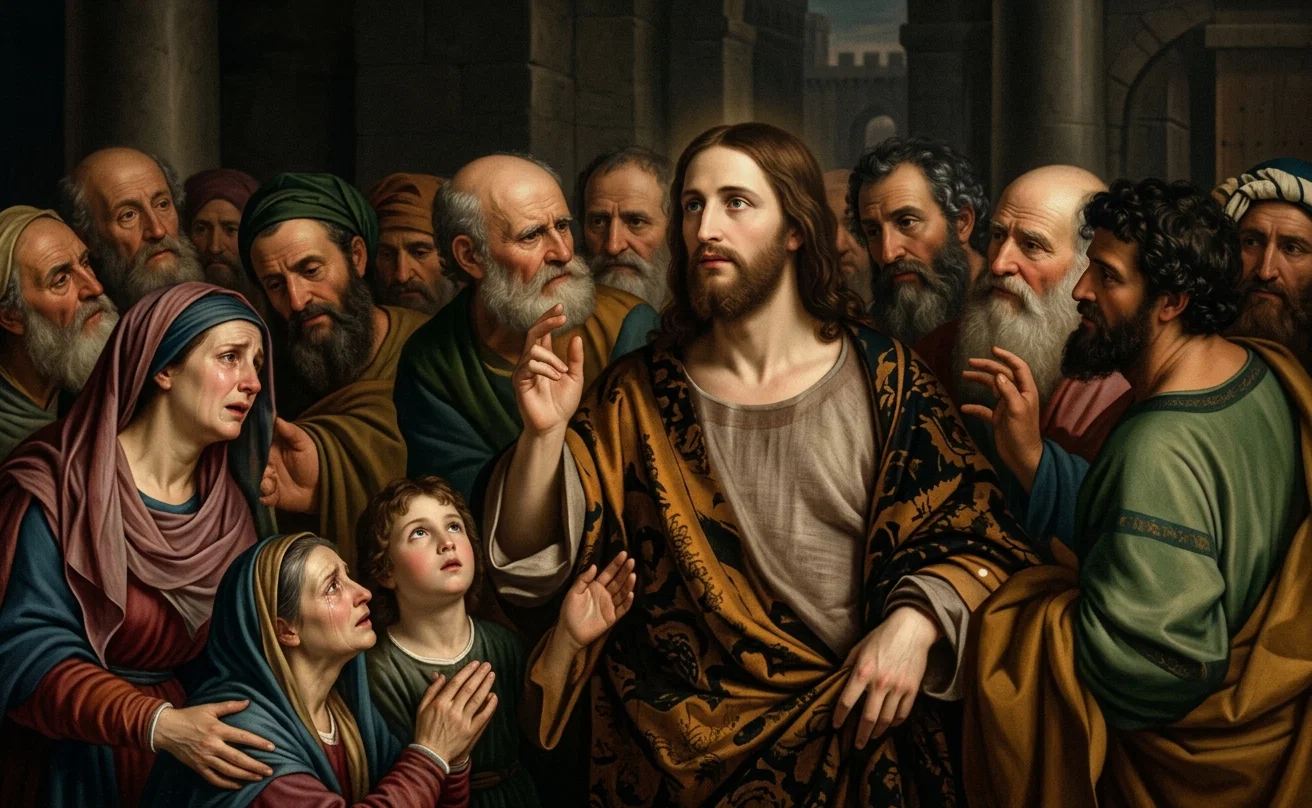
FORTH through the solemn street
The sad procession swept,
Pacing its mournful way with measured feet,
While inly wept
One mourner, in a grief
Stern as the silent years,
Which seemed to mock the common weak relief
Of outward tears.
Keen was her sense of loss,
An agony untold;
For death had seized amid a world of dross,
Her piece of gold.
They bore her only son,
Star of her evening, fled;
Whose lesser light recalled that vanished one
Now long since dead.
For her best loved had died;
And, stunned from former bruise,
The widow’s oil of life had dried
Within her cruse.
Desert her heart, and bare;
Like lone house on a wild;
No voice to make blithe music on the stair—
No laughing child.
No solace from the past,
No hope in days to come,
She cowered as if sorrow’s second blast
Had struck her dumb.
But, near the city’s verge,
A sudden silence came;
The hired mourners swift forebore their dirge,
As if in shame To mourn a lifeless clod
With such despairing cry,
While the Redeemer, “the strong Son of God,”
Was passing by.
He came and touched the bier.
They wait in curious pause:
Has He the power and will to interfere
With nature’s laws?
He walked upon the waves!
His word the thousands fed! —
Is He imperial in the place of graves
Over the dead?
Then spake the royal word;
And quick with rushing throes,
The red life in the clay obedient heard;
The dead arose!
And so — just as before —
Unconscious of eclipse;
Like babe who only knows that night is o’er
From mother’s lips;
Or one who, free from harm,
From the engulfing sea,
Comes home and finds all on his father’s farm
Which used to be;
The same through endless time,
Thus Jesus healeth now,
With “many crowns” for victories sublime,
Upon His brow —
Conqueror in each stern fight
O’er mortal sin and dread,
And mighty, from corruption’s foulest night,
To raise the dead.