THE WITNESSING OF GOD: THE BASIS OF OUR CONFIDENCE
By Editor
By the Editor
II. His Word Twice Written
From “Cuneiform Parallels to the Old Testament,” by Robert William Rogers
God does not leave Himself without witness in the Word alone. He has so revealed Himself that His revelations are themselves clear, cogent, sufficient witness of the Word which He Himself has given. In other words, God writes His Word twice at least,—all the Word which He has given. He does not leave it to chance, or to the care of a backslidden and apostate church; but He has so ordered in the giving of that Word, and in His providential care and guidance of the affairs of this world, that that Word itself, twice written in the letter and in the fulfilment, becomes a mighty and all-sufficient evidence of its veracity and inspiration.
That Word, it may be said in general, is composed of historical, prophetic, and ethical, or moral writings. The history records actual events which took place in connection with men and nations, in their relations with God and with each other. They show the outworking of the principles of truth, and the result of the rejection of those principles. In a way, they are prophecies of principles and of similar circumstances yet to rise. They show, and are designed to show to those who follow, that “whatsoever a man soweth, that shall he also reap;” that certain causes produce certain results; that he who transgresses God’s law, the law of life and being, must certainly reap the sure result,—deterioration, utter ruin, and death; and that “the Most High ruleth in the kingdom of men, and giveth it to whomsoever He will.”
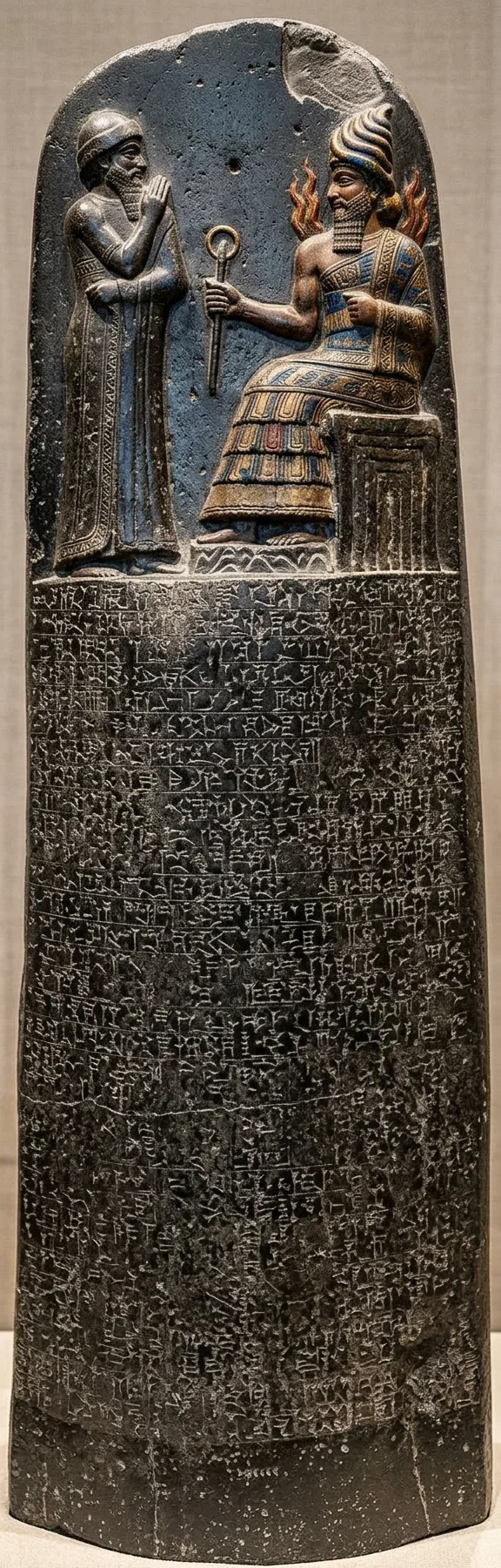
But the history of God’s word has been disputed. Take, for instance, Genesis, which has been set down by many of the higher critics as largely a book of myths, and at the best a matter of mere traditions. The 14th chapter of Genesis was years ago made a special object of attack. We are told in that chapter, historically, that in the days of Abraham, Amraphel king of Shinar, Arioch king of Ellasar, Chedorlaomer king of Elam, and Tidal king of Goïim, made war with Bera king of Sodom, and Birsha king of Gomorrah, Shinab king of Admah, Shemeber king of Zeboim, and the king of Bela. That is, there were four kings that made war against five, and the four kings conquered. Yet it has been said that there were no such civilizations as that; such a king as Amraphel of Shinar, or Chaldea, did not exist. In fact, the history given with such particulars in the 14th chapter of Genesis was scouted. But in the researches of the archeologists it was found that there was just such a king as Amraphel, that the name was identical with Hammurabi, or Khammurabi, and that he was a great king. His code of laws was also discovered, and has been translated. It showed a remarkable likeness, in many respects, to some of the laws of Moses. It indicated that civilization was high at that time in the land of Chaldea, and doubtless among the other kings with whom he was associated; and Sayce declares, in view of these discoveries, that “there were therefore Hebrews, or at least a Hebrew-speaking population, living in Babylonia at the period to which the Old Testament assigns the lifetime of Abraham. But this is not all. As I pointed out five and a half years ago, the name of Ammurabi himself, like those of the rest of the dynasty of which he was a member, is not Babylonian, but South Arabian. . . . The names are not South Arabian only, but they are Hebrew as well. . . . When Abraham, therefore, was born in Ur of the Chaldees, a dynasty was ruling there which was not of Babylonian origin, but belonged to a race which was at once Hebrew and South Arabian. The contract-tablets prove that a population with similar characteristics was living under them in the country. Could there be a more remarkable confirmation of the statements which we find in the 10th chapter of Genesis? There we read that unto Eber were born two sons; the name of the one was Peleg, the ancestor of the Hebrews, while the name of the other was Joktan, the ancestor of the tribes of South Arabia. The parallelism between the Biblical account and the latest discovery of archeology is thus complete, and makes it impossible to believe that the Biblical narrative could have been compiled in Palestine at the late date to which our modern critics would assign it. All recollection of the facts imbedded in it would then have long passed away.” (Quoted from “Patriarchal History,” by the New Biblical Guide, volume 2, pages 70, 71.)
The same volume (pages 189-205) takes up in detail the names of other kings mentioned in the 14th chapter of Genesis, and shows that they had actual6existence in harmony with the history. We read: “Every advance which has been made in the knowledge of this Elamite dominion has added to the confirmation of the Scripture. The names show an intimate acquaintance with the time. All these men, we now know, were contemporaries.”
The knowledge of this began to be opened by George Smith in 1871, and has been developing from that time since. God wrote His Word through Moses, from records, perhaps, that Abraham had himself left concerning that very time. The history of these kings was written in their own language, in the cuneiform alphabet; and God in His providence overruled that these records written in stone should be discovered, translated, read, and confirm His Word in this very day and generation, when His Word is on trial as it never was before in all the history of the past, and the two witnesses agree. They are not collusive, nor can they be, but they concur in every respect.
The Evidence of the Deluge
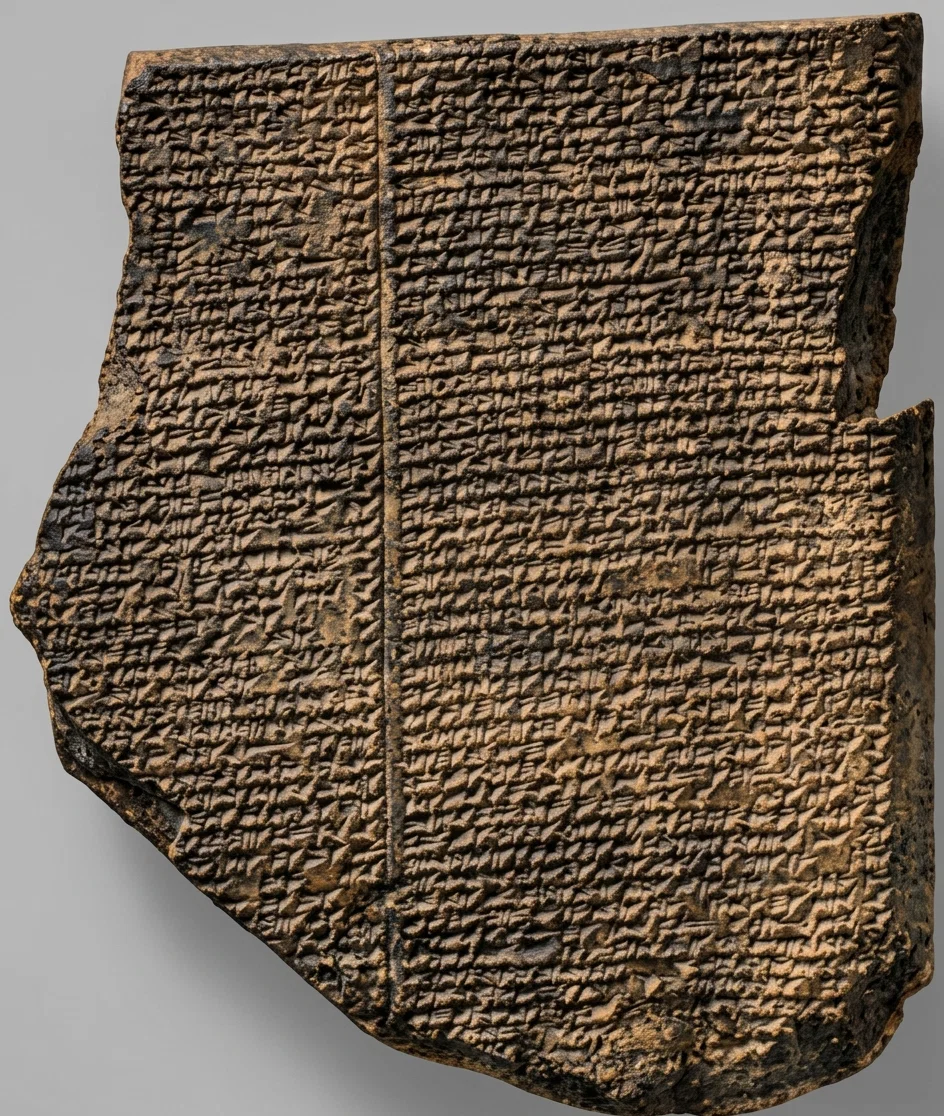
The Deluge, or Flood, of which we have a history in the 6th to the 8th chapters of Genesis, has also been among the disputed things. Men have ridiculed the idea that there was anything like a universal flood. That is still ridiculed to-day, and yet the language of the Scripture indicated that the Flood was universal, that the whole earth was itself covered, that all life except that which was preserved by Noah in the ark perished. Now Professor Wright is claiming that it was very much more extensive than the critics and doubters have regarded it. He declares that it extended over the northern part of Asia, and took in probably nearly all or all of the world at that time. But we have the tablets that were written by nations who lived just this side of the time of the recorded Deluge. The old Assyrian people have a tradition of the Deluge. They have colored this more or less with the traditions of their gods; but so far as the great fact itself is concerned, they record the Deluge entirely apart from the account of the Hebrews in the Bible.
More than this, we have traditions among native tribes of savages and barbarians in different parts of the world. The tradition is almost universal among savages that have any traditions at all of their early ancestries. They tell us in South America, and in North America, and elsewhere, that there was a time when a great deluge took place which drowned the people of the earth. Where did they get this tradition? It all must have been derived from the great fact which took place in the time and according to the manner described in the book of Genesis. The words of inspiration give us the fact; the traditions of the various tribes and nations, sifted through the various cults of heathenism, confirm the fact.
Then, too, it is written in the very earth itself. Go where we will, and we find evidences that the earth in various places was sometime submerged. Shell formation of rocks, fossil remains, water-washed stones and pebbles, and various other things, indicate clearly that the record in Genesis is true. It is written there by inspiration. In God’s providence it was carried in the traditions of men and buried underneath the surface of the earth, and the two witnesses concur.
We might refer to repeated instances in the history of the children of Israel, which have been disputed and criticized, but of which we now find contemporary records in the discoveries of archeology which have been exhumed in later years. Take one other instance of the testimony of history to the Word, found in the prophecies of Daniel, one of the disputed books of the Bible. The history is found in the 5th chapter of Daniel concerning Belshazzar, in which he is represented as the king of Babylon. In that idolatrous feast a hand comes forth and writes the doom of Babylon upon the wall. Daniel the prophet reads the inscription and tells its interpretation. Previous to this Belshazzar has promised Daniel that he would be made the third ruler in the kingdom if the inscription could be read. After the inscription has been read, although it pronounces the doom of Babylon, Belshazzar commands that Daniel be clothed with purple, a chain of gold put upon his neck, and the proclamation made that he should be the third ruler in the kingdom. And that night Belshazzar is slain.
Fragment of a baked clay tablet inscribed with the Babylonian account of the Deluge. The original is in the Nineveh Gallery of the British Museum.
The history of the times outside of the book of Daniel, gave us no account whatever of Belshazzar, so far as men had ascertained. We were told that the last king of Babylon was Nabonidus, but Nabonidus had reigned for years, and therefore the doom of Babylon in the third year could not have been true of him, and the logical conclusion was that the book of Daniel was not a reliable history. One devout man had made a guess at the truth, or really more than a guess, from a careful study of the Bible. He had learned, as all have who are acquainted with Oriental manners, that when an Oriental king made a promise, he made the promise as strong as he could make it. If he were to give gifts, he gave great gifts. If he promised a man a place in his kingdom, he made the promise as large as he could. Belshazzar promised that Daniel should be the third ruler in the kingdom. The natural gift would have been that he should be the second ruler, and this earnest man concluded that Belshazzar himself was the second ruler, and his father must have been the first ruler.
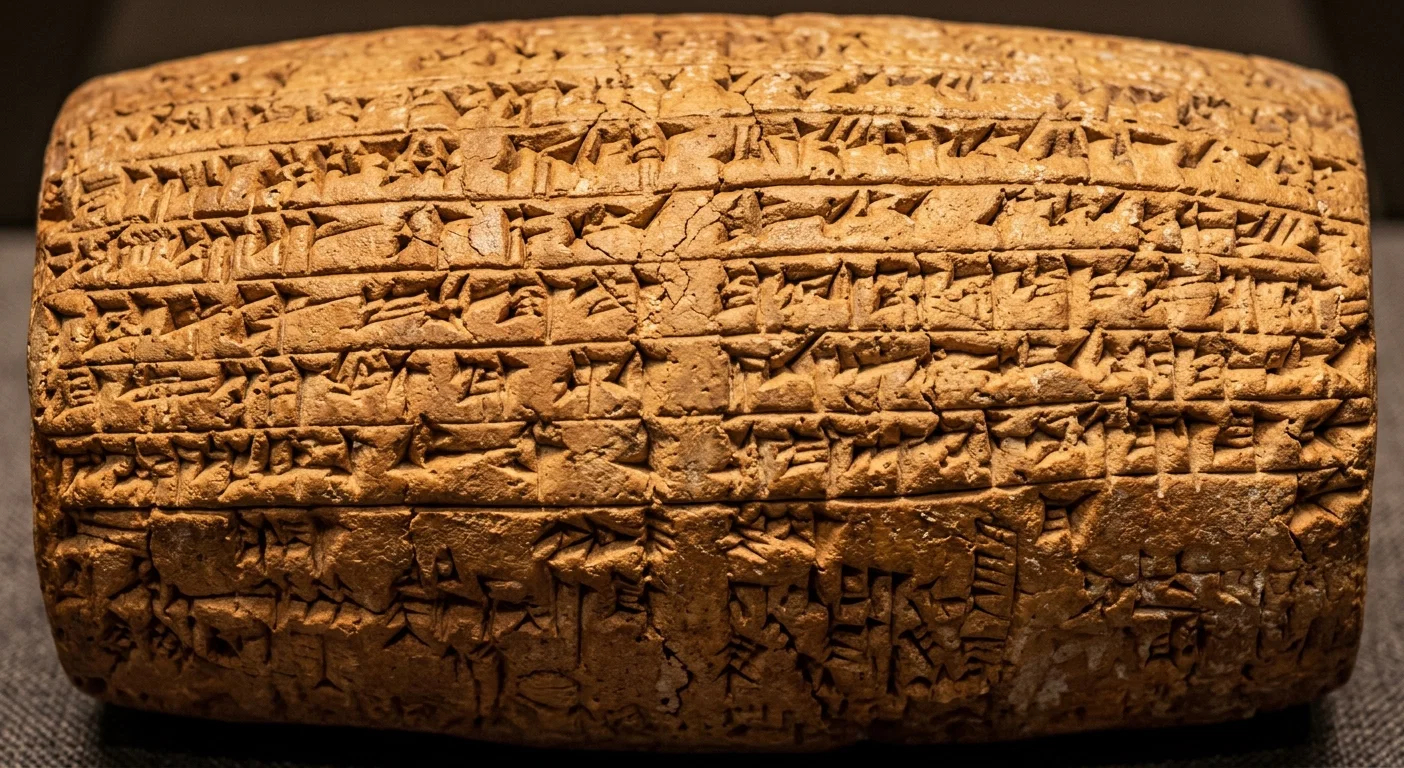
But this was considered merely a guess, and so the charge still lay against the book of Daniel that it was false, and not in harmony with the history of the time. Nabonidus was the king of Babylon; Belshazzar was not. Some of those who contended for the truth of the Bible thought that Belshazzar was probably some general, or some one in temporary authority, some one who was acting as regent in the absence of Nabonidus. But just at the time when it was needed most to meet the contentions of the higher critics, God in His providence was guiding archeologists in their researches. Nabonidus was a very devout man; he was a great temple builder. The last part of his life was given to the worship of the gods and the building of temples. He therefore associated with him upon the throne Belshazzar, his son and heir. Sayce tells us that his father alludes to him more than once in his inscriptions, calling him “Belshazzar, eldest son, offspring of my heart.” Among the things discovered left by Nabonidus was a cylinder written in cuneiform about 556-539. Upon that is a prayer to the moon-god for himself and for Belshazzar his son. This is reproduced upon this page. The providence of God overruled in the writing of the testimony on the cuneiform plate, which concurred with the testimony which was given in His Word. The Word was twice written, and in these last days of doubt and conflict the twofold witness comes to light, witness which could not be collusive in any way, but which becomes, in the very nature of the case, absolutely conclusive regarding the record given in Daniel.
And these are only a few instances among many which God has given concerning the truthfulness and reliability of His Word. We can rest upon it. He has given His Word by inspiration; He has in His providence caused it to be written in the history of nations in rebellion against Him. Heaven and earth shall pass away, but His Word shall not pass away.
[The next article in this series will be on His Work Witnessing to His Word.]
Baked clay cylinder of Nabonidus, king of Babylonia from B.C. 555 to B.C. 538. It is in the Babylonian and Assyrian room of the British Museum, and its record concludes with a prayer to the moon-god on behalf of Nabonidus himself and of his eldest son, Belshazzar, as follows: “O Sin, that is the moon-god, thou lord of the