FORBIDDING THE BIBLE

17%

Pacific Press Publishing Company · Oakland, California · Mar 5, 1902

FromSigns of the Times, Vol. 28, No. 10.

Read the full edition
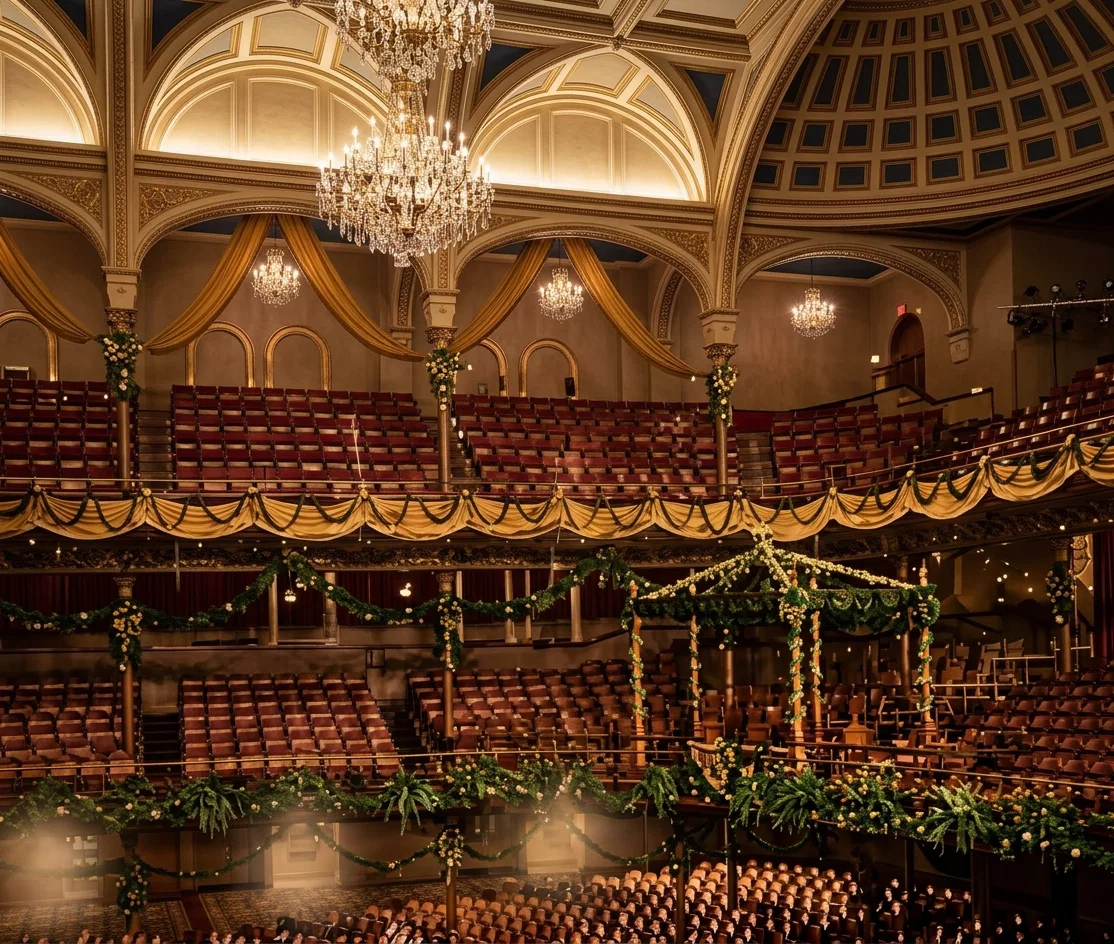
INTERIOR of Massey Music Hall Toronto, Ont., where the Students' Volunteer Movement will hold its world's meeting, February 26 to March 2. The illustration shows about one-third of the hall, the seating capacity of which is about 4,000. The SIGNS representative will send us a report of this wonderful missionary movement.

FORBIDDING THE BIBLE.

A loving, wise father in a foreign land, writes a series of letters to his children in another land, in a language unfamiliar to them. These children are of all ages, from the little child to the adult man and woman. The father sends instruction to his agents to make these letters plain to his children, as their understanding or otherwise involves vital issues. In these letters, in which there are portions adapted to every one of his children, speaking directly to the heart of each one, there are perfect instructions as to the moral conduct of all human affairs. Friends of both father and children, having perfect access to these letters, have done all they can to make these letters plain. They have made many translations, seeking to make them in the very language of the children. Would you not think it strange if the professed friends and agents of that father should forbid the children reading the letters of their father put in their own tongue, unless the reader was wholly under the direction of some one else? Would you not think it cruel thus to keep back these children from the most direct contact with the father?—You certainly would. You would feel that it is the duty of these men to make those letters just as plain as possible, to encourage the children to read them, and so become acquainted with their father.
But not so has the Roman Catholic Church done. It has sought to keep back the children of our Heavenly Father from reading His own Word, which He has sent, not to priest or prelate or pope, but to all, the babes as well as the full-grown. Here is their own statement, what the Literary Digest tells us is “practically official information,” from “a pronounced organ of that church, the Märkische Kirchenblatt.”—
It is true that the reading of the Scriptures in the vernacular has not been allowed to the laity, unconditionally, but only under certain fixed limitations. This order is the outcome of the experience of centuries, which has gradually resulted in a certain discipline in the matter. Therefore, in accordance with the constitution of Leo XIII. of January 25, 1897, under a penalty to be determined by the bishop; and as a great sin, it is forbidden to the average Catholic to read or to have in his possession any edition or copy of the Scriptures in a translation, even if this translation has been given by members of the Catholic Church, unless this work has had the express approval of the Holy See, or has also certain comments of a proper kind, and unless the bishop has given consent to its being printed. Hence only such Bibles in modern languages are allowed as have the approval of the Vatican, in case of editions without comments; and in case notes or explanations are added, these must have the authority of the bishop. In the same way are forbidden all editions and translations made by non-Catholics, especially those of the so-called Bible societies, whose publications are denied to the faithful under the severest penalties. Only those Catholics who are engaged in theological and Biblical studies are allowed to use such translations and editions, and to these only if neither in the introduction nor in the commentaries the doctrines of the Catholic Church are assailed. And in general, it is the duty of a good Catholic, before he begins upon the general reading of the Scriptures, to consult with his spiritual father, and, in conjunction with him, make selections for reading. If the priest fears that the promiscuous reading of the Scriptures will harm his members, he has the right to curtail this privilege or even to deny it altogether.
This is the freedom of access allowed the children to the words of our Heavenly Father by the Catholic Church. Let every soul be free to go to God and His Word. You can get comfort from the Word of God as well as can a priest and without a priest. It is written for you. And, priest, it is written for you. God has greater light and blessing for you than you have ever gotten or ever can get from Latin theology or dry, dead formal liturgy. “All flesh is grass; . . . the grass withereth; . . . but the Word of our God shall stand forever.” Better even to risk a poor translation than the glosses of erring men.