A SKETCH OF NEW SOUTH WALES.
At one time, nearly one half of all Australasia was under the government of New South Wales. Tasmania was the first portion of it granted a separate government, which was formed in 1825. Victoria followed in 1850, and Queensland, on the north, in 1859. The present area of the mother colony is 310,000 square miles, or only about one tenth of the entire continent. It is bounded on the east by the Pacific Ocean, by Queensland on the north, by South Australia on the west, and by Victoria on the south.
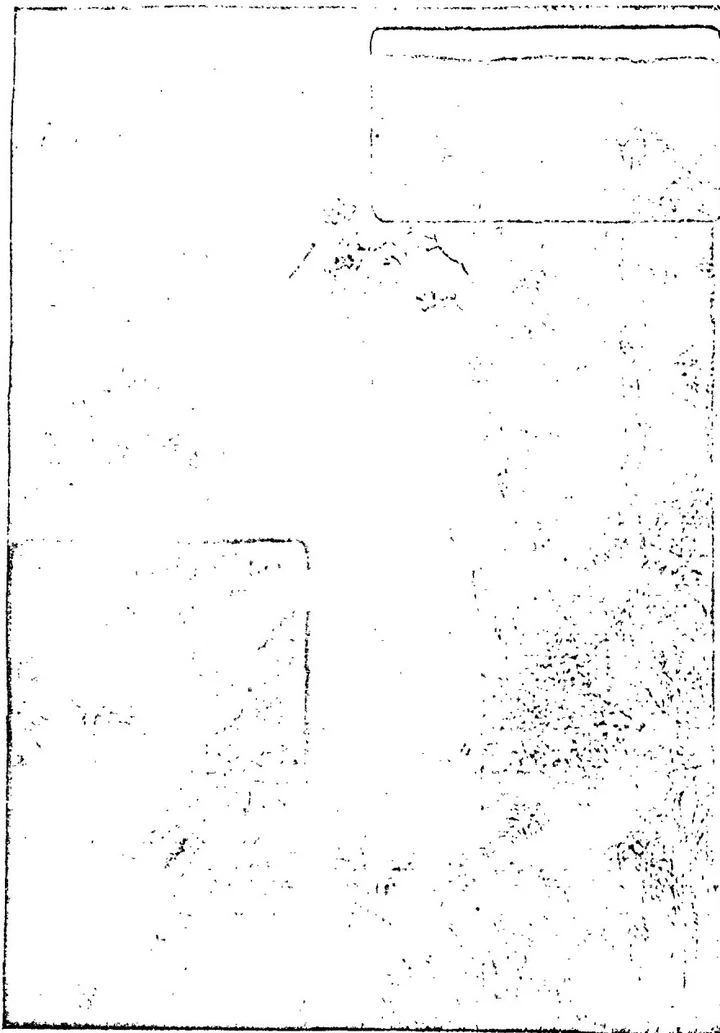
The climate in winter is quite mild, the temperature in the table-lands generally dropping to only ten or twelve degrees below the freezing point. In the summer, it rises to 100 degrees or more. On the coast, the air is moist, and somewhat oppressive in the middle of summer. There are, however, occasional hot, dry winds from the interior, followed by reactionary winds from the ocean, causing the thermometer to fall twenty or thirty degrees, and sometimes more, in a few hours. In Sydney, especially, the summer seasons are somewhat disagreeable, and the citizens who can do so, repair to the higher inland country, where the air is dryer, and the temperature much lower. Stretching along the 700 miles of coast belonging to this colony, is the great chain of heights known as the Blue Mountains. Their elevation is not great, but they are everywhere steep and rugged, with deep and precipitous ravines, and in many places stupendous chasms, inclosed by almost perpendicular walls of rock. The illustration this week presents some of the wierd scenery of that region. Two points in the group are familiar to all Blue Mountain tourists. The one inclosed in the circle shows the Mermaid's Cavern, and the view in the lower corner is Govett's Leap. The origin of its name is as follows: In the early days of the colony, a prisoner named Govett escaped from jail, and securing a horse, attempted to cross the mountains. He was hotly pursued by the police until near this point, when seeing that it was impossible to escape, he resolved, rather than be captured, to take his own life. Putting spurs to his horse, he pressed him over the edge of the abyss, and was shattered into pieces among the boulders and brushwood, 1,500 feet below.
The government of this colony is similar to that of all the others of Australasia. The governor is appointed by the crown, and administers the government in the name of England, and in harmony with its laws. At the same time, each colony has a parliament of its own. In the case of New South Wales, the lower house, there called the Legislative Assembly, consists of something over a hundred members, who are elected by the people, for a term of years. The upper house, or Legislative Council, is composed entirely of members appointed by the governor; these hold their seats for life, unless forfeited by misbehavior. The number of members composing the higher body is limited to one half that of the Legislative Assembly.
Owing, however, to the peculiar situation of affairs on account of its being a penal colony, the earlier government was a strictly military one, and, as such, was very unsatisfactory. Many of the earlier governors were extremely despotic, which entailed much trouble, until the people unanimously demanded that the transportation of convicts from England should cease; that trials by jury should be established, and other reforms instituted which would conduce to make the government a rational one.
Paramatta, on a river of the same name, is thirteen miles from Sydney, and at one time was the summer residence of the governor of the colony. During the administration of Sir Thomas Brisbane, he had an observatory established there, but this was removed to Sydney in 1858. When the writer visited the place a year and a half ago, the remains of a granite shaft were still standing on the hill, near where the observatory was located. Not far away was the old mansion, with stables attached, all, however, falling into decay, and looking ancient enough. The grounds are still owned by the Government, but are used for public demonstrations both political and religious. The town has about 6,000 population, but is very quiet, with an air of crestfallen aristocracy which is not seen in any other town of the entire colony. A small quantity of woolen goods, called “colonial tweed,” is manufactured there, and a little salt is made in the vicinity. Besides these, there is no industry except that of orange-raising, which is engaged in by quite a number in the surrounding districts. It is quite a pleasure-resort for the city people, and excursion-boats run there from Sydney, making two or three trips each day during the summer. The trip up the river is interesting beyond description. All along are seen the beautiful villas of the gentlemen and merchant princes nestling among the trees, with velvety lawns extending to the water’s edge, dotted here and there with the choicest flowers and shrubs; while in the distance may be recognized the dark green of the orange groves, specked with their golden fruit.
Among other places of interest near Sydney, are Botany Bay and Coogee Bay. At the first-named resort are a pavilion and race grounds, but many go there to walk on the beach or to sail on the smooth waters of the nearly land-locked bay. The beach is lined the entire distance with the finest of white sand, that glistens in the sun so as to almost destroy the power of seeing objects at a distance. Near the entrance to the bay, stands the historic monument of the ill-fated La Perouse, a French navigator who left that point in the early part of the century, and was never after heard from.
Coogee Bay is only an indentation of the coast where the surging waves roll in upon the beach, bringing shells of various shapes and hues, or lash themselves into foam on the sentinel rocks which impede their course, and dash their spray high in air, only to let it fall in harmless showers on their grim adversaries. One of the greatest attractions in a visit to this place, consists in listening to the wierd music of the waves, as they exhaust themselves in their vain attempt to pass the bounds that nature has placed before them. While viewing the grandeur of the surroundings, my mind was led to the statement of the patriarch: “He hath compassed the waters with bounds,” and I thought, How true is this word. In such a place one can appreciate the omnipotence of God to a degree that seems impossible in the ordinary quiet of routine life.
Gold was first discovered in the colony about 140 miles west and a little north of Sydney, by a Mr. Hargreaves. The place soon acquired the name of Ophir, which it has retained to the present time. At Meroo Creek, not far from the first-mentioned place, a native black, while tending sheep for his employer, accidentally found a nugget weighing a little over a hundred pounds. The black was rewarded for his find with a flock of sheep, a saddle horse, and a team of oxen with which to plough his land. His employer took the gold, which was sold for £20,000. The news of this discovery set the whole country astir, and soon miners from every part of the country were hurrying to the diggings. In less than a year, this colony, with Victoria, had shipped to England eight tons of gold.
When we stop to think that this colony, too, is the only place in the continent where coal is found in sufficient quantities to pay for mining, it will be seen how important is the place that New South Wales occupies among her sister colonies. Coal was first discovered here in 1796, and since that time, a steady supply has been furnished for the entire continent, some also being shipped to America and other points.
Sydney is a city of 200,000 inhabitants, and is, without doubt, a good field for the preacher or canvasser. Last year a sister from the Melbourne church, having business in the place, held some Bible readings while there, and a few embraced the Sabbath. Besides these, a family of Sabbath-keepers from New Zealand have settled there. A letter just received from Bro. Tenney, after a visit to the place, says: “The field is waiting.” The work there is pressing faster than laborers can be found to fill the openings. It is, however, thought that the way will open for some one to enter that vast territory during the next season, which opens in that country, in November.
We rejoice to know that the cause is moving onward as rapidly as it is, in our foreign fields. Could our people everywhere see the importance of the work at these distant points, and unitedly assist, both by their means and their prayers, to carry the message to the remotest corners of the earth, we might well rejoice in the expectation of the near approach of the Master. J. O. CORLISS.