AFTER completing our work east of the Andes and in Chile, six of us set out for the Lake Titicaca Mission field; viz., Elders J. L. Shaw, Charles Thompson, O. Montgomery, and H. U. Stevens, Subtreasurer W. H. Williams, and the writer. We went by sea from Valparaiso to Antofagasta, Chile, where we had to wait two days on the triweekly railway service into the interior. There is now through service from Antofagasta by way of the nitrate and mining region of northern Chile to La Paz, Bolivia. The train is fitted out with sleeping-car and dining-car service of good quality.
The first half of the line is a narrow gauge of only two and one-half feet, so that our berths in the sleeping car were placed singly end to end in the middle of the car, with the car proportionately small in other respects. The rest of the line was a gauge of one meter, carrying us over a remarkable tableland on top of the Andes for nearly 400 miles at an average elevation of about 12,000 feet.
This was our first introduction to the high altitudes of Bolivia and Peru, of which our people in North America and the world have heard not a little. Like every new traveler in these parts, we had our apprehensions about how the elevation would affect us, and did not have to wait long to find out. Among the first symptoms are headache, a nervous tension at the base of the brain, and shortness of breath on exertion. Then followed, with some, nausea and dry sore throat. In two or three days these symptoms largely left us, with the exception of short breath and sore throat, which remained with some of us the entire three weeks we were in these high altitudes; shortness of sleep, too, was a common and continuous element in our experience. Usually we slept quite well about five hours a night, then were left to our cogitations till daylight came. None of these difficulties were serious, hardly more than inconveniences for the visitor, though of course the nervous strain wears on the worker in time.
Well toward the eastern border of the extensive plateau on top of the world, described above, lies the city of La Paz. On the eastern edge of the plateau, as also on the western, lies the cordillera of the Andes, in the form of rugged broken peaks and deeply serrated ranges and groups of rocky, sky-piercing spires, perpendicular precipices, and well-nigh bottomless ravines. La Paz lies in a large basin in the very edge of10the eastern mountain range, some 500 or more feet below the general level of the plateau on which it is approached from the west, and from which our first view of the city was virtually that of the condor or the aviator. It was thus placed by its founders for protection from both enemies and the natural elements.
Restored with AI
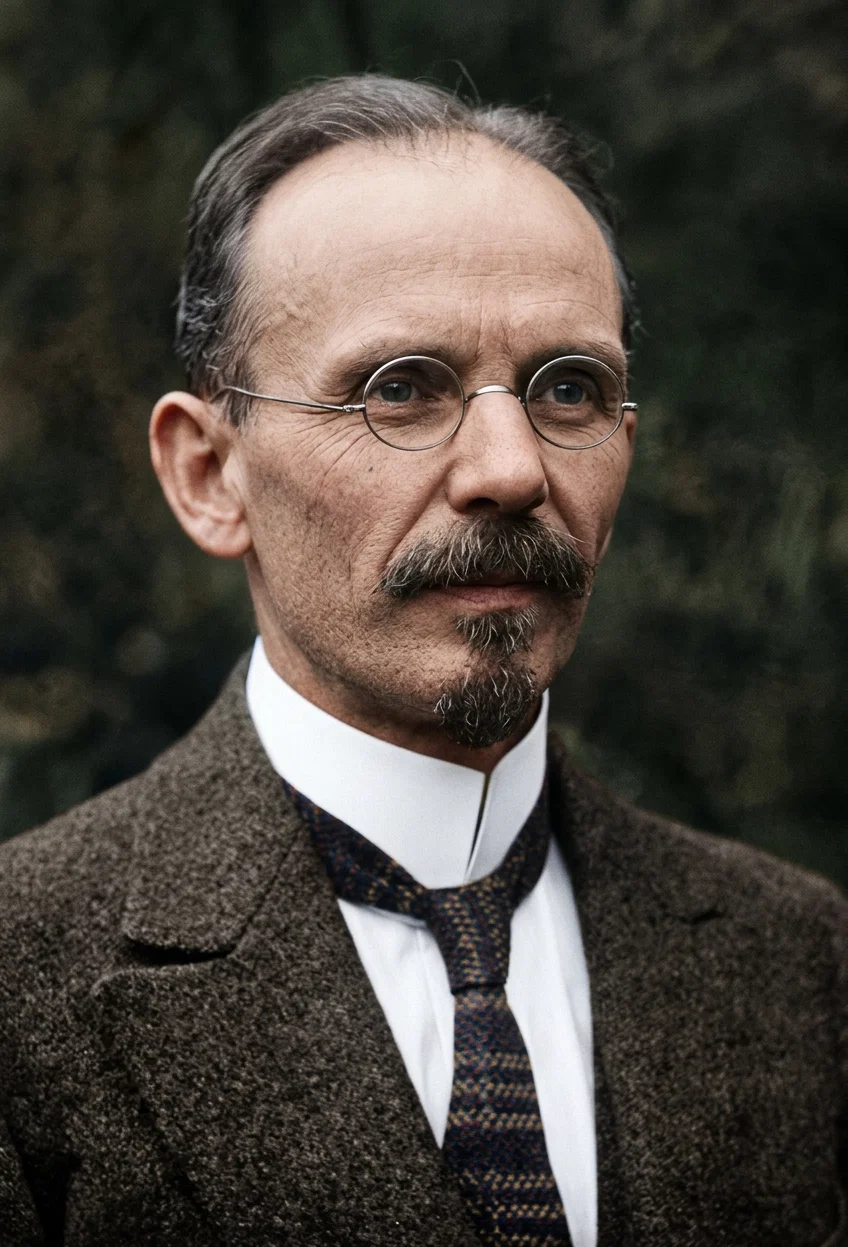
JOHN LIPKE
President Rio Grande do Sul Conference
Here is our faithful worker and director of the Bolivia Mission, Elder W. R. Pohle, who, with his wife and four boys, has been living and laboring here for the last six years, making in all eleven years’ work in South America without furlough. We found them of good courage, and received a very cordial welcome and entertainment in their own home. We were joined here by E. F. Peterson, superintendent of the Inca Union Mission; E. H. Wilcox, field missionary secretary; and Brother and Sister Reid Shepard, and held a three days’ meeting.
La Paz is a city of 70,000 inhabitants, of whom about 50,000 are Indians, largely Aymaras. The entire Bolivia Mission field contains some 130,000 people, of whom it is said that not more than from 5 to 15 per cent in any city can read and write. This limits the sale of literature to a considerable extent, but the book sales for the first five months of 1920 exceed any previous record. Brother Pohle’s son is at present working the cities of Potosi and Sucre, of some 25,000 people each. Cochabamba, 40,000, and Oruro, 30,000, are the other two cities of some size.
The membership of the La Paz church is twenty-five, with a few isolated members elsewhere. The Bolivia Mission goal for Harvest Ingathering this year was 1,000 bolivianos, with 500 bolivianos for the local church. At the time of our visit, 1,663 bolivianos had already been gathered—about $416, gold.
Work for the Indians in Bolivia is beginning to open up with promise. Brother Reid Shepard is at present living at Viachi, a railway junction town between La Paz and Zuaqui on Lake Titicaca, and will work out from there as the interests may indicate. It may prove best in due time to set off to the Bolivia Mission all the Indian work around the east end of the lake that is on Bolivian soil.
Bolivia is the third largest republic in South America, extending east of the Andes into rich forest and agricultural districts in the tropics, which, together with possibly the greatest variety and quantity of mineral wealth on the continent, it is said, will make her the most independent in resources needful for her economic life. Proper transportation facilities will open up these resources, and some projects for the purpose are under way.
Our meetings for the study of God’s word and for counsel were well attended, and plans were laid for aggressive effort to extend the message to the waiting thousands of Bolivia.