President’s Address
It has been four years since our last union conference session, and we are glad to greet so large a number of laborers from all parts of our union. This is the first time that all our laborers have thus met. We welcome most heartily representatives from the Brazilian, North Brazil, and Inca Unions. We greatly appreciate the kindness of the General Conference in sending as representatives to our union meeting, Elder J. L. Shaw, assistant secretary of the General Conference; Elder Charles Thompson, assistant treasurer of the General Conference, and Prof. W. E. Howell, secretary of the Educational Department of the General Conference.
The prolonged term since our last union meeting is due to the fact that the General Conference session had to be put off a year, thus bringing that session at the time when our union meeting should have been held.
The reason for a further postponement of our meeting, which carried it over to 1920, was the prospect of having with us Elder A. G. Daniells, president of the General Conference; and Elder W. T. Knox, treasurer of the General Conference. But it seemed an urgent necessity that these brethren visit Europe at this time, hence they have sent us the above-mentioned representatives.
Our last union session was held in the midst of the terrible World War. Since then millions have laid down their lives in defense of their respective countries. Other millions have died of starvation or of resultant disease. All these are now beyond reach of the last saving message to mankind.
Although the war has closed, the predicted peace has not yet come to a greatly perturbed world. New ambitions have been awakened. Armies are still fighting. International wars have changed to other international difficulties and internal revolutions. Men are still striving for supremacy. Pestilence continues. The specter of famine is claiming its victims by thousands. International and local traffic is in a state of chaos. Travel is hedged about with unpleasant and hindering difficulties. Uncertainty is written on every plan and hope. The labor problem is assuming world-wide proportions, and is taking on an aspect that bodes trouble, confusion, and great danger. Every effort by men, by the nations, and by the world to extract themselves from the quicksands of our times, seem only to result in their sinking deeper and in making their cases more hopeless.
In the midst of these ever-multiplying troubles there is one thing that moves serenely onward with unfailing certainty toward a speedy triumph. It is the gospel of salvation that is advancing in the world, the last message of mercy to the multitudes of earth. An overruling power is manifest in its victorious march forward. The supremep. 24 obstacles of the last few years, instead of hindering it, have been the means of its gathering strength, and have only accelerated its advance. Thus comes the message of courage and good cheer from every part of the great world field. To the question, “Watchman, what of the night?” the reply has never before been so full of assurance and hope as now, “The morning cometh, and also the night.”
What has been, and is, true of the world field, is also true of the advance of the work in the Austral Union Conference. While in some fields the advance has been greater, there are here evidences of God’s mighty working. The visible changes that are now taking place in various departments of the work in our field give great promise for future advance. Apparently we are standing on the verge of great things in the work of God. We will note some of the developments of the work during the last four years:
The work in our union has been greatly strengthened by the securing of strong men to take charge of the several departments. Since the union has had a regular field secretary, the book sales have greatly increased. The home missionary secretary has succeeded in increasing missionary activity among our people, encouraging them in the sale of home missionary literature, especially in circulating our missionary paper El Atalaya. The Missionary Volunteer and educational secretary has succeeded in doing excellent work for our young people in many ways.
In some instances the hands of the secretaries have been strengthened by the appointment of secretaries in local conferences. Chile has now a Missionary Volunteer and home missionary secretary, and Argentina has a home missionary secretary. This advance step should be emulated by other fields as soon as the constituency will permit. There is a special need of field secretaries in every field, large or small. Without them we shall never accomplish in the colporteur work what we should. There is a very urgent need now of such leaders in the Alto Paraná, Uruguay, and North Chile Missions. Immediate steps should be taken to supply them.
There has been no superintendent in the Uruguayan Mission to devote his time to the work there, consequently the mission has suffered. It seemed necessary for the president of the union to carry this responsibility for three years. Since last April, Brother A. R. Sherman has had charge of the mission, and there are many indications of improvement. North Chile, being so separated from the center of the work in that republic, has had little labor for many years, because of the dearth of laborers. Now a North Chile Mission has been formed, and the Inca Union Mission has kindly conceded to us Brother J. M. Howell, to become its first superintendent. Chile has granted us the services of Brother Abram Berchin to unite with him in the work.
There is also a dearth of active field workers. We cannot spare one of our institutional, departmental, or office workers; in fact, we should have more. But with the scarcity of field workers, there is the appearance of top-heaviness that is at times embarrassing. With a few additional field workers, the results in souls gained might be greatly multiplied. The comparative additional expense would be small when we consider that it will not require additional organization and that more fruit will be harvested. This is a question to which serious attention should be given.
The history of the Austral Union Conference under this name and with its present territory—the Republic of Argentina, Chile, Paraguay, Uruguay, and the Falkland Islands—begins with 1916, just before the last union conference session. At the separation of the Inca Union from our union at that time, there went with it 547 members, leaving our union a membership of 2,159. To the end of December last, there had been baptized 875 persons. The total membership is now 2,645, an increase of 486, or only 61 less than before the separation of the Inca Union from our field. The number baptized during the last biennial period was 443, and the increase in membership, 366. The membership is divided among two organized conferences and three missions, as follows:
Argentina ........................ 1,230 Chile ............................ 868 Alto Paraná ...................... 377 Uruguay .......................... 156 Magellan .......................... 14
They are organized into fifty-three churches, of which nineteen are in Argentina, twenty in Chile, nine in Alto Paraná, four in Uruguay, and one in the Magellan Mission.
There has been an almost continual and steady growth of tithe during the time a definite record has been kept—since 1904. During this period, it has been a third of a million—$332,040.83. It has grown from $21,923.32 in 1916 to $37,187.47 in 1919. The total for the four years is $119,953.67, and for the last biennial period, $72,121.84. The per capita tithe has also grown steadily from $5.86 in 1904 to $20.95 in 1919.
The offerings to missions for 1919 were one thousand dollars more than for the two preceding years. The Sabbath school offerings averaged an increase of nearly $1,200 annually during the last four years. The total offerings for missions considered in the Eight-cent-a-week Fund for the four years were $34,756.43; for the last two years, $21,220.15. In 1919 the union passed its goal of eight cents a week, giving 10.6 cents. This has encouraged us to set a goal of fourteen cents for 1920; and this we hope to pass. We have often felt that it should have been placed higher.
The proper persons will give full reports of the work of our several institutions, but it may not be out of place to say a few words here in regard to them.
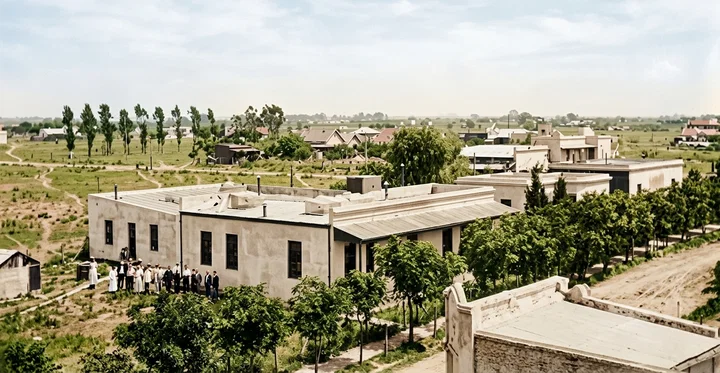
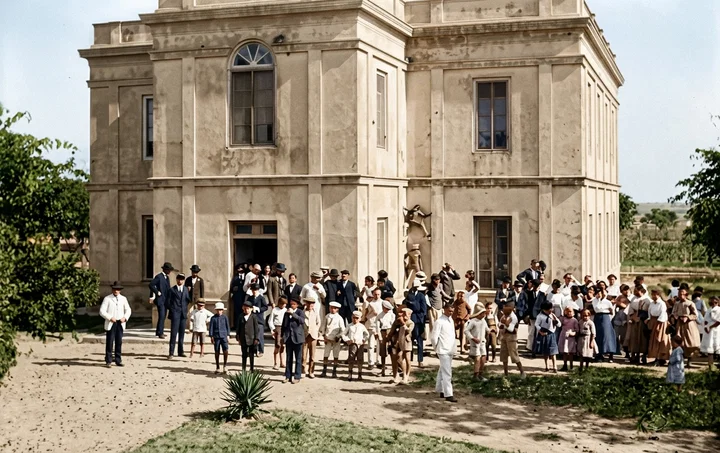
The attendance at the school has not materially changed. Several of the students have entered various departments of the work, a number of them taking the nurses’ course. The future is more promising, for there seems to be awakening a new interest among our people in the education of their children. We are better prepared also to give thoroughp. 25 instruction in the Spanish language. The school is working for the one purpose of preparing gospel workers for the harvest field. Its needs are many. Chief among these is a dormitory for boys. The present one is unhomelike, and is rapidly becoming unfit to live in. A new oven is needed for the bakery, a good shed for hay and stock, better dairy stock, more homes for teachers and helpers. The property has been added to by the purchase of Prof. H. U. Stevens’ home.
The patronage of the sanitarium has been excellent, and there has been a substantial gain in its business. This has made it possible to make important improvements. During the last four years, it has paid $3,332 tithe to the union, which is an indication of its net gain during this period. Its resources have more than doubled during the last four years. Of the results of its work, the treasurer, O. H. Maxson writes:
“It is interesting to know that of the eight classes which began with a total membership of sixty-three, fifty-four have been graduated, and of these, thirty-two are engaged in the work. These nurses represent fourteen nationalities.”
A new wing has been added to the main building of the sanitarium, and there is now a well-equipped operating room. There are also two treatment-rooms, fairly well equipped, and the laboratory is better equipped. Dr. G. B. Replogle, who went to the States two years ago especially to take further work in bacteriology, has charge of it. Dr. Carlos Westphal has come from Chile to connect with the medical staff.
The Buenos Aires Publishing House has secured the services of an experienced printer in Brother E. W. Everest, who will act as its business manager, devoting all his time to its interests. Brother E. G. Hartman had carried this work in addition to his many duties as union secretary and auditor. The house has done a good business, the business of 1919 amounting to more than $100,000. Were it not that it must suffer a heavy loss on the papers, it would have made a fair gain last year, whereas the gain was much less the year before. Our goal for book sales in the Austral Union for 1920 is $105,000. When the field is properly manned with field secretaries, there is no reason why this goal may not be doubled, and our total sales raised to two or three hundred thousand dollars annually.
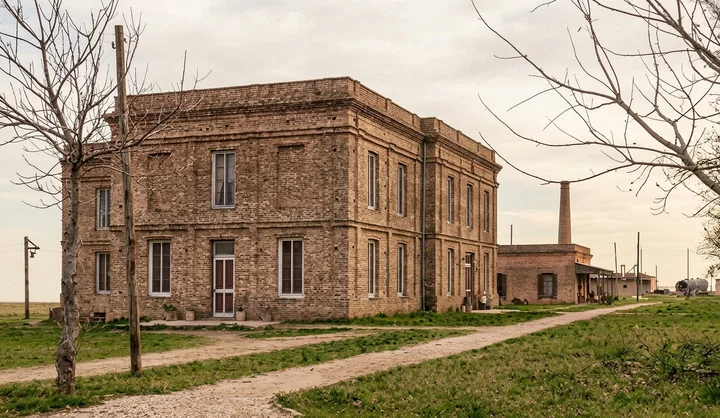
The increased business already done justifies enlargement and improvement of our printing plant, and makes necessary the increase of our operating fund. In fact, the uncertainty in world conditions makes it imperative. A good illustration of this is the fact that we ordered a linotype machine some eight or nine months ago, and it has not yet come, nor is there any prospect whatever of our getting it within a year. The machine is sorely needed. Some of our typesetting must now be done in the city, and the volume of our printing may, and should, be greatly increased. We need a new and larger press immediately, which will cost in the neighborhood of ten thousand dollars. Binding machinery must be purchased to the amount of five thousand dollars or more. The building must be enlarged at an expense of about five thousand dollars. Provision must be made for a fair stock of raw material. To provide for these and other needs, from forty to fifty thousand dollars is required.
Steps should be taken at this conference to place all our institutions on a proper and definitely defined basis of control and responsibility.
In addition to the various needs mentioned above, the union is in great need of an office building. While the publishing house was under the management of the union secretary, the office room required was much less. The brethren of the publishing house have kindly permitted us to continue our work in their building up to the present, but they are themselves in great need of the room. To rent is difficult, and not often can anything really desirable be obtained. It will be necessary for us to build; we have some means for the purpose.
The Florida center is also in great need of a meeting place. Until recently, the religious services have been held in the publishing house chapel. It is now necessary to use this as a bookroom, and the services are held in a public hall, the amusement center of the village. We should have a place dedicated to the service of God.
The perspective of the work is excellent. Many of our brethren are taking an active, growing interest in home missionary work, as the report of the home missionary secretary will show. Under the leadership of Prof. Crager, the young people are taking a deeper interest in all branches of the society work, including personal missionary work. The steps taken for an advance by the General Conference Committee in its Autumn Council has found a hearty response among all the leaders in our work. From various leaders I have received encouraging letters, saying that our brethren have never before responded so freely in increased gifts to missions. This has also been very noticeable in my experience among the churches. Instead of working for a goal of fourteen cents a week per member—our established goal—some are encouraged to work for twenty cents. There is a feeling that we are nearing the end, and there is a consequent growing sentiment that we must now arise to finish the work. This is also predisposing toward deeper consecration, a revival of heart and practical religion. Reports come of new life and awakenings in some of our churches. Some who have long lived in spiritual apathy, are suddenly awakening, and rubbing sleep from their eyes. A new life and light and power is descending from above and taking possession of those not yet dead in trespasses and sins.
The same Spirit working in the world to draw from its ambitions and pleasures those who shall be saved, together with the literature that is being scattered in a steadily increasing quantity, and the renewed, consecrated activity of our brethren, are bound to have their effect in opening doors for the message of salvation. J. W. WESTPHAL.