THE MANCHURIAN MISSION

4%

Review and Herald Publishing Association · Takoma Park Station, Washington, D. C. · May 10, 1917

FromReview and Herald, Vol. 94, No. 19.

Read the full edition

THE MANCHURIAN MISSION

A. G. DANIELLS
LEAVING Soonan, our Korean educational and medical center, the afternoon of February 20, we reached Mukden, the headquarters of our Manchurian Mission, the morning of the twenty-first. The journey was pleasant, the Korean and south Manchurian railways affording fully as many conveniences and comforts for travelers as can be found in most other parts of the world. The changes that have taken place in very recent years in making possible rapid and easy transit from place to place in these far-distant heathen lands, are startling yet convincing evidences that God is marvelously preparing the way for the finishing of his work in this generation.
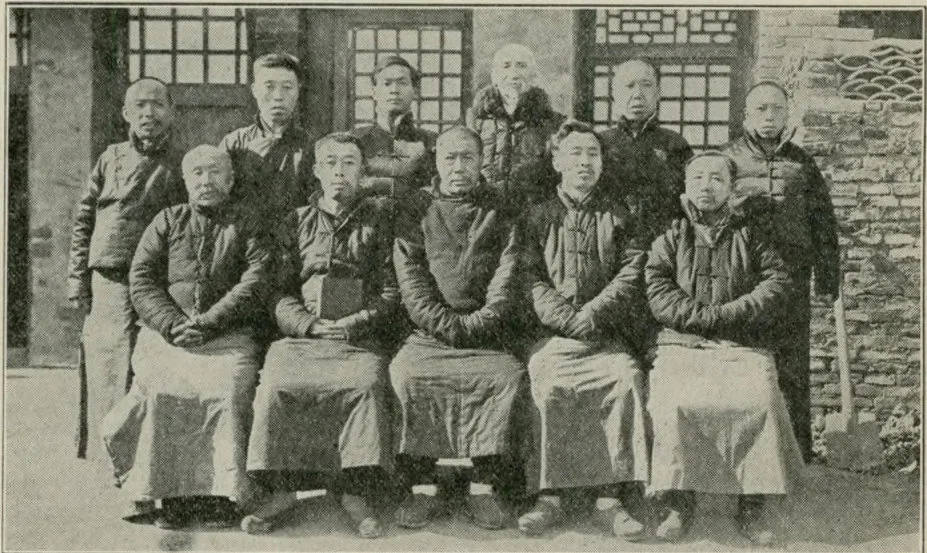
We were met at the Mukden station by Brethren Bernhard Petersen and J. G. Gjording, and taken to the mission compound, where we met Sisters Petersen and Gjording, and also Brother and Sister O. J. Grundset from the Chang-chun outstation, halfway between Mukden and Harbin. These three couples constitute our force of foreign workers in Manchuria at present. With them are associated six native evangelists, four colporteurs, one Bible woman, and one church school teacher.
It was in October, 1914, that Brethren Petersen and Grundset, with their wives, settled in Manchuria, after having spent a year in language study at Shanghai. The third couple, Brother and Sister Gjording, joined them in November, 1915. These workers entered Manchuria not a day too soon. The field was ripe. Manchuria was entering upon an era of marvelous commercial development. Hundreds of thousands of sturdy colonists were pressing into this rich northern dependency of China, with its vast unoccupied plains capable of yielding two and three crops a year. These immigrants have broken away from the associations of former years, and are more susceptible to the influences of the gospel than are those whose conservatism has kept them in the homes of their ancestors. In some respects, Manchuria is to China what Argentina is to Latin America, what the Northwest is to the United States, and Canada to the British Empire. The population is said to be upwards of twenty million. Mukden, the largest city in the dependency, has a population of nearly three hundred thousand. Out in the country districts the people live in villages, and during the day they go out into the surrounding fields and cultivate the broad tracts available for agricultural purposes. If we can establish good churches among these farmers, the church members should be able to render substantial financial help to the cause.
NATIVE WORKERS IN THE MANCHURIAN MISSION
Very encouraging progress has been made in the development of our work in Manchuria since my first visit to this mission, in March, 1915. Then we had only two couples stationed in this field; now we have three. At that time, public meetings were held in a hired hall. We had no mission property in our own name. Our workers were living in unsuitable rented quarters, which were damp, moldy, and altogether insanitary, endangering health and even life. On account of the water-holes and deep mud in the streets around the semiforeign Chinese compound where our Mukden missionaries lived two years ago, the vehicle that took us from the station to their place had to stop three or four blocks from the house, leaving us to pick our way the best we could through the mud. At that time we saw delivery carts sunk in the mudholes up to the axles in different streets around their rented compound. All this made it difficult for people to attend the meetings, even in daylight, and almost impossible to do so at night.
How different our situation today! In a very favorable location, near the legations of the various nations having consuls general at Mukden, and almost midway between the ancient walled portion of Mukden and the modern Japanese section, our brethren have secured an excellent tract of land on one of the great provincial highways, the Hsin Min Fu Road. Here they have established a center from which work can be carried forward to excellent advantage. Around a portion of the five-acre tract they have built a substantial seven-foot brick wall, with a frontage of one hundred and ninety-five feet, and running back about one hundred and fifty feet toward the rear of the lot. Within this secluded compound they have erected two good, substantial brick bungalows.
The outside measurements of these bungalows, which are identical in design, are 29½ x 45½ feet. On the main floor there are six rooms, including two bedrooms and an office or study, besides a small bathroom. At the rear of the house, and forming a portion of the back wall of the compound, are two small brick buildings, each 12 x 25 feet in size, for laundry, storage of fuel, etc.
The walls of the bungalows are solid brick and lime mortar, fifteen inches thick. Storm-doors and -windows have been provided. The thick walls, the extra doors and windows, and the insulated roof insure warmth in winter and coolness in summer,—very desirable features in this far northern land, where the winters are long and severe, and some months of the summer extremely hot, and where terrible dust storms are not infrequent.
The total cost of these homes for our Mukden missionaries, including brick outbuildings at the rear, is about fifteen hundred dollars each. We rejoice in the kind providence that has preserved the health and strength of our workers until we could provide suitable homes for them, apart from the noise and filth and the deadly diseases of the crowded quarters where the Orientals live, and yet within a few minutes' walk of the heart of the city.
Our workers can now continue their self-sacrificing labors with renewed courage, knowing that their families have sanitary surroundings and the ordinary comforts that make life in a mission field nearly as safe as in more favored lands. The comparatively small investment in these mission homes will be returned to the Mission Board a hundredfold in the preservation of the health and strength of our fellow workers in these difficult fields, and in their increased efficiency in their labors for the lost.
During the fall of 1916 a piece of property inside the small north gate of the walled city of Mukden, was purchased for use as a mission chapel and as general headquarters for our native workers stationed in this center. The lot has a frontage of one hundred and nineteen feet on one of the best and most frequently used streets of the inner city. The lot extends back about sixty feet to a good alley. This property has cost the mission a little more than $2,100. It gives us a serviceable chapel, besides a few old Chinese buildings. There is ample space for the erection of a larger chapel when one becomes necessary later on. There is also room for a medical dispensary and a church school.
Meetings are held every evening in this chapel, and already our work in the city is becoming known among the natives as one that has in it the elements of permanence. The purchase of this mission property in Mukden has placed us decidedly on vantage ground.
The present membership of the Mukden church is thirty-six. This includes our foreign workers, and all other baptized believers in the Manchurian Mission, although if we were to count those whom we hope soon to see identified fully with us, and who even now attend all our meetings faithfully and keep the Sabbath, we could report about fifty believers.
Our general meeting was held in the city chapel at Mukden. All our foreign workers were present, and also our native workers. We had good meetings. While the work in Manchuria is just beginning, we are encouraged to hope for great things within a very short time. The field is a most promising one, and already workers are being developed. Two years ago we had only ten believers in all. Three of these were doing a little colporteur work, two of whom have since developed into evangelists. At the time of my former visit, the faces of these workers still bore decided traces of the debasing influences of heathenism; today I find these same men wholly different.
It is amazing to me, as I go about from one mission field to another, to see the wonderful transformations that have taken place in the countenances of those who have been rescued from the depths of heathenism and caused to know this glorious message, which is preparing the way for the advent of our Saviour. No one can witness these changes that are taking place, even in the countenances of the believers, and doubt that the gospel has in it creative and transforming power. Lines of strength, of firm purpose and noble resolve, take the place of lines of weakness and sin. Thus the glory of God is being revealed in life and character.
During the meeting, plans were laid for enlarging our work in the Manchurian Mission by opening new mission stations as soon as possible in various important centers.
Manchuria is divided into three provinces; namely, Feng-tien, Kirin, and Heilung-chiang. Feng-tien Province embraces the southern and west-central portion, with Mukden as the natural center; and this is the one we occupied first of all. Kirin Province embraces the east-central portion, with the cities of Chang-chun and Kirin and Harbin as natural centers. When our workers had become well established in Mukden, they divided their small forces, because of their eager desire to occupy new territory. Brother and Sister Grundset moved on to Chang-chun, the northern terminus of the South Manchuria Railway, one hundred and eighty-six miles north of Mukden and about two hundred miles south of Harbin, with which latter city it is connected by a railway. Heilung-chiang Province is as yet unentered.
The establishment of our new outstation in Kirin Province required no little self-sacrifice on the part of Brother and Sister Grundset, as that mission was opened just as the new bungalows were getting under way at headquarters. For nearly two years they had occupied Chinese houses, and then, just as we were about to provide the comforts of clean and inviting homes, they with their young child turned their faces northward, and rented a Chinese house in Chang-chun, where they are endeavoring to form a new center of light and blessing. Of course this family must be provided very soon with a mission home, as otherwise they may not be able to keep their present good health and strength. And if with the cottage home we could give them another foreign family to unite with them in labor, it would greatly cheer their hearts.
Some of our native evangelists are conducting chapel services in rented quarters in important towns. Aside from our missions in Mukden and Chang-chun, there are chapels at Liao-yang, forty miles south of Mukden; at Tie-ling, about forty miles north; at Tung-giang-kou, west of Mukden and inland from the railway; and at Kwang-Cheng, about forty miles south of Harbin. These chapels are each manned and operated at a total cost to the mission of about two hundred dollars annually.
One of the most interesting and far-reaching lines of work carried on in Manchuria at the present time, is the placing of our monthly magazine, the Chinese Signs of the Times, in the homes of the people regularly through annual subscriptions. Last summer four colporteurs traveled up and down the highways and byways of the southern and central provinces, and secured a little more than three thousand subscriptions for our Chinese monthly. These papers are even now penetrating into regions we may never be able to reach by means of the living preacher. The work was done on a self-supporting basis, the only cost to the mission being the car fare of the colporteurs to their fields of labor. It is planned this coming spring and summer greatly to extend the circulation of our Chinese paper in Manchuria. This will mean much to our work in this great unentered territory, covering three hundred thousand square miles.
The outlook for our Manchurian Mission is very bright. The encouragements met with early in our work in this field are strong incentives to our faithful fellow laborers to persevere with strong faith and earnest prayer, knowing that the Lord of the harvest is preparing the way before them, and that in his own time and way he will give them abundant success.