By Prof. Lucas D. Reed
XI. A Revival of Building
For a few months the work upon the temple ceased, in obedience to the command of the Pseudo-Smerdis, the Artaxerxes of Ezra 4; the children of Israel were required to abstain from labor upon the house of God.
“Now when the copy of king Artaxerxes’ letter was read before Rehum, and Shimshai the scribe, and their companions, they went up in haste to Jerusalem unto the Jews, and made them to cease by force and power. Then ceased the work of the house of God which is at Jerusalem. So it ceased unto the second year of the reign of Darius king of Persia.” Ezra 4: 23, 24.
As the period in which Pseudo-Smerdis reigned was counted into the dynasty of Darius, we see that the second year of Darius’s reign would mean only a few months, possibly nine at the most.
When Pseudo-Smerdis was slain and Darius Hystaspes assumed the government, God’s people should have had enough faith to at once begin the work. They had been stopped from their labor by Pseudo-Smerdis; and when he was removed, they should have felt that the only obstacle was out of their way, and taken again with energy and faith to the work of building. This, however, they did not do.
And so God sent them word through the prophet Haggai:
“In the second year of Darius the king, in the sixth month, in the first day of the month, came the word of the Lord by Haggai the prophet unto Zerubbabel the son of Shealtiel, governor of Judah, and to Joshua the son of Josedech, the high priest, saying, Thus speaketh the Lord of Hosts, saying, This people say, The time is not come, the time that the Lord’s house should be built. Then came the word of the Lord by Haggai the prophet, saying, IS IT time for you, O ye, to dwell in your ceiled houses, and this house lie waste? Now therefore thus saith the Lord of Hosts: Consider your ways.” Hag. 1: 1-5.
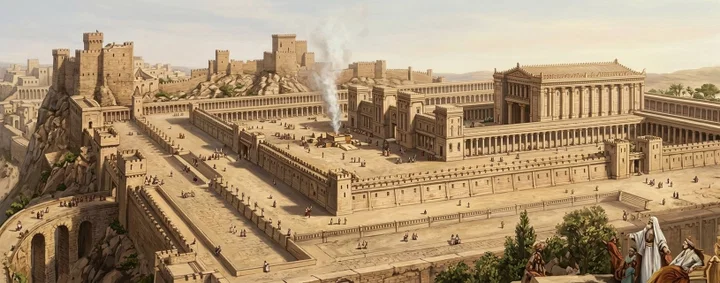
It is evident from this scripture that some of God’s people were saying that the time had not come to build the house. Altho the seventy years had ended, and the Lord had plainly instructed them to return to Jerusalem, and had clearly outlined their work in restoring and rebuilding, the first serious disturbance of their work by an impostor and a usurper of the throne, gives them an excuse to relinquish the work. They leave God’s house unfinished, and make themselves comfortable in their own homes. But God points out to them that this is inconsistent.
He asks them to consider their ways. He calls attention to the fact that they have been seeking to produce harvests, to earn wages, to clothe themselves, in short that they were struggling in vain for prosperity and things material. Now the Lord explains why they failed in this:
Saving to Lose
“Ye have sown much, and bring in little; ye eat, but ye have not enough; ye drink, but ye are not filled with drink; ye clothe you, but there is none warm; and he that earneth wages earneth wages to put it into a bag with holes. . . . Ye looked for much, and, lo, it came to little; and when ye brought it home, I did blow upon it. Why? saith the Lord of Hosts. Because of Mine house that is waste, and ye run every man unto his own house. Therefore the heaven over you is stayed from dew, and the earth is stayed from her fruit. And I called for a drought upon the land, and upon the mountains, and upon the corn, and upon the new wine, and upon the oil, and upon that which the ground bringeth forth, and upon men, and upon cattle, and upon all the labor of the hands.” Hag. 1: 6, 9-11.
All this loss, all this lack of prosperity, was due to their lack of faith, to their failure to obey. Now the Lord asks for a new order of things:
“Go up to the mountain, and bring wood, and build the house; and I will take pleasure in it, and I will be glorified, saith the Lord.” Hag. 1: 8.
But altho God’s people had made a mistake, it is good to know that they now took hold by faith of the work which they were neglecting:
“Then Zerubbabel the son of Shealtiel, and Joshua the son of Josedech, the high priest, with all the remnant of the people, obeyed the voice of the Lord their God, and the words of Haggai the prophet, as the Lord their God had sent him, and the people did fear before the Lord. . . . And the Lord stirred up the spirit of Zerubbabel the son of Shealtiel, governor of Judah, and the spirit of Joshua the son of Josedech, the high priest, and the spirit of all the remnant of the people; and they came and did work in the house of the Lord of Hosts, their God.” Hag. 1: 12, 14.
Giving to Gain
The work began again. The Lord sent a comforting message through His prophet, assuring the people that He was with them:
“Then spake Haggai the Lord’s messenger in the Lord’s message unto the people, saying, I AM with you, saith the Lord.” Hag. 1: 13.
The first word through the prophet Haggai came from the Lord “in the second year of Darius the king, in the sixth month, in the first day of the month.” Hag. 1: 1. Only a very short period of time intervened between this instruction from God and the beginning of the rebuilding again of the temple; only a trifle over three weeks. According to one chronology the first word came from the Lord on the Sabbath. Three weeks intervened, and on the following Wednesday the work was again taken up.
The year mentioned is the second year of Darius’s reign, which would be B.C. 520; but the month mentioned is not that of the Persian year, but of the Hebrew year.
Nearly a month later the Lord sent further instruction to His people. It is evident that they were not as courageous as they might have been; that they were not taking hold of the work with the vigor that should have animated them. There were present engaged in the work those who had seen something of the splendor of Solomon’s temple, and knew how grandly that work had proceeded, and who contrasted the humble beginning now with that glorious building then. The Lord takes hold of this discouraging situation and calls their attention to this matter, which doubtless was upon their minds:
“Who is left among you that saw this house in her first glory? and how do ye see it now? IS IT not in your eyes in comparison of it as nothing?” Hag. 2: 3.
The Lord admits that in the comparison the present work suffers seriously. When this is compared with that, this seems as nothing. But they are not to be discouraged:
“Yet now be strong, O Zerubbabel, saith the Lord; and be strong, O Joshua, son of Josedech, the high priest; and be strong, all ye people of the land, saith the Lord, and work: for I AM with you, saith the Lord of Hosts.” Hag. 2: 4.
While God’s people were in prosperity in the reign of Solomon, and altho they were able to do a grand and noble piece of work in erecting that temple, the Lord gives them another event in their history from which they can extract courage and hope:
“ACCORDING TO the word that I covenanted with you when ye came out of Egypt, so My Spirit remaineth among you: fear ye not.” Hag. 2: 5.
In this statement He reminds them of their weakness and littleness when they came forth from Egypt.p. 6 From this small beginning the Lord had brought them up to the glorious times represented by the reigns of David and Solomon. From this they were to gather the lesson that tho the work was beginning in humility and in littleness, if they were faithful and true it should go on until it reached that point of glory, prosperity, and influence that God designed.