Upon the first visit of the “Pitcairn” to these islands, an interest was aroused in the truth, and from that a few accepted the views held by Seventh-day Adventists. Gradually, others have learned of these things, and have cast in their lot with our people, until now we have about one hundred Sabbath-keepers in this group, including men, women, and children. More than half this number are children and young people, and it is of these that we wish to speak particularly at this time. It is from among them that we hope for our best workers in the future.
The older a person is, the harder it is for him to change his manner of living. He gets set in his habits, and since he has usually been educated in that way by the example of his parents and grandparents, he is apt to feel that his way is good enough, and perhaps the best. It is very much that way with the Tahitians. They have many customs and habits which are detrimental to spiritual progress as well as injurious physically. But because of their limited knowledge, it is very hard to root erroneous ideas from their minds.
Now those who have the responsibility of being teachers or leaders of the people, should be such as understand what is right, and uphold only that which is good, discountenancing everything which is evil. But before they can uphold the right, they must know what it is, and why it is right, or the principles of it. The people do not generally believe all that is told them by others, but when they have learned the principle underlying the right course, it is much easier for them to believe and obey. Therefore, if we would have these youth grow up to be intelligent and consecrated Christians and workers for the Master, we must educate them. If they receive their education from their parents, they will remain just as low as they; for the fountain can rise no higher than its source.
What we need here is a boarding-school for our youth, where they can be taken away from their homes, and be influenced as little as possible by their parents. It is our desire to have a sort of industrial school, combining physical with mental labor, so the students can help pay their own expenses in the school, and also learn to be industrious and useful. In such a school our children would have an opportunity to develop their faculties, and learn to make the best possible use of their lives.
Both the Protestant and Catholic denominations recognize the school as being a very important factor in their mission work, and both furnish free schools which are well attended. These schools are, indeed, a great help to their work. We also need such a school for our own children. The influence in these other schools is not favorable to the truth, and besides, the weekly holiday of most of the schools is on Thursday, and school is in session on the Sabbath. This gives only four school-days a week to the children of Sabbath-keepers.
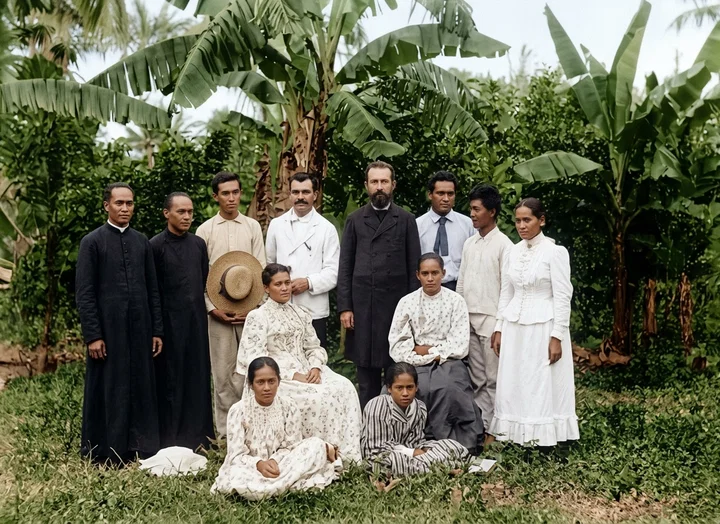
We find that the native children are as bright and quick to learn as any other children. We have had two with us for over a year now, and the rapid progress they have made has been very encouraging. We now have seven with us, whom we are trying to train. We do this work without remuneration from the parents, as they are too poor to pay us, with the exception of one girl from Raiatea, whose father is a Dane. We formerly taught two of his children while at Raiatea, and he gives us donations from time to time, as he feels able. Brother Green teaches the boys the printers’ trade and also reading, etc., and the two youngest girls attend the French Protestant school in Papeete. One of them reads English well now, and we thought it time for them to begin to learn the French language, which is the principal language of this group. Mrs. Cady teaches the other two girls, and teaches music to five of the children. We also give them two Bible lessons a week, and one in physiology. We hope that this is only a beginning, and that we can soon have a school which will take in all those children who might be benefited.
The Lord has gone before us and raised up French teachers for our school, and now we need a home for fifty or more, with a good family to take charge of it. We cannot get this without means, and we must have money to pay the teachers and support the school. We feel that this is our greatest need here now; for without training, most of these children will be lost, but with proper care they can be made a blessing to the cause.
The Lord has surely blessed the seed which has been sown here in the past, and we feel of good courage to go on with our work, knowing that we are not dependent on our own strength, but that God is our helper, and he will carry on the work until it is finished.
November 12. B. J. CADY.
[The above is a picture of the missionary family on Tahiti. Brother Cady and wife occupy the middle of the group, with Brother Joseph Green and wife at their right. The others we do not recognize.—ED.]