One of the significant signs of the times is the lively interest now everywhere being manifested in foreign missionary work. To promote this spirit, especially among the students of colleges and universities, there was organized, some ten years ago, the “Student Volunteer Movement for Foreign Missions.” It was started in a humble way; but it has grown until to-day it is recognized as a very important and influential factor in the missionary life of the church.
February 23–27, at Cleveland, Ohio, this organization held its third convention; and a notable gathering it was. There were present 2,214 delegates that registered, representing 61 theological seminaries, 47 medical schools, 19 missionary training-schools, 331 colleges and universities, and 71 different foreign mission boards. They came from the East, the West, the North, the South, from the Orient, Europe, and Africa, and from the islands of the sea; indeed, the convention was an international one in the fullest sense of the word.
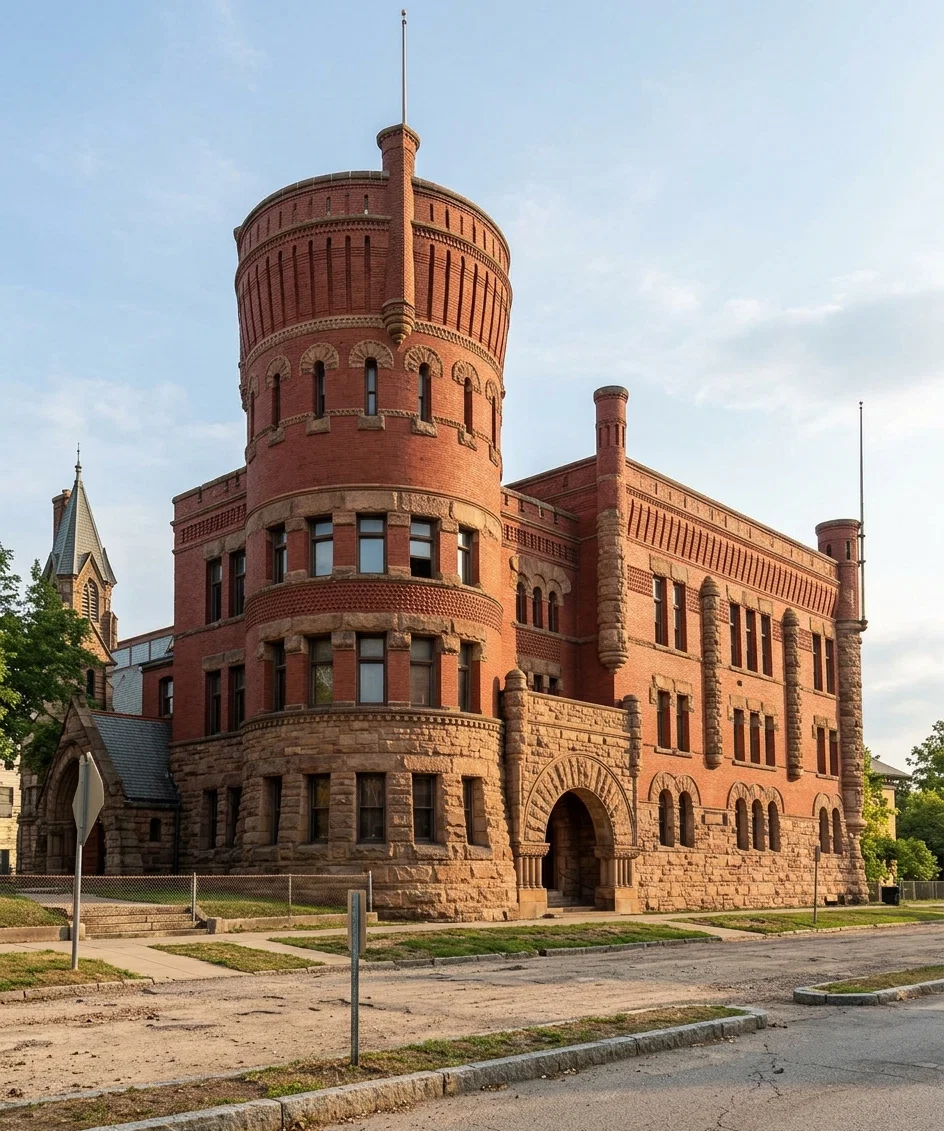
The meeting was held at Gray’s Armory, which can seat about three thousand persons; but it was the serious regret of all that its capacity was wholly inadequate to accommodate those who desired to attend, and hundreds were turned away from every session.
Hung about the walls in festoons were the flags of many nations, with impressive and appropriate mottoes. Over the platform was an immense map of the world, indicating the prevailing religions, and the words, in large letters, “Thy Kingdom Come.” Then on one side of the gallery, extending the entire length of the room, were these words, “The Evangelization of the World in this Generation;” while on the opposite side were the words, “Thy People Shall Be Willing in the Day of Thy Power.”
The large majority of those present were young people; the chairman, John R. Mott, looked to be less than twenty-five years of age. The sight of such a gathering was most inspiring, and the enthusiasm manifested was unbounded and irresistible.
The time of the opening session was occupied by Rev. F. B. Meyer, of England, a man famed as a leader of devotional services. This meeting was charming for its simplicity, and so wonderfully impressive that at times a whisper could be heard anywhere. It seemed, as he stood there and pleaded with those present for a Spirit-filled life, that the very hearts of the audience were bare before God. “Be ye clean, that bear the vessels of the Lord,” was the text on which his remarks were based. Then from his own knowledge he told the people what the fulness of Christ really is, and how absolutely essential it is to the successful missionary. Many remarked that that one meeting was worth going across the continent to attend.
There were three sessions daily in the Armory,—morning, afternoon, and evening. In the afternoon, in addition to the regular session, overflow meetings were held in many of the neighboring churches.
Every phase of the question of missionary work was fully discussed, and many interesting and valuable suggestions were brought out.
This Student Volunteer Movement has been severely criticized by some, and one session was devoted to setting it right before the public. At this meeting Mr. Robert E. Speer was the principal speaker. This, in connection with the report of the executive committee, threw much light on the subject. Epitomized, the thoughts developed were as follows:—
The fourfold purpose of this organization is, (1) to awaken and maintain among all Christian students of the United States and Canada, intelligent and active interest in foreign missions; (2) to enroll a sufficient number of properly qualified student volunteers to meet the successive demands of the various missionary boards of North America; (3) to help all such intending missionaries to prepare for their life-work, and to enlist their co-operation in developing the missionary life of the home churches; (4) to lay an equal burden of responsibility on all students who are to remain as ministers and lay workers at home, that they may actively promote the missionary enterprise by their intelligent advocacy, by their gifts, and by their prayers.
The Volunteer Movement is in no sense a missionary board. It never has sent out a missionary, and never will. It is simply a recruiting agency. It does not usurp, nor encroach upon, the functions of any other missionary organization. It is unswervingly loyal to the church; it is the servant of all the foreign missionary societies, and has received the endorsement of every leading board on this continent.
Dr. J. C. R. Ewing, president of Forman College, Lahore, India, spoke on the preparation necessary—intellectual and spiritual—for the volunteer missionary, which, he said, was consecration, intelligence, and tact. “We cannot afford,” he declared, “to export doubt to foreign countries—they have enough of that.”
On Sabbath afternoon something like thirty separate services were held in the various churches, most of them denominational, to consider their relation to this movement. Our own people also held a service, in their chapel,175which was well attended. Stirring addresses were made by Professors Sutherland and Magan, Doctors Winegar and Paulson, Elder J. W. Collie, and others. It was clearly brought out that to us this movement means much; it has its lessons in enthusiasm, faith, consecration, devotion. It is not our duty to hold ourselves aloof from it, but rather to mingle with its members, giving them what we have that they have not, so that, as they go forth in their labors of love and self-sacrifice, it may be with a knowledge of the light of truth for this time; for “knowledge is the key that unlocks heaven.” The way to the great heart of humanity is by the throne of God, and is found through the agency of prayer. We are all missionaries, either for good or evil, and our message to the world is not particularly the evangelization of the world in this generation, but rather, Jesus is soon coming! Get ready, get ready, get ready!
Mr. Mott gave a very interesting discourse on the “Morning Watch,”—the habit of taking a little time each morning for secret communion with God. “It is then,” he said, “that the soul is in its most receptive state.” One noted missionary, when asked why the church accomplishes so little, replied, “Because her members do not spend the first hour of the day with God.” Many say they do not have the time to do this. We take time to eat to sustain our physical body; why not take time to drink in that which keeps our spiritual life in a healthy condition? All this can be done, and that easily, if once there is a plan for it. Form an inflexible resolution that there shall be no exceptions. Habits are formed when no exceptions are suffered, and this is pre-eminently true of good habits. Are we willing to pay what it costs to form a habit of communing with God first of all in the morning? If we are, and if our resolution is carried out in the right spirit, without formality, a steady, healthy growth in spiritual life will be the result.
An interesting feature of the convention was the plans laid that every one might, as he returned to his home, carry with him the spirit of the convention.
Special attention was given to the medical missionary work, and the Medical Missionary and Benevolent Association had several representatives present. One of the leading speakers said of the medical missionaries: “They have more opportunities for doing good, and wield a greater influence among the people, twice over, than others without a knowledge of medicine.” And again: “No matter what we do, our efforts will be futile unless we minister with Spirit-filled lives to lives that are empty.”
Yet in the discussion of the subject, it was plain to be seen that they are without the light and truth on healthful living which Seventh-day Adventists possess, and which they would gladly accept if brought to their notice. Every day brings fresh evidence that the world appreciates more highly the principles of healthful living than do many to whom they have been given by the Lord himself.
One whole session was devoted to educational work, under the direction of Professor Ross Stevenson, of the McCormick Theological Seminary, Chicago. “Spiritual growth depends much on right conceptions of spiritual things; and the educational work of the missionary, if it is effective in nothing else, corrects the intellectual mistakes of the non-Christian world.” Battle Creek and Union colleges had representatives at this meeting. Rev. Mr. Lawson, a returned missionary from India, said: “Educational work is the only means of getting a hold on the high-caste people of India.”
One evening after a short talk by one of the speakers on the privilege of giving, the needs of the movement were presented, and a call was made for means to carry it forward. In almost less time than it takes to relate it in detail, over $30,000 was pledged. And when it is remembered that nine tenths of those present were students in school, some idea can be formed of the spirit of sacrifice that possessed them. None gave very large amounts, but all gave something. The thought came to me: If these young people, the very flower of consecrated youth in the colleges of our land, could only know the solemn, searching, testing truth for this time, how much greater would be their enthusiasm! Surely an army like this could evangelize the world in this generation . These young people, with only faint glimpses of the truth as it is in Jesus for this generation, are entering upon a mighty work with faith that it can be accomplished;—what ought not the children of the light to do?
Restored with AI
THE CONVENTION BUILDING.
On the last evening, after some most impressive and stirring speeches, a call was made for those among the audience who expected during the coming year to go to foreign fields. They were asked to rise to their feet, name their field, and in a sentence to tell why they were going. About seventy arose. Over a third of them were going to China, many to India, others to Japan, South America, Africa, Mexico, etc. One was going to China “to nurse the sick for Jesus’ sake;” another to South America “to hasten the coming of the King;” another to India “because there may be some who would never enter the kingdom of God unless I go to tell them of Jesus.” A lady had given her life to mission work in Mexico, that her sisters there might know of the love of Jesus; and one man had decided to go to Bolivia, because, so far as he could learn, there is but one saved man in that whole country.
There were other interesting features that the space allotted to this report will not permit me to enumerate. Suffice it to say that no one could attend it without coming away feeling that God is in a wonderful manner reaching out and influencing the hearts of the young to devote their lives to missionary work. And it was noticeable that about all the life and enthusiasm manifested came from the young in years; the old men, those who had grown gray in the service of the Master, sat by as counselors, while to the hands of the younger men and women seemed to be committed the task of pressing the battle to the very gates.