After accepting the invitation of the managers of the Keene Industrial Academy to connect with their work as instructor in the Bible, I naturally wanted to know how things look at Keene. There may be others interested in the problem of industrial education which is being wrought out here, who would also like to know; so I will try to describe the situation.
Stepping from the train at Cleburne, I found a clean, live, modern city of four thousand inhabitants. The town is lighted with electricity, furnished with an ice plant, and provided with a good school system. I counted one hundred and fifty teams about the court-house square. A drive of six miles, most of the way through an oak forest, brought us to Keene. I was not expecting to reach the place so soon, and was taken by surprise when, upon turning a corner, the driver called attention to the school buildings. They were much larger than I expected, and, standing out of the forest upon the highest elevation in all the country, they present quite an imposing appearance.
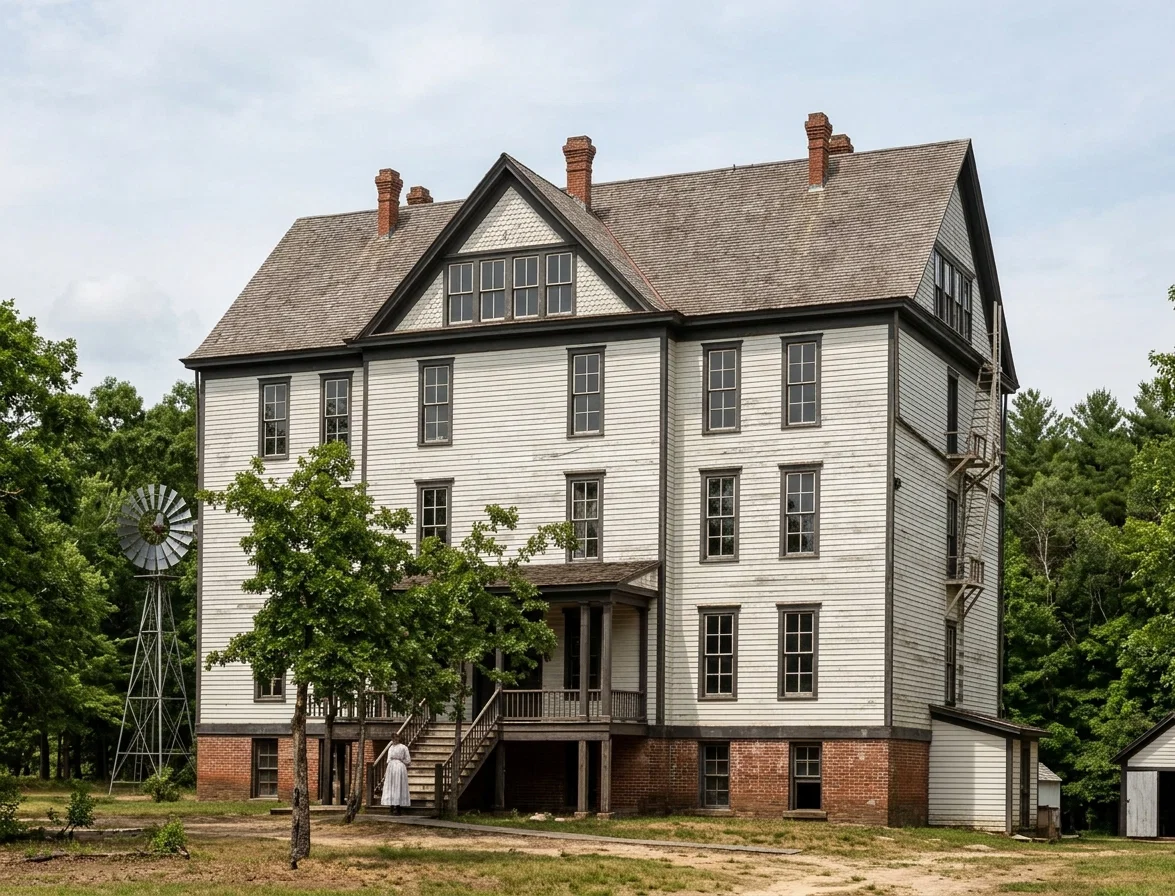
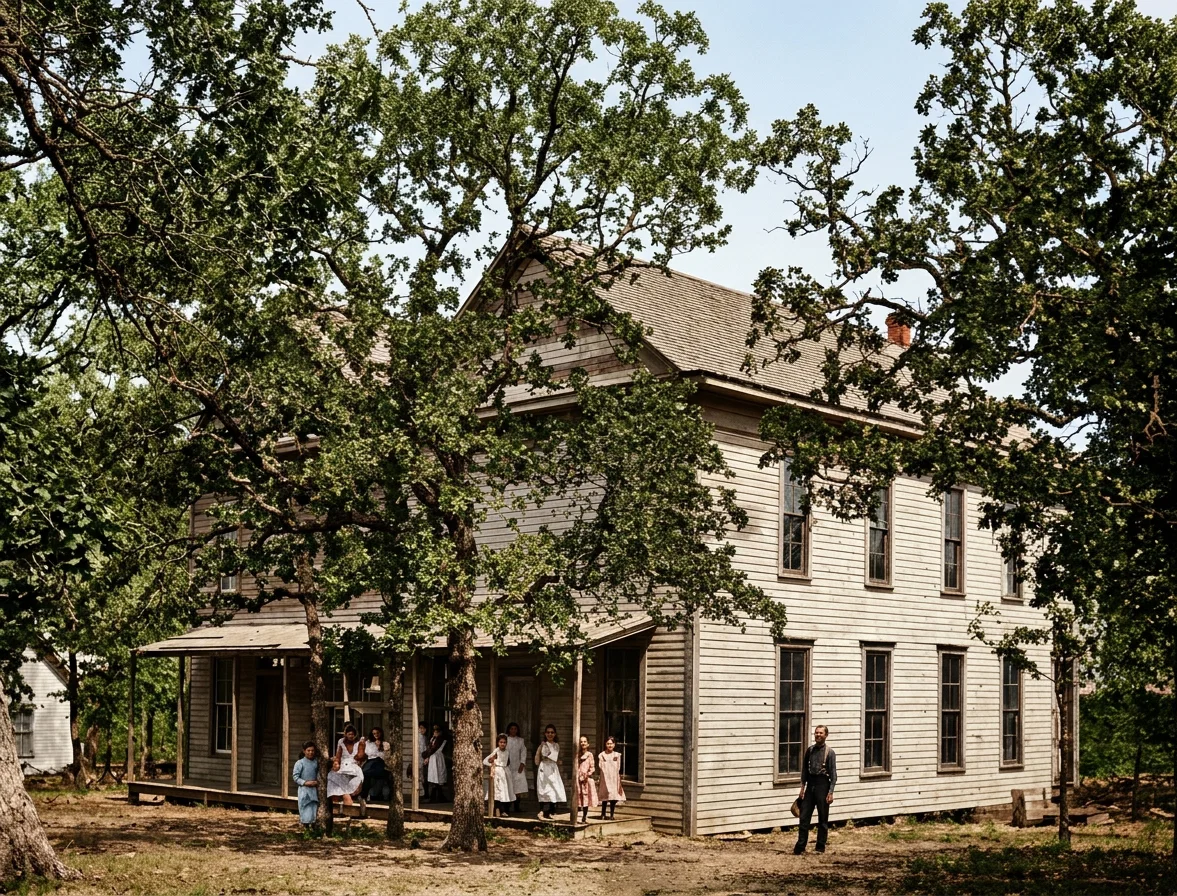
Perhaps I may as well anticipate information obtained later, and describe these buildings as we approach them. Academy Hall, which is not yet completed, but which has been used for recitations during the past term, is fifty by seventy-eight feet, and has three stories, an attic, and a basement. The first floor contains four large, airy recitation-rooms; the second floor has a library, an office, and hat-rooms, and a chapel capable of seating two hundred and fifty students. The third floor contains five recitation-rooms. The basement and attic will probably be used eventually by the industrial department. The home is thirty-two by sixty-four feet, and consists of three stories, a basement and an attic. It has accommodations for rooming and boarding sixty persons, and is well equipped for its purpose. Assembly Hall is forty-four by forty-seven feet. The first floor is devoted entirely to an assembly-room for the various meetings of the church and the academy, while the second floor is divided into three schoolrooms, occupied by the preparatory graded school.
The view to be obtained from the upper floors of the school buildings is delightful, the prospect stretching for many miles in every direction over an undulating landscape of oak woods and patches of prairie. In other respects also the location seems to be desirable. The site is high and dry. The soil is sandy, with a clay subsoil, absorbing quickly the rainfall, and securing comparative immunity from malaria. A drilled well seven hundred and fifty feet deep, in which the water rises four hundred feet, furnishes the school with an abundant supply of pure water, said to be as soft as rain-water.
The soil is especially adapted for fruit-culture, plants and trees making an astonishing growth. Peach-trees set out two years ago last spring, bore fruit this year, and are as large as one's arm, and ten feet high. Grapes set out last year are bearing this year. Other products that do well here are cotton, corn, sweet and Irish potatoes, and garden vegetables, for all of which there is a ready market at Cleburne and other surrounding towns. There is also a good market for fruit and vegetables in the “black prairie” country, where the people devote themselves principally to the cultivation of corn and cotton. I should have said that Keene is located in the “cross timber,” an elevated, sandy region, covered with oak woods, extending irregularly from north to south across the State, and dividing the “black prairie” region.
These conditions are favorable to the success of one of the foundation principles of the school; namely, the furnishing of daily employment to the student, whereby he may be able to meet part of his expenses. The school owns one hundred and forty-five acres of land, with seventy acres more under its control, with the privilege477of purchasing. Of the one hundred and forty-five acres, fifteen acres are cleared and set out to fruit, and ten acres are devoted to the campus. About a thousand fruit-trees have been set out, three hundred plum and apple, and the rest peach. There are also five thousand blackberry canes and seven hundred grape-vines. These will be in full bearing next year. Thirty-five acres of the land controlled by the school are also under cultivation. The rest of the land is covered with oak timber, which will furnish the young men with remunerative employment for a number of years, as there is a ready sale for wood at a fair profit to the school. When one considers the fact that three years ago the site of the campus was a perfect tangle of trees and bushes and vines, the present condition reflects great credit upon the energy and perseverance of those who have had charge of the work.
Restored with AI
ASSEMBLY HALL.
The board of management have just issued their annual calendar, in which are announced four courses of study for the coming year,—preparatory and Christian workers’ courses of two years each, and academic and ministers’ courses of four years each. Those who are interested in a school whose chief object is to train Christian workers upon the industrial plan, are invited to write to the principal, Professor C. B. Hughes, Keene, Tex., for the new calendar, containing a full description of the school and its plans of work and courses of study.