We reiterate our text of last week—the development of the home has ever kept pace with the advancement of civilization and Christian principles. In those lands where domestic ties are weakest, homes are rudest. It is natural for us to adorn and beautify the objects upon which the heart dwells; consequently, where there is no beauty, there is no heart, and a true home is the heart’s dwelling-place.
Starting with the most primitive people, as the Australian natives, or the Ute Indians, whose frail structures scarcely afford any shelter from storm or heat or protection for privacy, we find the lowest ideas of home life. Parental or filial ties are scarcely known beyond the natural instincts of brute beasts. Womanhood is trodden under foot, and motherhood is despised. Ascending the scale, we have the teepees, or wigwams, of the Indians, the huts of the African natives, and similar abodes, which, as they bear more of the characteristics of the home, represent more of domestic life. But here womankind are but bond-servants, performing the drudgery for men, who hunt and fish or follow the war-path, but regard themselves altogether above the menialities of household care. Their movable dwellings are built by the women alone.
Many times we have seen the Indian walking proudly in front, carrying his rifle, and wrapped in his blanket, while his squaw followed behind laden like a donkey with a papoose and the whole camp outfit. This is only a manifestation of brutal selfishness that is entirely natural to human nature. We often see it cropping out very plainly in more civilized communities. A man swaggers about with a cane and a cigar, while his delicate and tender wife is left to tug and struggle with a baby in her arms, and another hanging to her skirts. He is ready to scold if the children cry, or if his wife does not keep up with his pace; but to load himself down with such truck!—never. He acts as though she had no business to have babies. Shame on such poor excuses for men! they are estrays. They belong with the Sioux Indians.
There are many steps to the ladder of civilization; and every one is represented by a home corresponding thereto. In the semi-barbarous tribes we have dwellings that approach more nearly to our ideal. To such belong the adobe homes of the Mexicans and the often elaborately carved dwellings of the Maories of New Zealand. The one shown in the engraving, though true to life, is inferior to many of its class. In the domestic relation of this people we find that the principle stated holds good.
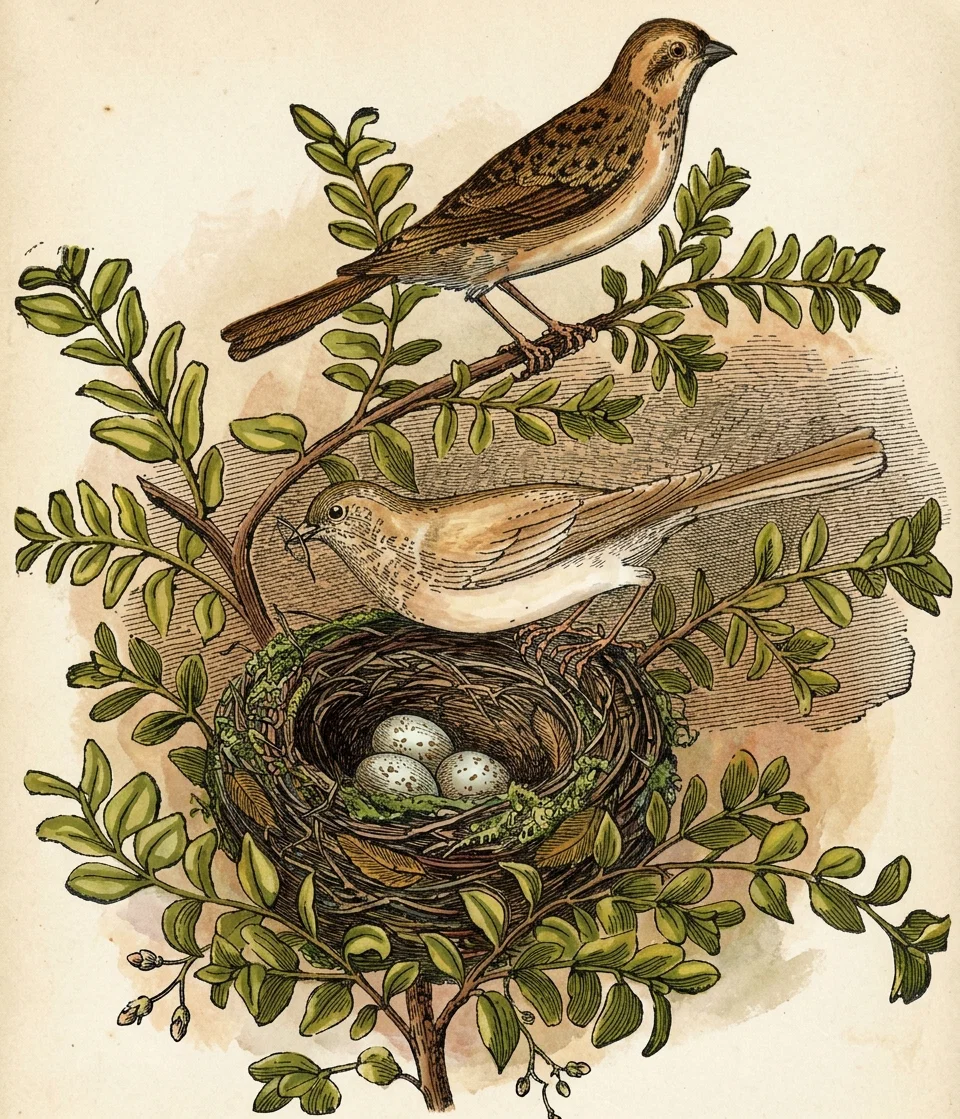
To the construction and equipment of these permanent abodes, both husband and wife contribute. And it is easily perceived that where their interests and labors are combined in establishing the domicile in a permanent locality, a great step is gained in the evolution of a home where family ties may be created and cultivated. We learn this same lesson from the loving companionship of many birds, whose mates consort and toil together for an abode, where in peaceful security the family may be reared. It is the ambition of their little hearts to make them secure, comfortable, and attractive, and we have all witnessed how well they succeed.