There cannot be two opinions as to the wisdom of looking well to the children, if enduring and in every way successful Christian work is to be accomplished. This is as true in India as in America; it is probably more true in that great pagan country than in any Christian land to-day. The illustration of bending the twig need not necessarily be gone over. The illustration does not wholly illustrate all the good to be expected.
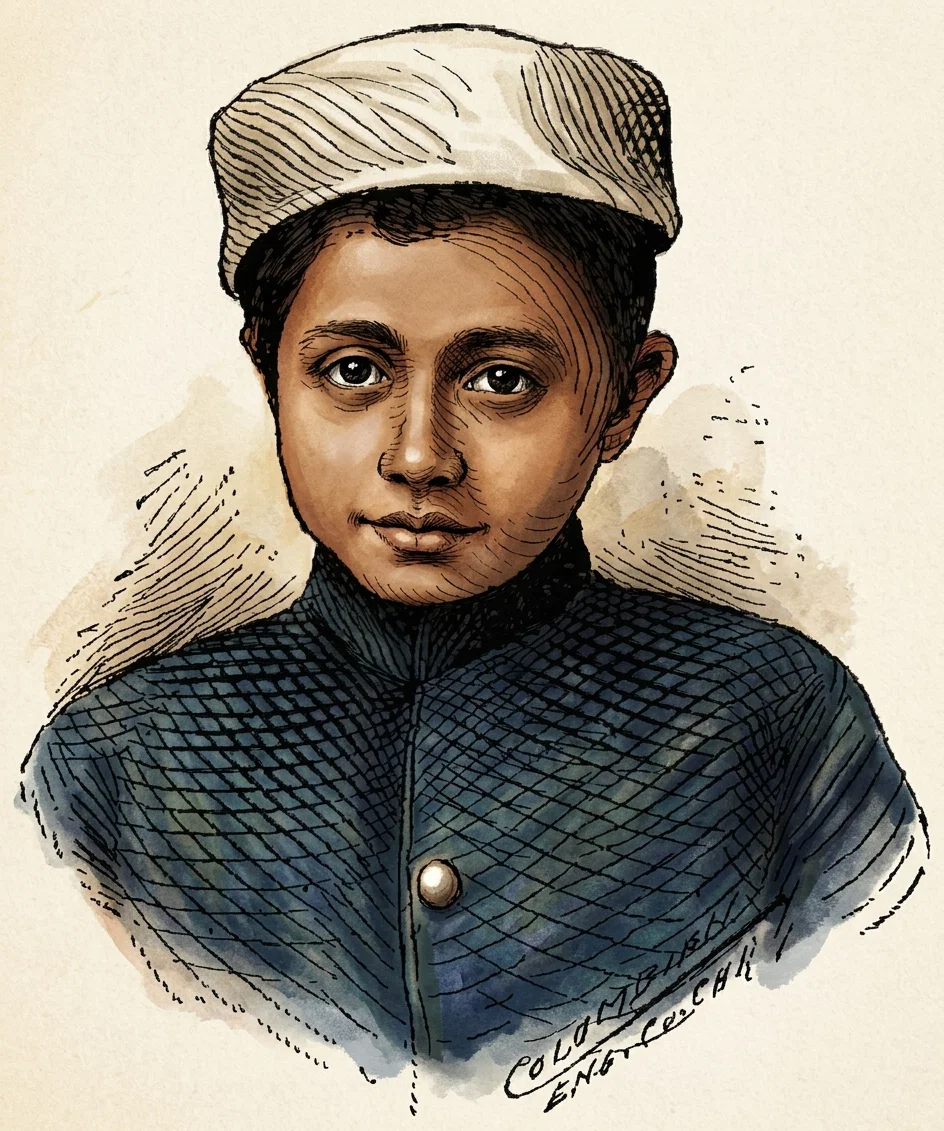
Two great factors present themselves in India: (1) The greatness of the work. The children of the 300,000,000 are to be reached; the influences of an oppressive paganism are to be antagonized. (2) The children are not only to be reached, but the whole of that large community. It is reasonable to suppose that the purer the ideas of children and the more free from idolatrous notions children’s minds can be kept, the more quickly they will develop into strong Christians, other things being equal. It is, therefore, most desirable to have thousands of the boys and girls brought up in touch with Christians, and not in their idolatrous environment; receive an education, and be taught Christian duties at the same time, as they would not be taught these in the homes of their parents only lately discarding their heathen practices. There is not a mission in India but should be able to put thousands of boys and girls in their schools to receive an education as soon as the children are forthcoming. This little boy’s name is David. He, with his two brothers and mother, was found trying to subsist on from three to four cents a day. The mother was approached by a kind Christian sister. They lacked clothes and food. Only one little frugal meal of coarse flour per day did they have. People talk of poverty in America; they do not know any such poverty as is known in India. The cholera took off their mother, but the boys are in school, and will, some day, we trust, become exemplary Christians and good workers.
Besides the boarding-schools, there are also day schools and Sunday-schools; the scholars are often the bearers of the glad news. A tall, fine-looking Englishman stepped into the office of the publishing house at Lucknow one day. He came to give the word of encouragement the plodder at his work likes to hear. He sat down by the publisher, and told him how delighted he had been that morning to notice a group of boys in the business quarter of the city, eagerly listening to a paper being read, which had a picture on it. He found out through an interpreter that the paper was none other than the illustrated Sunday-school paper distributed the day before, and the boy reading it was a Sunday-school scholar, though not a Christian.
The Lucknow publisher was able to tell the visitor a better story than that. He said: “Not very long ago, after the opening exercises of the Sunday-school, I went into the class-room and threw down on the table the picture papers for that Sunday. The boys grabbed for them, but they let go and fell back onto their seats, on remonstrance being made. I thought the sincerity of that eagerness should be tested, so I called the names of half a dozen of the boys who lived nearest to the school, and told them to go and bring their old Sunday-school papers. They shot off as bright boys might be expected to go, and in a few minutes returned, joyously saying, ‘Here is mine!’ ‘Here is mine!’ A glance at the papers showed that they had been carefully preserved for years. What next? The boys had the best of that challenge. Well, I tried them again, with this remark: ‘Yes, boys, you have carefully kept your Sunday-school papers; they are to be read, however, and how many of you can tell me what is in them?’ No sooner had the last word fallen from my lips, than up went a score of hands, and the boys sent up a chorus of, ‘Ask me!’ ‘Ask me!’ ‘So they were asked, and gradually the questions concerned the older papers—some three years old. ‘See this picture, Mátá Pershód?’ ‘Yes,’ was the reply. ‘Then tell me about it,’—and the account was correctly given. Well, that examination amazed me, and the boys had a high time. ‘How is it, boys,’ I at last asked, recovering from my wonderment, ‘that you have remembered so well the contents of these old Sunday-school papers?’ ‘Nothing strange in that,’ said several. ‘It is just this way. We first of all like those papers, and read them; first chance perhaps going home; then father likes to hear them read and mother, too, and as they cannot read, we read the papers to them. Not only so, but our parents think a great deal of our being able to read, and when an uncle or grandfather or cousin or old friend of father’s comes to town, and visits us, we are sure to be asked to read the Sunday-school paper. Why, sir, we have read each one thirty or forty times over!’ That was a revelation, a wonderful revelation.” And the tall visitor from England said he, too, never heard a story illustrating the power of the religious press equal to that. A small Sunday-school paper, prized by the boys themselves, because perhaps they did not get any other paper, read, too, to all of the household, the relatives, and friends, carried by them to other circles and communities! Surely the influence of even a Sunday-school paper may be likened to a great ripple caused by the casting of a huge stone into the water.
True, the tiger, bear, and lion story, with some moral, enlivens the boy’s paper in India. Such stories are abundant, but the story of David, Samuel, Paul and Silas, the martyrs, of the miracles of Jesus Christ, and of Christ himself, have a fascination for the youth in India. The press in India must be made of greater use. The press in America is powerful; the religious press in India has that possible influence in it which should lead to a hundredfold greater effort in its employment than it has. A thousand of such papers can be printed and sent out in India for $1.50.
T. CRAVEN,
Methodist missionary to India.Evanston, Ill.