Next week there will be celebrated in London and throughout the British Empire a notable event, the termination of sixty years’ reign of Queen Victoria. Since the Norman Conquest, in a period covering nearly one half of the Christian era, there has been in the history of that nation but one reign that has approached the length to which the present one has been extended. George III was crowned in 1760, and his reign continued, at least nominally, until 1820, making a period of sixty years, just equal to that attained by Victoria. But in 1810 a mental malady, to which the king was subject, having developed into insanity, his son, George IV, was appointed regent, and held that position until the death of his father, so that the rule of George III really extended over only fifty years, thus constituting that of Victoria the longest in English history.
Victoria.— Victoria Alexandrina was born May 24, 1819. She was the only child of Edward, Duke of Kent (son of George III), and Maria Louisa Victoria, of Saxe-Coburg, sister of the king of Belgium. She came to the throne on the death of her uncle, William IV, the successor of George IV, June 20, 1837, and was crowned the following year.
In 1840 Victoria was married to Albert Francis Augustus Charles Emanuel, Prince of Saxe-Coburg, who was born in the same year as his illustrious wife. They were parents to nine children. Prince Albert always maintained a wise reserve as to political matters, but took a deep interest in the welfare of his adopted people, and became a great help in the affairs of the kingdom, and was beloved by the people. The attachment between the queen and her consort was true and sincere. Since his death in 1861 his memory has been most sacredly cherished by the ever-sorrowing widow, and the nation at large have looked upon his loss as irreparable.
The Reign.— The reign of Queen Victoria has been an unbroken succession of progress. The prodigacy and folly of preceding kings had brought burdens and discouragement upon the English people. In her opposition to the demands of Sir Robert Peel at the outset, the young queen showed that she was possessed of a mind of her own, and she has preserved that impression up to the present time. Among the important events that have marked her rule, we have three attempts at assassination between 1840 and 1843; in 1841 the Prince of Wales was born, and he still waits in vain for the opportunity to sway the British scepter; in 1846 the famous corn laws were repealed; in 1854 began the Crimean war; the sepoys of India mutinied in 1857; the death of Prince Albert took place in 1861; and in 1877 Victoria was proclaimed Empress of India. Many other details might be mentioned, but those of more recent years will suggest themselves to the mind of the readers. During the past sixty years the British Empire has become the grandest and most extensive nation the world has ever seen. British rule now extends over 9,094,301 square miles, to which another two and one-half million of protectorates might be added. Queen Victoria’s rule is recognized by 344,816,000 subjects, and her protectorate covers 36,000,000 million more. One fourth of the world acknowledges Victoria as its gracious queen.
While it is true that the sovereign lady has had the advantage of a high tide of universal progress on which to sail a prosperous voyage, yet it is true that in these bright and resplendent days she has shone among her brilliant associates with no secondary light. As a woman she has not assumed a masculine rôle, nor sought to act a manly part. As a counselor in national affairs her judgment and authority have commanded and retained respect. She has had the aid of eminent statesmen, whose skill and devotion have largely made her queenly career what it has been. But as a woman, as a daughter, wife, and mother, the life and character of the queen have been a model to her people. In this way she has been able to accomplish a work of such a magnitude and of such a salutary character that only the infinite Judge can ever tell its measure.
A Long Reign.— Sixty years of earthly glory and power is a long allowance. But it does not satisfy the longing of the heart. Although but few earthly potentates have enjoyed so liberal a portion of power, even this term of office is brief and unsatisfying. Christians have not the least occasion to look with envy or wistfulness at such a portion; for the poorest and most obscure child of King Jesus has a sure prospect before him of a reign and a glory before which the luster of an earthly kingship fades into nothingness. “To him that overcometh will I grant to sit with me in my throne.” “And they shall reign forever and ever.” That kingdom draws near. Our gracious King now seeks to rule in the hearts of men, that he may perfect them for that glorious state.
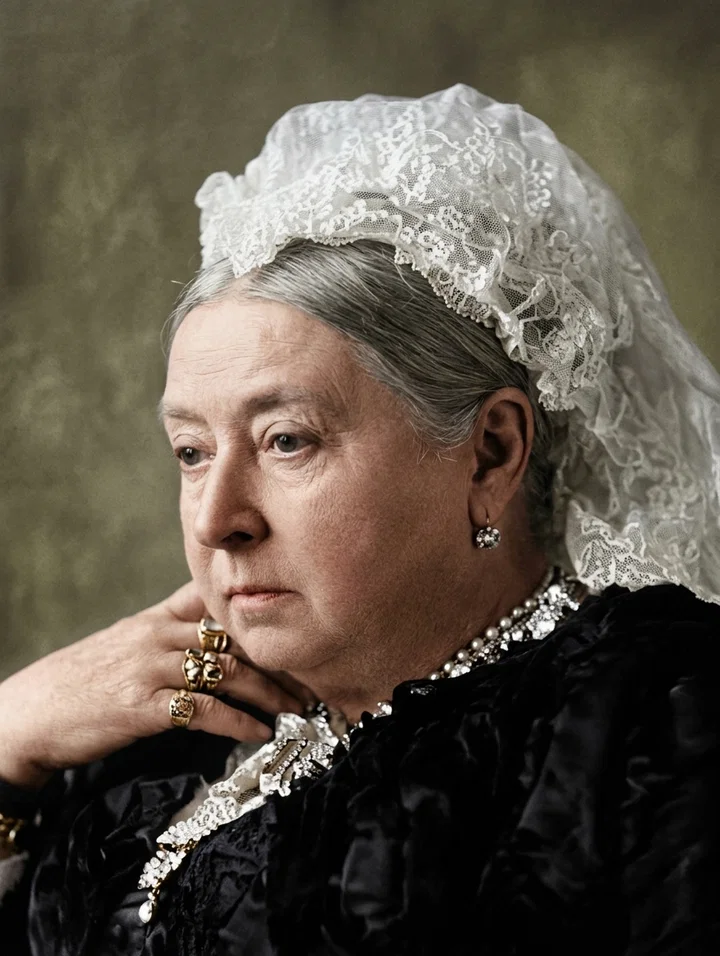
The Celebration.— The preparations for the celebration have been made on a magnificent scale. The representatives of all nations have gathered to pay the respects of the world to the aged sovereign. An elaborate program has been devised. But beyond receiving the representatives of other nations, and a few other functions, the aged queen will reserve her strength, and let others carry on the jollification, which will consist of every kind of display on a magnificent scale.