L. A. REED.
It is interesting to see how the different colors of light correspond to the different graces of God’s character; but we may take natural objects possessing these colors, and find also an interesting similarity. Thus fortitude, the red of the character, is symbolized by the red of the blood, the vital current that flows through the veins to give energy and life. It is also typified by the fire, which melts down opposition, and through a variety of operations imparts energy.
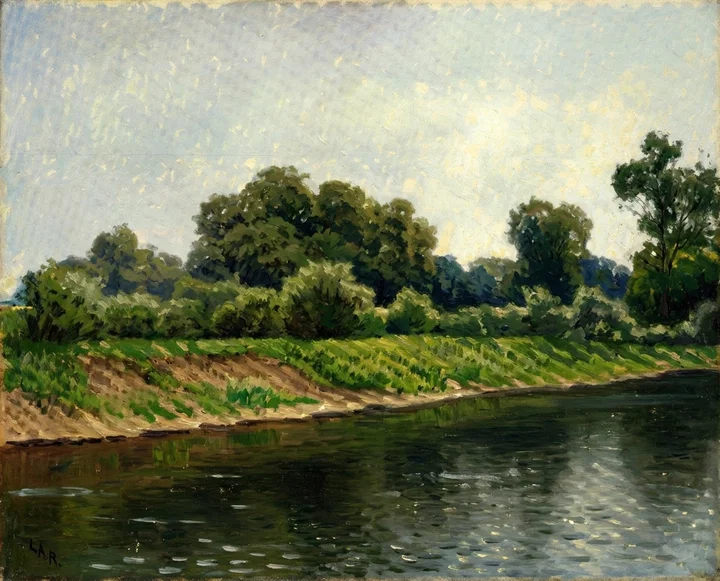
Green, the analogue of patience, is the hue of the grass, “which through summer’s heat and winter’s frost remains unchanged, which may be trampled underfoot and injured in every way, and yet retain its vitality unimpaired.” The world tramples on unheeding, but is nevertheless refreshed by the green of grass and woods; and the crowds that throng our parks in summer, and that flock to the country, attest that its quiet, patient loveliness is thoroughly appreciated.
So patient souls are valued, and their presence is sought, though at times we hardly think why we seek them; and the world is brighter for their being here, and would be most cheerless if they were not. We love patience even “as we do the patch of green grass that struggles for existence on the naked rock,” or the mosses and the lichens that grow on every patch of soil amid the frost and chill of the polar zone. There is no place so dreary but there is some green to cheer it; there can be no place so dark but patience still may thrive.
Godliness, or piety,—the blue of the character, the royal, kingly color, true blue,—is the one most closely associated with God; for it is God-likeness. Blue is the color of the sky,—that sky that embraces the world, and looks down, as God himself looks down, in benevolence upon the just and upon the unjust.
Brotherly kindness, a deeper blue,—the indigo or ultramarine blue of the character,—is typified in the deep hue of the violet,—the modest, retiring flower we all so dearly love. Rare, but treasured, can be said both of the quality and of the flower. This blue is the color of fruit when ripening, and the attribute is possessed by every ripening soul. It is the background of nature,—the color of the hill in the distance when in the strongest light,—and this grace is ever in the soul when God is shining brightest there: it is the highest attainment, next to love.
And love is the violet: it is more than this, it is all the prismatic colors. “As every lovely hue is light, so every lovely grace is love. This is the rainbow, which gathers up and harmonizes all other qualities, and bends its divine beauty over the whole of the Christian. It is the genus of which all the Christian virtues are the species. Patience is the attitude of love; zeal is the energy of love; humility is the aspect of love; benevolence is the acting of love. Faith works by love; the fruit of the Spirit is love; the end of the commandment is love; heaven is love; God is love.”