Lesson VII.—Sabbath, August 17, 1895.
The Apostasy and the Sabbath.
Scripture Readings.—Daniel 7; Acts 20:26–32; 2 Tim. 4:1–5; 2 Peter 2:1–3; 2 Thess. 2:1–8; Gal. 4:8–11; Rev. 13:1–10.
Review Questions.—(a) What is the distinguishing characteristic of the one true God? (b) What is his memorial and sign? (c) What was Christ’s attitude toward the law and Sabbath? (d) What is the universal testimony of the apostles in regard to the law?
1. What was the standard of faith in the apostolic church?
“All scripture is given by inspiration of God, and is profitable for doctrine, for reproof, for correction, for instruction in righteousness; that the man of God may be perfect, thoroughly furnished unto all good works.” 2 Tim. 3:16, 17. See also John 17:8, 17; 2 Tim. 4:1.
2. What was this word to them that received it?
“It is the spirit that quickeneth; the flesh profiteth nothing; the words that I speak unto you, they are spirit, and they are life.” John 6:63.
“For this cause also thank we God without ceasing, because, when ye received the word of God which ye heard of us, ye received it not as the word of men, but, as it is in truth, the word of God, which effectually worketh also in you that believe.” 1 Thess. 2:13.
3. Whom did it place within?
“I am crucified with Christ; nevertheless I live; yet not I, but Christ liveth in me; and the life which I now live in the flesh I live by the faith of the Son of God, who loved me, and gave himself for me.” Gal. 2:20. See also Col. 1:25–28; Eph. 3:17.
4. What therefore did each believer become?
“What? know ye not that your body is the temple of the Holy Ghost which is in you, which ye have of God, and ye are not your own?” 1 Cor. 6:19.
5. What did the entire church become when composed of such believers?
“Know ye not that ye are the temple of God, and that the Spirit of God dwelleth in you?” 1 Cor. 3:16.
“And what agreement hath the temple of God with idols? for ye are the temple of the living God; as God hath said, I will dwell in them, and walk in them; and I will be their God, and they shall be my people.” 2 Cor. 6:16. See also Eph. 2:19–22.
6. What is that power in the heart called?
“That their hearts might be comforted, being knit together in love, and unto all riches of the full assurance of understanding, to the acknowledgment of the mystery of God, and of the Father, and of Christ.” Col. 2:2.
“And without controversy great is the mystery of godliness.” 1 Tim. 3:16, first clause. See also Col. 1:26, 27; Eph. 3:8, 4, and elsewhere.
7. What is its work?
“And to make all men see what is the fellowship of the mystery, which from the beginning of the world hath been hid in God, who created all things by Jesus Christ.” “That Christ may dwell in your hearts by faith; that ye, being rooted and grounded in love.” Eph. 3:9, 17.
“Who gave himself for us, that he might redeem us from all iniquity, and purify unto himself a peculiar people, zealous of good works.” Titus 2:14. See also 1 Thess. 4:3; Rom. 8:4; 2 Cor. 3:3.
8. What therefore would be the proper name and character of that power which would usurp the place of Christ in the heart?
“Little children, it is the last time; and as ye have heard that antichrist shall come, even now are there many antichrists; whereby we know that it is the last time.” 1 John 2:18.
“For the mystery of iniquity doth already work; only he who now letteth will let, until he be taken out of the way.” 2 Thess. 2:7.
9. Why was not this mystery of iniquity immediately manifested?
“And now ye know what withholdeth that he might be revealed in his time. For the mystery of iniquity doth already work; only he who now letteth will let, until he be taken out of the way.” 2 Thess. 2:6, 7. See note 1.
10. What charge did Paul give to elders and preachers?
“Wherefore I take you to record this day, that I am pure from the blood of all men.” Acts 20:26.
“I charge thee therefore before God, and the Lord Jesus Christ, who shall judge the quick and the dead at his appearing and his kingdom; preach the word; be instant in season, out of season; reprove, rebuke, exhort with all longsuffering and doctrine.” 2 Tim. 4:1, 2.
11. What did he say would soon come upon the church?
“For I know this, that after my departing shall grievous wolves enter in among you, not sparing the flock. Also of your own selves shall men arise, speaking perverse things, to draw away disciples after them.” Acts 20:29, 30.
“For the time will come when they will not endure sound doctrine; but after their own lusts shall they heap to themselves teachers, having itching ears; and they shall turn away their ears from the truth, and shall be turned unto fables.” 2 Tim. 4:3, 4. See also 2 Peter 2:1, 2.
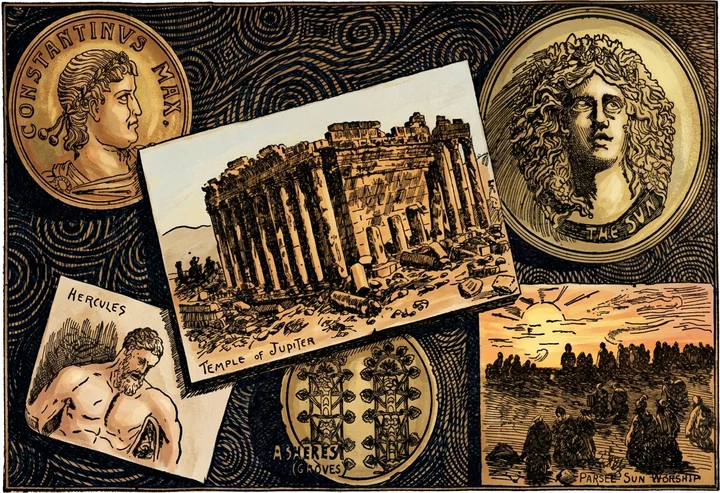
12. What was the prominent worship and prominent day in the pagan world in apostolic days? Ans.—Sun worship and Sunday. See “The Lord’s Day,” pp. 88–92.
13. From what were the Galatian Christians converted?
“Howbeit then, when ye knew not God, ye did service unto them which by nature are no gods.” Gal. 4:8.
14. In their backslidden condition what did they desire to do?
“But now, after that ye have known God, or rather are known of God, how turn ye again to the weak and beggarly elements, whereunto ye desire again to be in bondage?” Verse 9.
15. What evidence did they give of this?
“Ye observe days, and months, and times, and years.” Verse 10.
16. As they were formerly heathen and observed heathen times and days, to what times and days did the apostle refer?
17. How alone can the Christian oppose this?
“And now, brethren, I commend you to God, and to the word of his grace, which is able to build you up, and to give you an inheritance among all them which are sanctified.” Acts 20:32.
“For though we walk in the flesh, we do not war after the flesh; for the weapons of our warfare are not carnal, but mighty through God to the pulling down of strongholds; casting down imaginations, and every high thing that exalteth itself against the knowledge of God, and bringing into captivity every thought to the obedience of Christ.” 2 Cor. 10:3–5.
18. To what extent would this apostasy be manifest?
“Let no man deceive you by any means; for that day shall not come, except there come a falling away first, and that manp. 13 of sin be revealed, the son of perdition; who opposeth and exalteth himself above all that is called God, or that is worshiped; so that he as God sitteth in the temple of God showing himself that he is God.” 2 Thess. 2:3, 4.
19. By what is this apostasy symbolized? Ans.—By a harlot, seated on a scarlet colored beast. Rev. 17:1–6.
20. In what way was this apostasy to oppose God and exalt itself above him?
“And he shall speak great words against the Most High, and shall wear out the saints of the Most High, and think to change times and laws; and they shall be given into his hand until a time and times and the dividing of time.” Dan. 7:25. See note 2.
21. What commandment in God’s law would be affected by a change in his appointed time?
22. In what commandment alone of the ten is there a difference between the papal code of morals and the Decalogue? See note 3.
23. What are the teachings of God’s law in this respect?
“Remember the Sabbath day, to keep it holy. Six days shalt thou labor, and do all thy work; but the seventh day is the Sabbath of the Lord thy God; in it thou shalt not do any work, thou, nor thy son, nor thy daughter, thy manservant, nor thy maidservant, nor thy cattle, nor thy stranger that is within thy gates; for in six days the Lord made heaven and earth, the sea, and all that in them is, and rested the seventh day; wherefore the Lord blessed the Sabbath day, and hallowed it.” Ex. 20:8–11.
24. What is the teaching of the Papacy? See note 4.
25. What express claim does the Papacy make? See note 4 and Bible Students’ Library No. 134, “The Lord’s Day,” pp. 83–85.
26. For how long were the saints, times, and laws to be given into the hands of the Papacy?
27. What may we conclude would then take place? Ans.—God would send a message, calling men to repentance. See Acts 17:30.