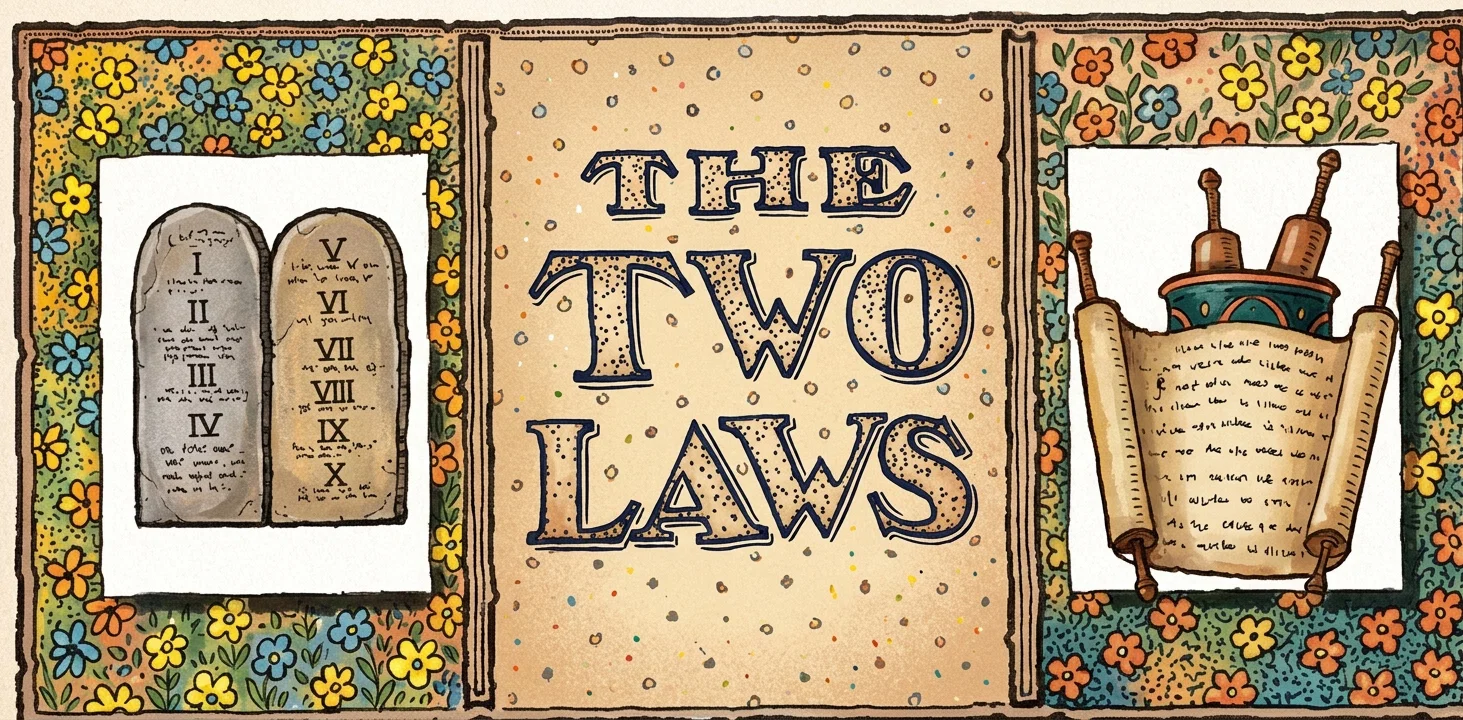
THE TWO LAWS

5%

Seventh-day Adventist Publishing Association · Battle Creek, Mich. · Dec 26, 1899

FromReview and Herald, Vol. 76, No. 52.

Read the full edition

THE TWO LAWS

We have seen that “all that is in the world [is] the lust of the flesh, and the lust of the eyes, and the pride of life.” We have also seen that when we are delivered from the “world” that is in our own flesh, we are delivered from all the outward forms and ceremonies that are in the world outside of our flesh. The church at Colosse had forgotten that fact; and possibly some Christians in our day have partly forgotten it. Therefore we have the warning that was sent to the church at Colosse, and the principles contained in that warning must be applicable to any who may find themselves to-day in the condition in which the Colossians found themselves. Here it is: “Beware lest any man spoil you through philosophy and vain deceit, after the tradition of men, after the rudiments of the world, and not after Christ.” Col. 2:8. Then, in verses 9-15, follow the reasons why Christians must not tamper with the philosophies and traditions of men. Then, in view of these reasons, verses 16-19 show what our attitude should be toward those who would “judge” us for not conforming, or would “beguile” us into conforming, to those things against which verse 8 has given warning. Verses 20-23 draw the conclusions from the warnings and facts which have preceded. With this introduction, we will now read verses 8-15 without comment:—
“Beware lest any man spoil you through philosophy and vain deceit, after the tradition of men, after the rudiments of the world, and not after Christ. FOR in him dwelleth all the fullness of the Godhead bodily. And ye are complete in him, which is the head of all principality and power: in whom also ye are circumcised with the circumcision made without hands, in putting off the body of the sins of the flesh by the circumcision of Christ: buried with him in baptism, wherein also ye are risen with him through the faith of the operation of God, who hath raised him from the dead. And you, being dead in your sins and the uncircumcision of your flesh, hath he quickened [made alive] together with him, having forgiven you all trespasses; blotting out the handwriting of ordinances that was against us, which was contrary to us, and took it out of the way, nailing it to his cross; and having spoiled principalities and powers, he made a show of them openly, triumphing over them in it. Let no man THEREFORE judge you.” “Let no man [THEREFORE] beguile you.”
Notice, it is the personal experience of the individual Christian that is here reviewed, in his relation to his Saviour; and that this experience and privilege in Christ are given as the sole reasons why we are to “beware” of the philosophies and traditions of men; and why we are not to allow their judgment of our conduct to influence us in the least.
First, we have, in Christ, the fullness of the Godhead. Here are all the treasures of wisdom and knowledge. Verse 3.
Second, we are complete—whole and entire, wanting nothing—in him.
Third, the reasons why:—
(a) We are circumcised with the circumcision of Christ. This puts off the “body of the sins of the flesh;” and is therefore the same as crucifixion with Christ. This we see by comparing Rom. 6:6.
(b) After this death with Christ, comes the resurrection with him.
(c) With the resurrection (the quickening with him) comes the forgiveness of all trespasses; and—
(d) With the forgiving of all trespasses comes the blotting out of the handwriting of ordinances.
“You hath he quickened,” “having forgiven you all trespasses.” Then the quickening comes only as the result of the forgiving. Again: “Having forgiven you all trespasses; blotting out the handwriting of ordinances.” Therefore, the blotting out of the handwriting of ordinances goes with the forgiving and the quickening, and only with that.
This is therefore not a national, nor yet a dispensational, matter; but it is an individual matter; and is just as applicable to-day, and has been as applicable through all the centuries that have intervened, as it was the day the Holy Spirit inspired the apostle Paul to pen the words. Each person must be delivered from the “law of sin which is in his members,” and that through the old method of crucifixion with Christ, before he can live for Christ. And thus living for Christ, he can no more follow the philosophies and traditions of the world in our day, than could the Christians of Colosse in the days of Paul.
“Wherefore if ye be dead with Christ from the rudiments of the world, why, as though living in the world, are ye subject to ordinances, . . . after the commandments and doctrines of men?” What should be our attitude toward these “ordinances”? The answer is: “Touch not; taste not; handle not.” What of their benefit to us?—“Which all are to perish with the using.” How do these “ordinances” appear to the mind of man?—“Which things [ordinances] have indeed a show of wisdom in will worship, and humility [voluntary humility, the humility which puffs up. Verse 18], and neglecting [‘punishing,’ or, ‘not sparing,’ margin] of the body; not in any honor to the satisfying of the flesh.”
Or, as given in Conybeare and Howson’s translation: “If, then, when you died with Christ, you put away the childish lessons of outward things, why, as though you still lived in outward things, do you submit yourself to decrees founded on the precepts and doctrines of men? For these precepts, though they have a show of wisdom, in a self-chosen worship, and in humiliation, and chastening of the body, are of no value to check the indulgence of fleshly passions.”
Here is penance versus the cross; philosophy versus the Holy Spirit; the commandments and doctrines of men versus the commandments of God. The Holy Spirit, the living Word of God, through the provision made by the “cross of Christ,” DOES CHECK the indulgence of fleshly passions. “The law of the Spirit of life in Christ Jesus hath made me FREE from the law of sin and death.” BUT the combined penance and philosophy of all heathen times, including our own, combined with all the traditionalism and ceremonialism of pagans, Jews, and papists, “are of NO VALUE to check the indulgence of fleshly passions.”
E. J. HIBBARD.
(Concluded next week.)
Restored with AI