INCIDENTS IN MY PAST LIFE.—NO. 9.
Release from close confinement—British fleet outgeneraled—Removed to a prison-ship in England—Provisions for a London newspaper—General excitement in relation to our bread—Another movement.
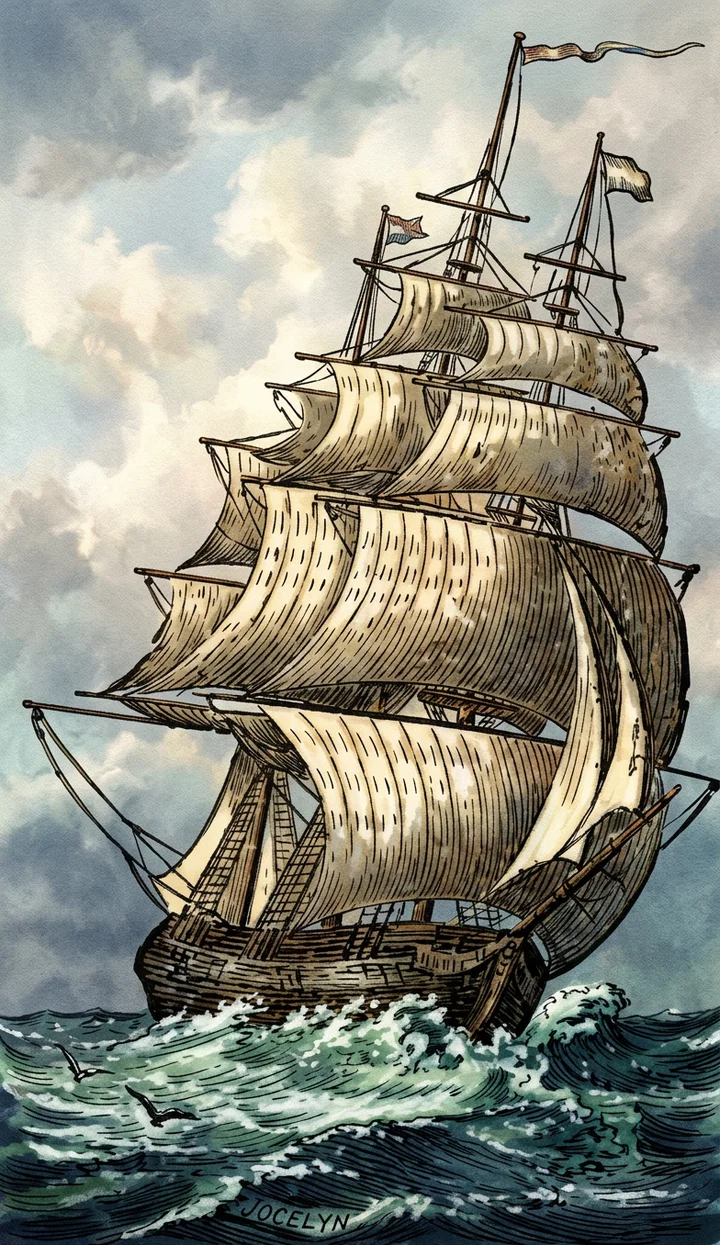
WHEN all the preparation was made for battle, one of my countrymen, in the absence of the master of arms, ventured to speak with me through the musket gratings of the gun-room, to warn me of the perilous position I should be placed in when the French fleet hove in sight unless I submitted, and acknowledged myself ready to take my former station [second captain of one of the big guns on the forecastle] and fight the Frenchmen, as he and the rest of my countrymen, were about to do. I endeavored to show him how unjustifiable and inconsistent such a course would be for us as prisoners of war, and assured him that my mind was fully and clearly settled to adhere to our position as American prisoners of war, notwithstanding the perilous position I was to be placed in.
In the course of a few hours, after the lieutenant had finished his arrangements for a battle, he came down into my prison-room. Well sir, said he, will you take up a hammock when you are ordered again? I replied that I would take one up for any gentleman in the ship. You would, ha! Yes sir: without inquiring who I considered gentlemen, he ordered me released. My countrymen were somewhat surprised to see me so soon a prisoner at large.
The first lieutenant is next in command to the captain, and presides over all the duties of the ship during the day, and keeps no watch, whereas all other officers do. As we had not yet seen the French fleet, the first lieutenant was aware that my case would have to be reported to the captain; in which case if I, as an acknowledged prisoner of war, belonging to the United States, was allowed to answer for myself, his unlawful, abusive, and ungentlemanly conduct would come to the captain’s knowledge. Hence his willingness to release me.
The British fleet continued their course across the Mediterranean for the Turkish coast until they were satisfied that the French fleet was not to the west of them. They then steered north and east (to meet them) until we arrived off the harbor of Toulon, where we saw them all snugly moored, and dismantled in their old winter quarters; their officers and crews undoubtedly highly gratified that the ruse they had practiced had so well effected their design, viz., to start the British squadron out of their snug winter quarters to hunt for them over the Mediterranean sea. They had remantled, and sailed out of their harbor, and chased our few lookout ships a distance down the Mediterranean [see No. 8,] and then unperceived by them returned and dismantled again.
After retaining us prisoners of war about eight months, we with others that continued to refuse all solicitation to rejoin the British service, were sent to Gibraltar, and from thence to England, and finally locked up on board an old sheer-hulk, called the Crown Prince, formerly a Danish 74 gun ship, a few miles below Chatham dock-yard, and seventy miles from London. Here were many others of like description, many of them containing prisoners. Here about seven hundred prisoners were crowded between two decks, and locked up every night, on a scanty allowance of food, and in crowded quarters. Cut off from all intercourse except floating news, a plan was devised to obtain a newspaper, which often relieved us in our anxious, desponding moments, although we had to feel the pressing claims of hunger for it. The plan was this: One day in each week we were allowed salt fish; this we sold to the contractor for cash, and paid out to one of our enemies to smuggle us in one of the weekly journals from London. This being common stock, good readers were chosen to stand in an elevated position and read aloud. It was often interesting and amusing to see the perfect rush to hear every word of American news, several voices crying out, “Read that over again, we could not hear it distinctly;” and the same from another, and another quarter. Good news from home often cheered us more than our scanty allowance of food. If more means had been required for the paper, I believe another portion of our daily allowance would have been freely offered, rather than give it up.
Our daily allowance of bread consisted of coarse brown loaves from the bakery, served out every morning. At the commencement of the severe cold weather, a quantity of ship biscuit was deposited on board for our use in case the weather or ice should prevent the soft bread from coming daily. In the spring, our first lieutenant, or commander, ordered the biscuit to be served out to the prisoners, and directed that one quarter of the daily allowance should be deducted, because nine ounces of biscuit were equal to twelve ounces of soft bread. We utterly refused to receive the biscuit, or hard bread, unless he would allow us as many ounces as we had had of the soft. At the close of the day he wished to know again if we would receive the bread on his terms. No! no! Then I will keep you below until you comply. Hatchways unlocked in the morning again. Will you come up for your bread? No! At noon again, Will you have your meat that is cooked for you? No! Will you come up for your water? No, we will have nothing from you until you serve us out our full allowance of bread. To make us comply, the port holes had been closed,p. 70 thus depriving us of light and fresh air. Our president also had been called up and conferred with, [we had a president, and committee of twelve chosen, as we found it necessary to keep some kind of order]. He told the commander that the prisoners would not yield.
By this time hunger and the want of water, and especially fresh air, had thrown us into a state of feverish excitement. Some appeared almost savage, others endeavored to bear it as well as they could. The president was called for again. After awhile the port where he messed was thrown open, and two officers from the hatchway came down on the lower deck and passed to his table, enquiring for the president’s trunk. What do you want with it? said his friends. The commander has sent us for it. What for? He is going to send him on board the next prison ship. Do you drop it! He shall not have it! By this time the officers became alarmed for their safety, and attempted to make their escape up the ladder, to the hatchway. A number of the prisoners who seemed fired with desperation, stopped them, and declared on the peril of their lives that they should go no further until the president was permitted to come down. Other port holes were now thrown open, and the commander appeared at one of them, demanding the release of his officers. The reply from within was, When you release our president we will release your officers. If you do not release them, said the commander, I will open these ports (all of them grated with heavy bars of iron) and fire in upon you. Fire away! was the cry from within, we may as well die this way as by famine; but mark, if you kill one prisoner we will have two for one as long as they last. His officers now began to beg him most pitifully not to fire, for if you do, said they, they will kill us; they stand here around us with their knives open, declaring if we stir one foot they will take our lives.
The president being permitted to come to the port, begged his countrymen to shed no blood on his account, for he did not desire to remain on board the ship any longer, and he entreated that for his sake the officers be released. The officers were then released.
Double plank bulkheads at each end of our prison rooms, with musket holes in them to fire in upon us if necessary, separated us from the officers, sailors and soldiers. Again we were asked if we would receive our allowance of bread? No. Some threats were thrown out by the prisoners that he would hear from us before morning. About ten o’clock at night, when all were quiet but the guard and watch on deck, a torch light was got up by setting some soap grease on fire in tin pans. By the aid of this light, a heavy oak stanchion was taken down which served us for a battering-ram. Then with our large empty tin water cans for drums, and tin pails, kettles, pans, pots, and spoons for drum sticks, and whatever would make a stunning noise, the torch lights and battering-ram moved onward to the after bulkhead that separated us from the commander and his officers, soldiers and their families. For a few moments the ram was applied with power, and so successfully that consternation seized the sleepers, and they fled, crying for help, declaring that the prisoners were breaking through upon them. Without stopping for them to rally and fire in upon us, a rush was made for the forward bulkhead, where a portion of the ship’s company with their families lived. The application of the battering-ram was quite as successful here, so that all our enemies were now as wide awake as their hungry, starving prisoners, devising the best means for their defence. Here our torch lights went out, leaving us in total darkness in the midst of our so far successful operations. We grouped together in huddles, to sleep, if our enemies would allow us, until another day should dawn to enable us to use our little remaining strength in obtaining if possible, our full allowance of bread and water.
JOSEPH BATES.
Orleans, Ionia Co., Mich., Aug. 1859.