Introduction into the British service--Spanish war ships--A Levanter--Image worship--Another attempt for freedom--Battle--Storm--Spanish war ship wrecked--Blockading squadron--Church service on board a king's ship.
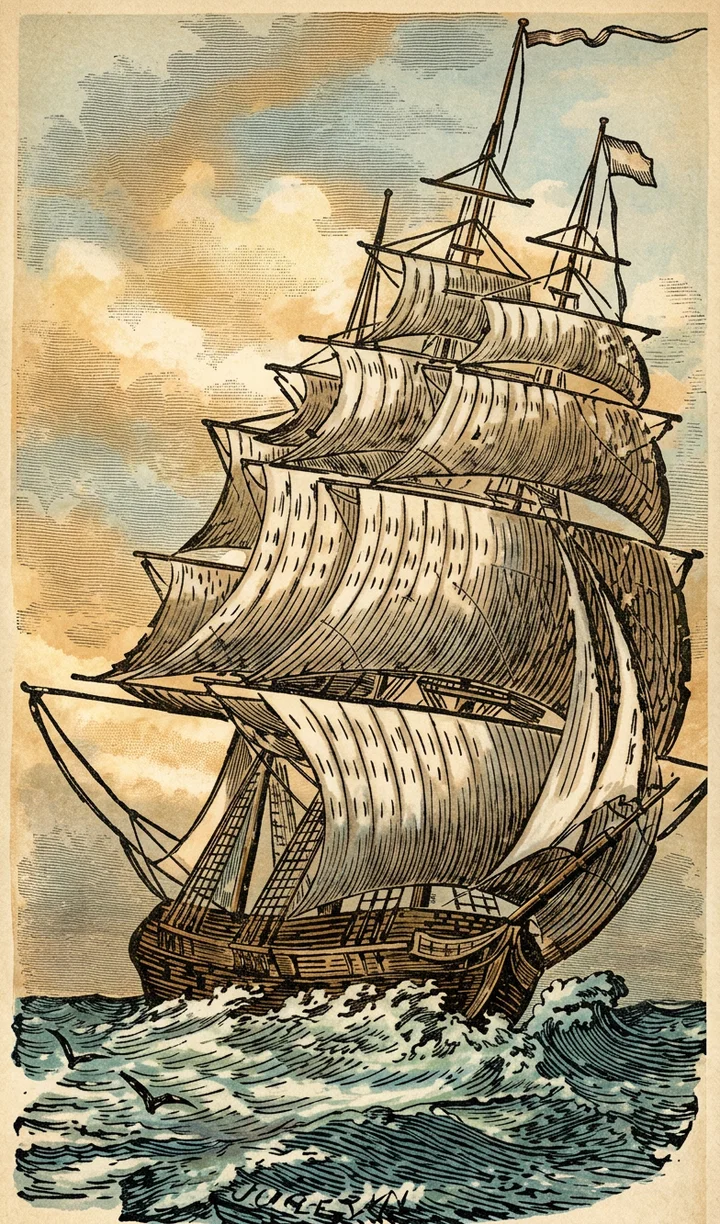
AFTER some thirty hour's of close confinement (see No. 5,) I was separated from my friend and hurried away with about one hundred and fifty sailors (all strangers to me) to join his Majesty's ship “Rodney,” of 74 guns, whose crew numbered about seven hundred men. As soon as we had passed our muster on the quarter deck of the Rodney, all were permitted to go below and get their dinners but Bates,—Commander Bolton handed the First Lieutenant a paper, on reading of which he looked at me and muttered, “scoundrel.” All the boats' crews amounting to more than one hundred men were immediately assembled on the quarter deck. Said Capt. Bolton, “Do you see that fellow?” “Yes sir.” “If ever you allow him to get into one of your boats, I will flog every one of the boat's crew.” “Do you understand me?” “Yes sir, yes sir,” was the reply. “Then go down to your dinners, and you may go too, sir.”
I now began to learn something of the nature of my punishment for attempting in a quiet and peaceable manner to quit his majesty's service. In the commanding officer's view this seemed to amount to an unpardonable crime, and never to be forgotten. In a few hours the Rodney under a cloud of sail, was leaving Old Plymouth in the distance, steering for the French coast to make war with Frenchmen. “Hope deferred makes the heart sick;” thus my hope of freedom from this oppressive state, seemed to wane from my view like the land we were leaving in the distance.
As our final destination was to join the British squadron in the Gulf of Lyons, in the Mediterranean sea, we made a stop at Cadiz in Spain. Here the French troops of Napoleon Bonaparte were bombarding the city, and British and Spanish ships of war in the harbor. These comprised a part of the Spanish fleet that finally escaped from the battle of Trafalgar, under Lord Nelson in 1805 and were now to be refitted by their ally the English, and sail for Port Mahon in the Mediterranean. Unexpectedly I was one of fifty selected to refit and man one of them, the “Apollo.” A few days after passing the straits of Gibraltar we encountered a most violent gale of wind, called a “Levanter,” common in those seas, which caused our ship to labor so excessively that it was with the utmost exertions at the pumps that we kept her from sinking. We were finally favored to return back to Gibraltar and refit.
A number of Spanish officers with their families still belonged to the ship. It was wonderful and strange to us to see how tenaciously this people hung around their images, surrounded with burning wax candles, as though they could save them in this perilous hour, when nothing short of our continual labor at the pumps, prevented the ship from sinking with us all.
After refitting at Gibraltar, we sailed again and arrived safely at the Island of Mahon. Here I made another attempt to regain my liberty with two others, by inducing a native to take us to land in his market boat. After some two days and nights of fruitless labor to escape from the Island by boats or otherwise, or from those who were well paid for apprehending deserters, we deemed it best to venture back. Our voluntary return to the ship was finally accepted as evidence that we did not design to desert from the service of King George III. Thus we escaped from being publicly whipped.
Our crew was now taken back to Gibraltar to join the Rodney, our own ship, who had just arrived in charge of another Spanish line of battle ship for Port Mahon, having a crew of fifty of the Rodney's men. In company with our Spanish consort we sailed some eighty miles on the way to Malaga, where we discovered the combined armies of the English and Spanish in close engagement with the French army on the seaboard. Our ship was soon moored broad side to the shore. As the orders for furling the sails were not promptly obeyed by reason of the Frenchmen's shot from the fort, all hands were ordered aloft, and there remained exposed to the enemy's shot until the sails were furled. This was done out of anger. While in this condition a single well directed shot might have killed a score, but fortunately none were shot till all had reached the deck. Our thirty two pound balls made dreadful havoc for a little while with the enemy's ranks: nevertheless they soon managed to bring their enemies between us and thereby check our firing. Then with a furious onset they drove them to their fortress, and many seeing our boats near the shore, rushed into the sea and were either shot by the French or drowned, except what the boats floated to our ship. This work commenced about 2 P. M., and closed with the setting sun. After disposing of the dead and washing their blood from the decks, we sailed away with our Spanish consort for Port Mahon. Just before reaching there, another “Levanter” came on so suddenly that it was with much difficulty that we could manage our new built ship. Our Spanish consort unprepared for such a violent gale, was dashed to pieces on the rocks on the Island of Sardinia, and most every one of the crew perished.
After the gale we joined the British fleet consisting of about thirty line of battle ships, carrying from eighty to one hundred and thirty guns apiece, besides frigates and sloops of war. Our work was to blockade a much larger fleet of French men of war, mostly in the harbor of Toulon. With these we occasionally had skirmishes or runningp. 46 fights. They were not prepared, neither disposed to meet the English in battle.
To improve our mental faculties when we had a few leisure moments from ship duty and naval tactics, we were furnished with a library of two choice books for every ten men. (We had seventy of these libraries in all.) The first book was an abridgement of the life of Lord Nelson, calculated to inspire the mind with deeds of valor, and the most summary way of disposing of an unyielding enemy. This, one of the ten men could read, when he had leisure, during the last six days of each week. The second was a small Church of England prayer book, for special use, about one hour on the first day of the week.
CHURCH SERVICE ON BOARD A KING'S SHIP.
As a general thing a chaplain was allowed for every large ship. When the weather was pleasant the quarter deck was fitted with awnings, flags, benches, &c. for meeting. At 11 A. M., came the order from the officer of the deck, “Strike six bells there!” “Yes sir.” “Boatswain's mate?” “Sir.” “Call all hands to church! Hurry them up there!” (These mates were required to carry a piece of rope in their pocket to start sailors with.) Immediately their stentorian voices were heard sounding on the other decks, “Away up to church there—every soul of you—and take your prayer books with you!” If any one felt disinclined to such a mode of worship, and attempted to evade the loud call to church, then look out for the men with the rope! When I was asked, “Of what religion are you?” I replied, “A Presbyterian.” But I was now given to understand that there was no religious toleration on board the king's war ships. “Only one denomination here—away with you to church!” The officers before taking their seats unbuckled their swords and dirks and piled them on the head of the capstan, in the midst of the worshipping assembly, all ready to grasp them in a moment if necessary before the hour's service should close. When the benediction was pronounced, the officers clinched their side arms, and buckled them on for active service. The quarter deck was immediately cleared, and the floating Bethel again becomes the same old weekly war ship for six days and twenty-three hour's more.
Respecting the church service, the chaplain, or in his absence, the Captain reads from the prayer book, and the officers and sailors respond. And when he read about the Law of God, the loud response would fill the quarter deck, “O Lord, incline our hearts to keep thy Law.” Poor wicked, deluded souls! how little their hearts were inclined to keep the holy Law of God, when almost every other hour of the week their tongues were employed in blaspheming his holy name; and at the same time learning and practicing the way and manner of shooting, slaying, and sinking to the bottom of the ocean all that refused to surrender and become their prisoners; or who dared to oppose or array themselves in opposition to a proclamation of war issued from their good old christian king.
King George III not only assumed the right to impress American seaman to man his war ships, and fight his unjust battles, but he also required them to attend his church and learn to respond to his preachers. And whenever the band of musicians on ship board commenced with “God save the king!” they, with all his loyal subjects were also required to take off their hats in obeisance to his royal authority.
At that time I felt a wicked spirit towards those who deprived me of my liberty, and held me in this state of oppression, and required me in their way to serve God, and honor their king. But I thank God who teaches us to forgive and love our enemies; that through his rich mercy in Jesus Christ I have since found forgiveness of my sins; that all such feelings are subdued, and my only wish is that I could teach them the way of life and salvation.
JOSEPH BATES.
Battle Creek, Mich,