SPIDERS rank among the most interesting animals in the insect world; but it is not needful that more than a general description be given of a creature so well known. It may be observed, however, that the body is composed of two pieces, and the legs are generally eight in number. Each limb has seven joints, and the foot usually terminates in two claws; but some spiders have only one, while others have three or four. At the base of each jaw is a feeler, or palp, with little claws at its tip. The spider has six or eight eyes, and its skin is rather leathery and horny, sprinkled over with hairs and little spines.
Restored with AI
The name in natural history for this insect is arachne, which term also includes scorpions and mites. There are some ten special varieties of spiders, and they are found in all parts of the world, but are largest in warm countries. Being carnivorous in their habits, they devour their prey alive. Spiders are very fond of fighting, the victorious party commonly devouring the other. They are very cleanly in their habits, and spend much time in cleaning themselves from dust with the toothed combs and brushes which nature has attached to their limbs.
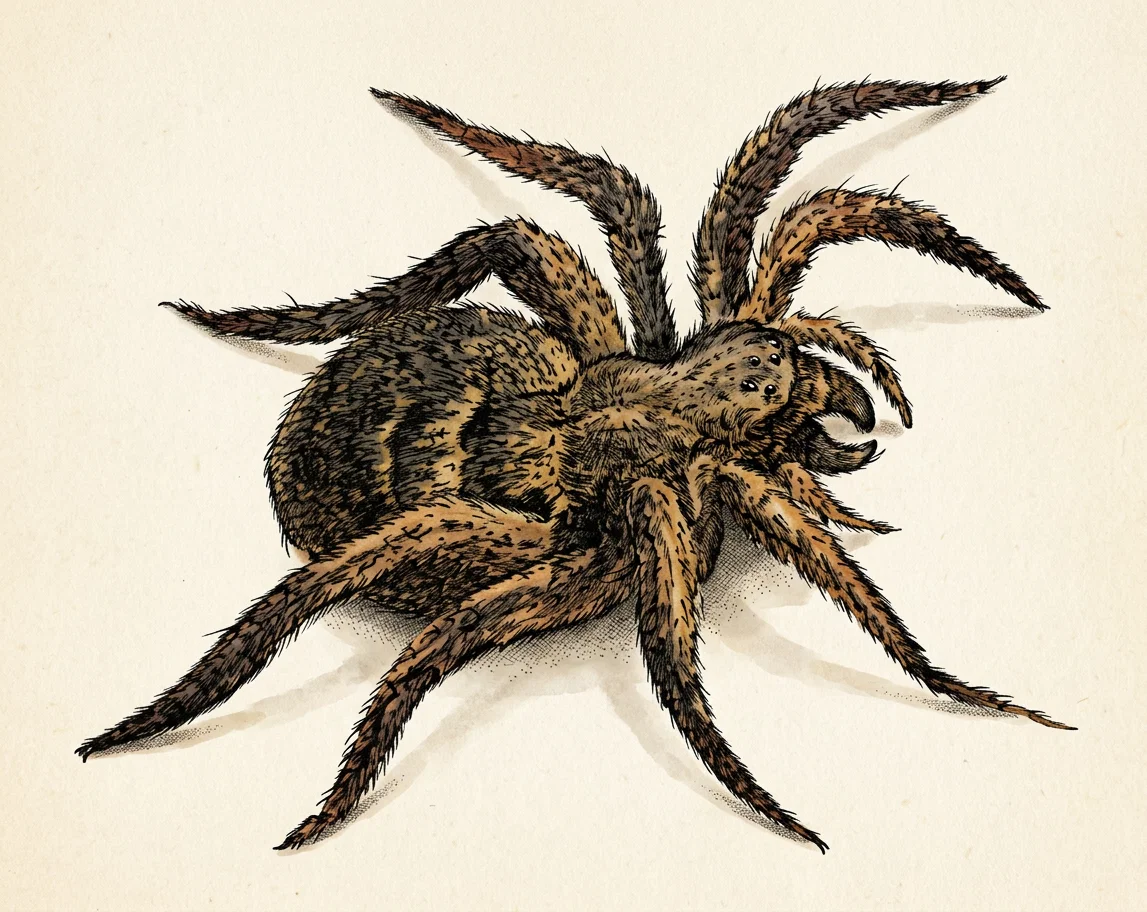
Tarantulas, also, belong to the spider species. This variety makes no web, but wanders about for its prey, which it runs down with great swiftness. Its den is made in crevices and holes which it neatly lines with silk of its own manufacture. See the illustration below.
Restored with AI
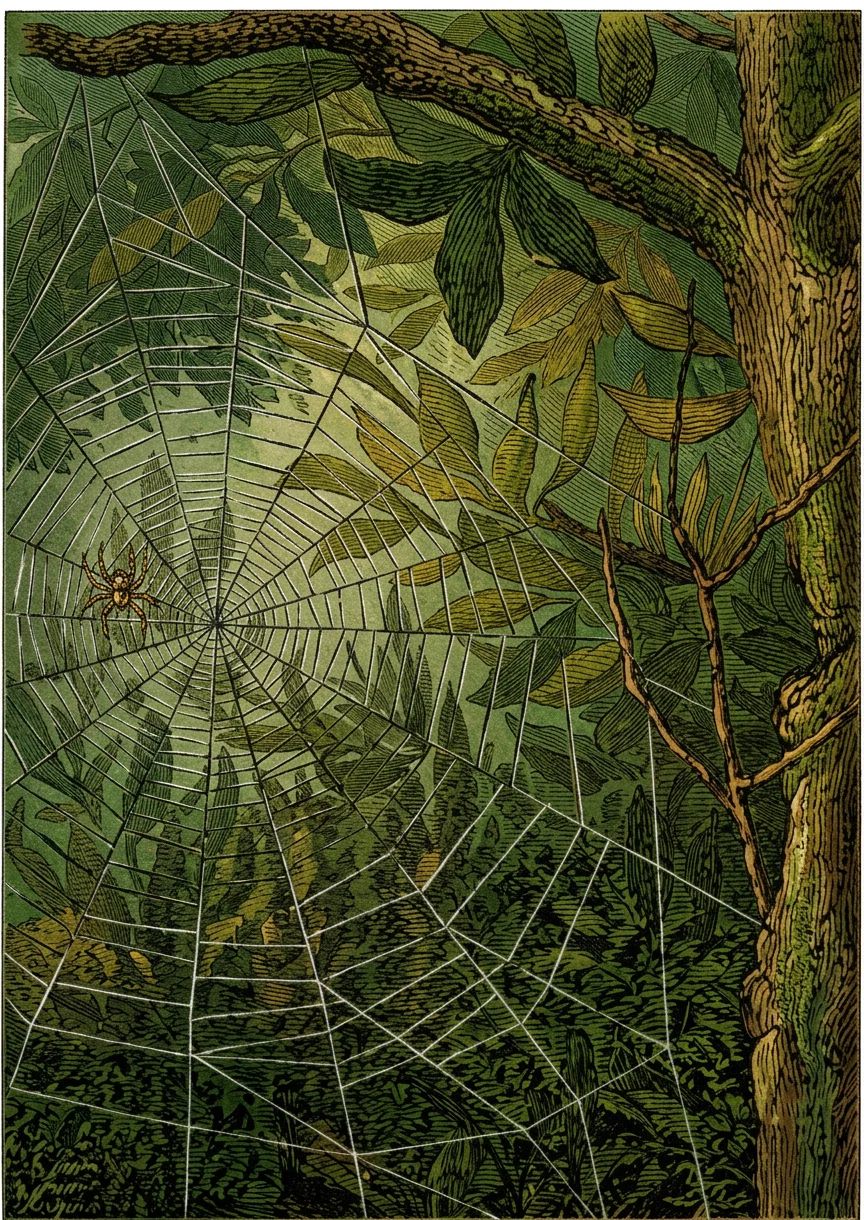
WEB OF THE COMMON GARDEN SPIDER.
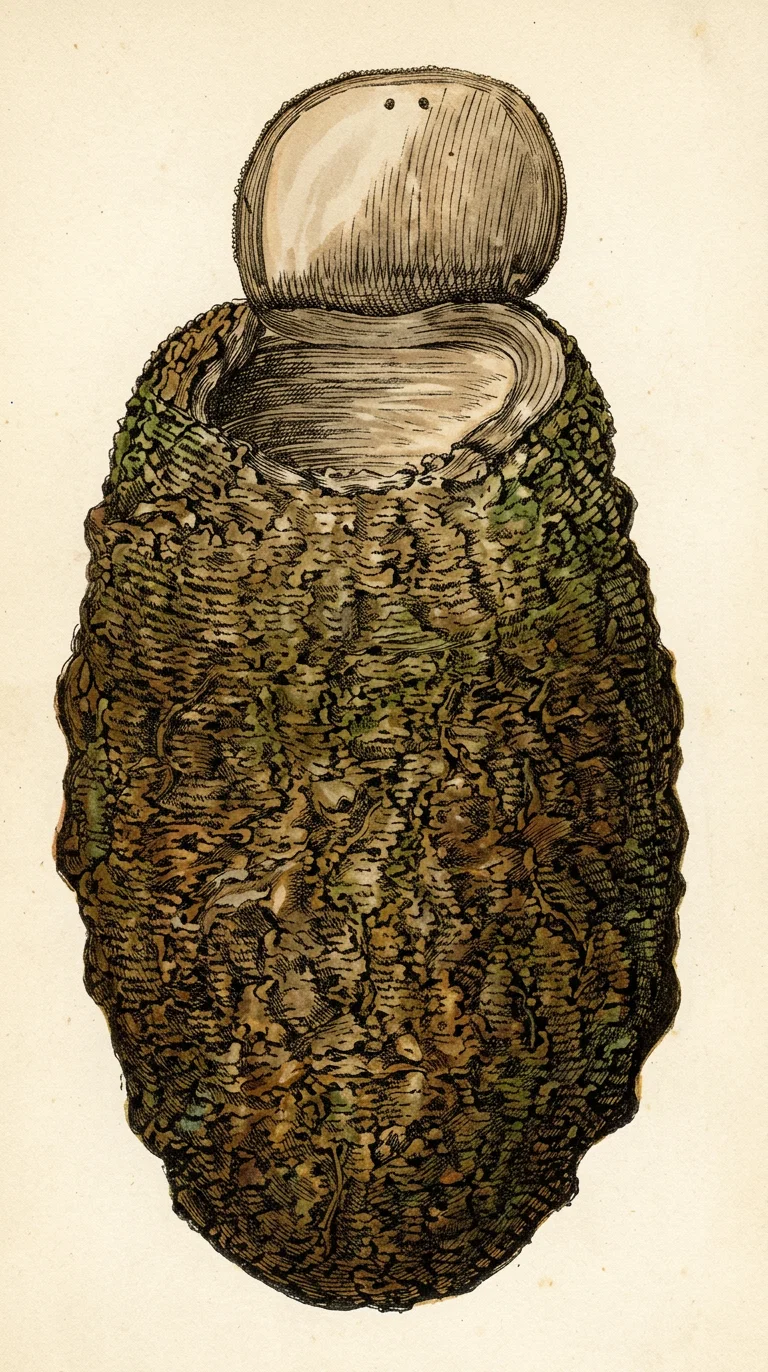
Spiders generally hatch but one brood in a year. The eggs are carefully protected in little silken bags, or cocoons. The female spider lays nearly a thousand eggs in a season. The mother is quite affectionate to her young family, and in return for this maternal care her little ones frequently devour her alive. The males and females live separately. The latter are the ones most frequently seen, and are much the larger.
Spiders can endure long fasts, and in this climate they remain torpid during winter. Some of them live several years. Though objects of general aversion from their cruel habits and dismal haunts, yet they display an instinct which amounts almost to reason.
The most remarkable office of spiders is that of weaving their webs by means of a silken thread drawn from fleshy warts on the under side of the abdomen. These spinning glands, called spinnerets, are from four to six in number, and contain thousands of delicate openings, from each of which descends a thread so thin as to be invisible to the naked eye until all are186united in one. One set of these warts, or spinnerets, produces threads which are glutinous, while another set furnishes those which are smooth.
Restored with AI
THE TARANTULA. (Called also the Wolf Spider.)
In spinning their webs, spiders show much perseverance, and great ingenuity. Recently a spider managed to fasten a silken cable across a river more than a mile in width! They perform such feats in the following manner: When they wish to go from tree to tree, or cross a stream, they let go a thread from their spinnerets in the direction of the wind, and when their delicate sense of touch tells them it has reached an object, they pass over it. In this way they travel long distances without descending to the ground, a multitude of tiny cables being seen on dewy mornings of spring and autumn. Some small gossamer spiders even speed through the air buoyed up by their fragile threads. Mr. Darwin, in the journal of the voyage of “The Beagle,” says that when anchored in the river La Plata, sixty miles from the shore, he has seen the rigging covered with cobwebs, and the air full of pieces of web floating about. The spiders, however, when they struck the ship, were always hanging from single threads.
The beautiful ray-like webs which we commonly see, so like a figure in geometry, as shown in the cut, are made by a variety of spiders called Epeiridæ, from the Greek word peirō, “to affix.” This species includes the common Garden Spider. How nicely they affix their webs to a limb, or the angle of a window!
Savage and unsocial as spiders are, they are capable of a certain amount of domestication. Pelisson, a prisoner in the old French Bastile, had a pet spider which came regularly at the sound of a musical instrument to get its meal of flies; and a spider-raiser in France is said to have tamed eight hundred, which he kept in a single apartment for the silk made from their gossamer threads. Spiders readily learn to take food from the hand or a pair of forceps, or water from a brush, and will come to the mouth of their bottle and reach after it on tip-toe.
The spider’s supply of silk seems to be limited to sufficient to make six or seven webs in a season. The thread is very strong and fine, and one of its uses is for the division of the micrometer in astronomy. According to Louenhoek, the great naturalist, it takes four millions of the extremely delicate threads to make a thread as large as a human hair. And each thread of the spider as used in the web is made up of thousands of smaller ones.