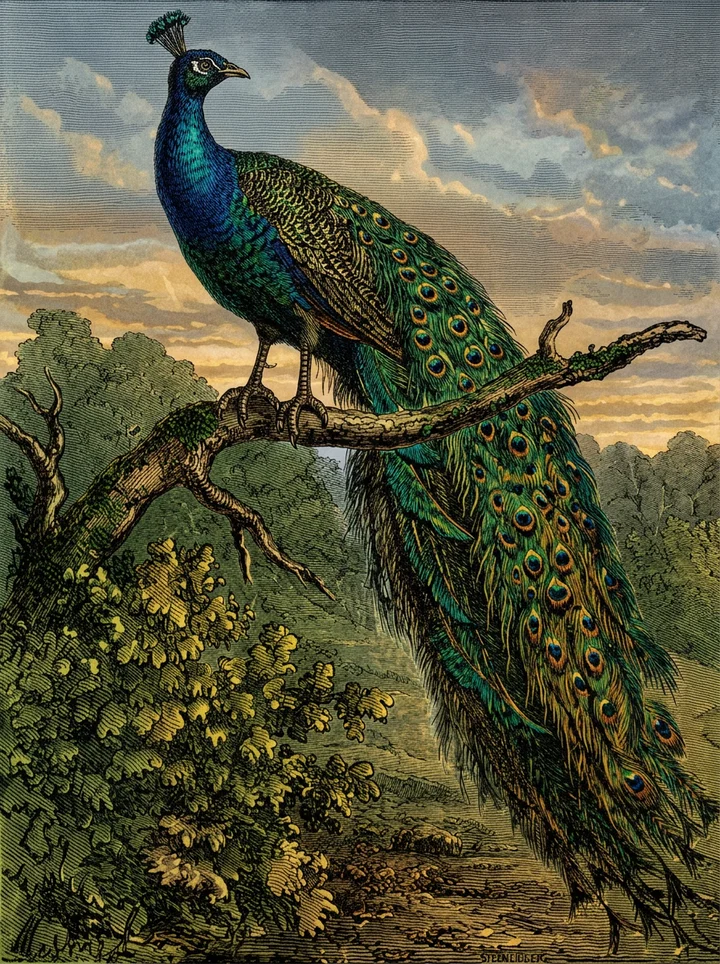
HIS bird, which is a native of India, was brought to Palestine by the fleet of Solomon, and to Europe at a very early period. It is now dispersed in a domesticated state all over Europe and the United States. It is much admired for its beautiful plumage; but the wild bird is much more brilliant than the domesticated ones. Griffith, the great naturalist, says of them: “We find in their incomparable robe all that glistens in the rainbow and sparkles in the mine,—the azure tints of heaven, and the emerald of the field.” It has been asserted that the principal use of its train is, by spreading it, to bewilder and terrify its enemies. It has not this effect, however, upon the tiger, to which this bird falls a frequent victim.
The voice of the peacock is harsh and disagreeable, resembling the word paon, which is the French name for this bird. It is very fond of being admired, and its vanity has been proverbial from early antiquity.
These birds in their wild state prefer wooded districts and low jungles. They roost on high branches, but their flight is low and heavy. They make their nests on the ground among thick shrubs, in which are laid from twelve to twenty eggs about the size of those of a goose. They raise but one brood in a year. The young birds do not get their full plumage until the third year, and only the males possess the beautifully tinted train. Their food consists of grain, seeds, fruit, and insects.
In ancient Rome the costliness of these birds made them favorite luxuries for the table, and a dish of peacocks’ brains and tongues was regarded as an essential part of every great feast. Even in the Middle Ages they formed a standing dish in grand entertainments; but modern people think their flesh dry and tough, and keep them only as ornaments.