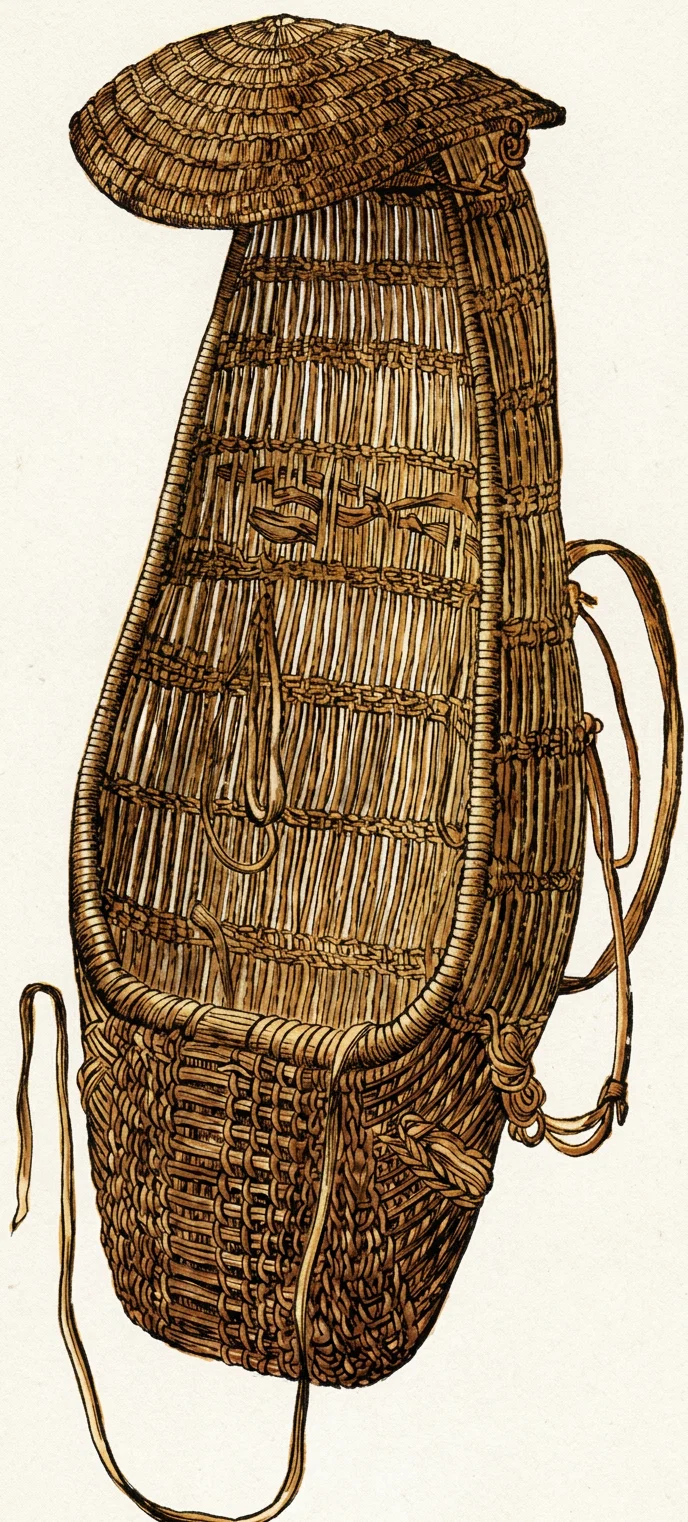
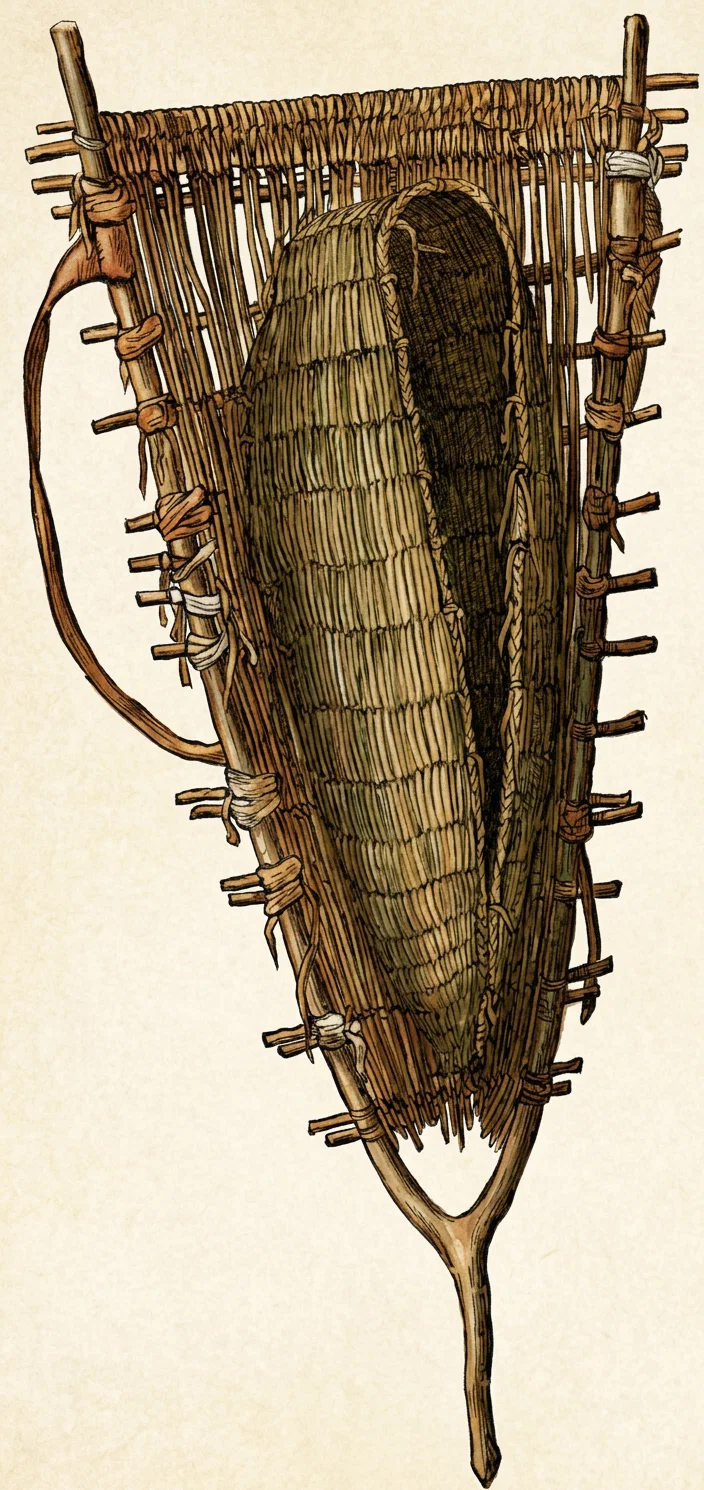
ON this page are pictures of two Indian baby-carriages. “But,” says one little reader, “these baby-carriages have no wheels. Are they drawn like a little boy’s sled by the strap that hangs from the end?” Oh, no, indeed! The little babies are tucked into these bird’s-nest carriages as if they were only a sparrow or an oriole, and the mother puts the strap around her shoulders, the carriage hanging down her back, and off she goes to the woods for berries, or bark to make pretty baskets and birch-bark ornaments or toys, perhaps little canoes for the older children to learn how to “paddle their own canoe.”
When the Indian mothers made these baby-carriages of twigs, and wove the sides so neatly, they covered the tops close, like a little roof, to protect the baby’s head from sunshine and shower. The pointed stick on the end of one of them is to stand it up in the ground when the mother takes it off her shoulders. She says to the baby, “Now keep quiet, Wakanhdikokipapi,” if it is a Dakota baby; and then little Fearful Thunder—as the baby’s name means in English—keeps quiet until, like all other little people with long or short names, he wants to be taken care of by his mother, and have milk and hominy that he can see the other children eating when he looks out of his carriage door. Then, too, he spies his sisters, “Blue Star” and “Jingling Foot Bells,” having their supper around the door of the wigwam.
Restored with AI
The Indians are very anxious that their children should be educated, and several schools have been opened for them. If you could visit these schools, you would see that many bright scholars and smart boys have grown up out of these baby-carriages. One boy walked a hundred and thirty miles to reach a school, so eager was he to learn.—Missionary Echoes.