THE SILK-WORM

14%

S. D. A. Publishing Association · Battle Creek, Mich. · Feb 8, 1882

FromThe Youth’s Instructor, Vol. 30, No. 6.

Read the full edition
Restored with AI

THE SILK-WORM.

The silk-worm, when full grown, is about three inches long, of a pale green color, with darker spots and a blackish head. It generally feeds on the leaves of the mulberry tree, of which it eats great quantities. The worm grows very rapidly, usually attaining its full size in about thirty days after it is hatched. Soon it begins spinning its cocoon. It is customary to supply the worms with a hollow roll of paper into which they may retire, or some convenient twig from which they may hang themselves before beginning to spin.
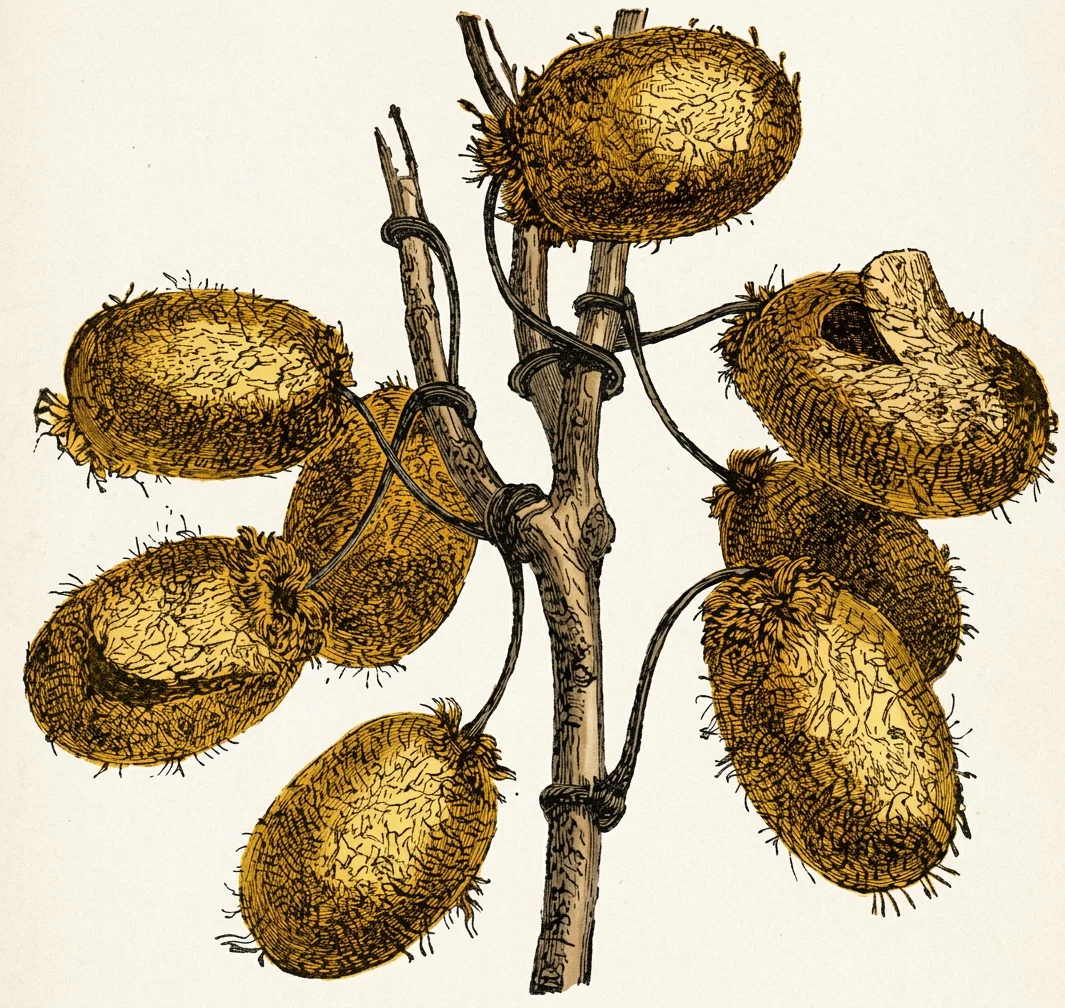
They first make an outer covering of floss-silk to keep off the rain; within this they spin fine silk, bending the head and body up and down, and crossing to every side, entirely surrounding themselves with a protection against wind and cold. Within this is a more delicate silk, glued firmly together for the inner chamber, and proof against both air and water. The cocoon, when finished, looks some like a pigeon’s egg, and is from an inch to an inch and a half long, and of a bright yellow color. In the picture we see several of these cocoons hanging from a twig. In from three to six weeks after the cocoon is finished, according to the warmth of the place where it is kept, the worm, now changed to a moth, bursts its prison, and makes its way into the world. Some of the cocoons in the picture you see are open at the side, which shows them to be empty.
By thus breaking through his wrappings, the moth of course cuts and spoils the threads of silk, thus making them unfit to be woven into cloth. So those who raise silk-worms for the silk do not wait for the cocoons to open of themselves, but a few days before the proper time for opening, they are either thrown into hot water or steamed, to soften the glue. When the silk is thus loosened, the threads are carefully unwound, and are then ready to be made into silk cloth or ribbons. When the cocoons are thrown into hot water, the moths within are killed; but when the glue is loosened by steaming, the little prisoners are allowed to come out alive. The latter way seems less cruel as well as more profitable for the silk-grower; for the escaped moth at once begins to lay eggs and prepare to raise more silk-worms.
Every time we wear anything made of silk, if no more than a bit of ribbon, and thus remember the curious little creature who gives his coat and even his house for our comfort, our minds should be led to Him who in his wisdom has fashioned all these wonderful things by which we are surrounded.
E. B.