No doubt all the children who read the Instructor can point out on the map the city of Washington, where the President of the United States and the great men who make the laws of the country, spend most of their time. Of course you all know that this city was named after our first president, who is still called the “Father of his Country,” because he did so much to make us a free nation.
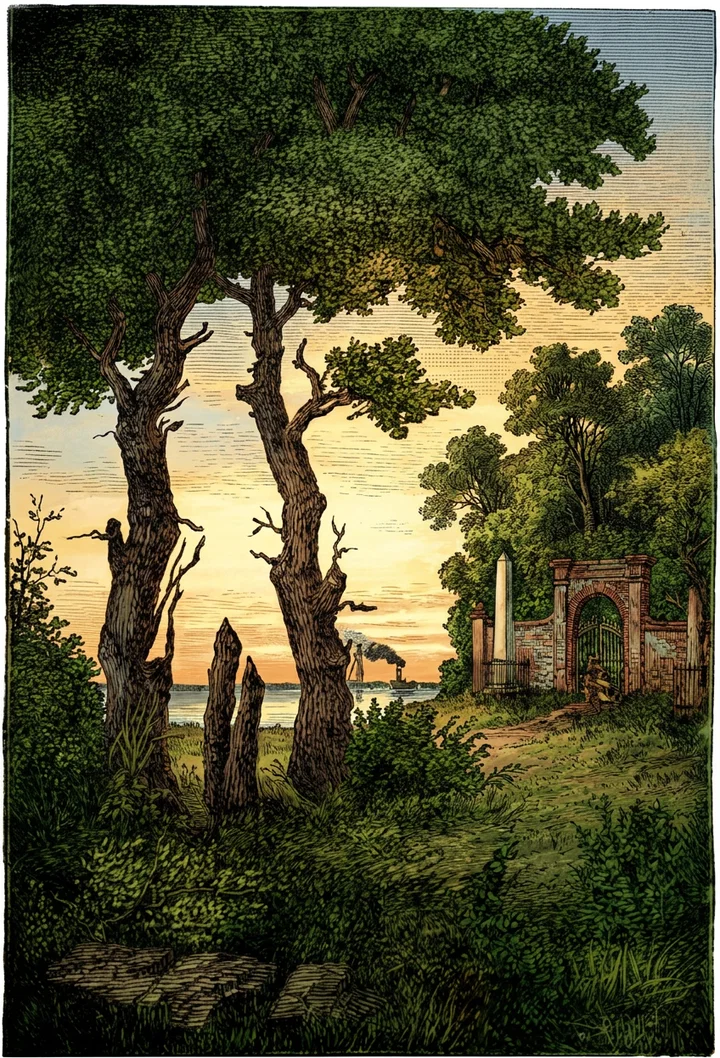
Well, as you know, this beautiful city is built by the side of the Potomac River. But let us imagine ourselves leaving the city, and sailing down the river. About fifteen miles below Washington, we come in sight of some beautiful grounds, with nice sloping lawns, and high above the water, a large wooden mansion. On asking what place this is, we are told that it is the home of George Washington. His oldest brother bought the grounds many years before the Revolutionary War, and named the place Mt. Vernon, in memory of a general that he had served under in the West Indies. Here George lived when a boy, and here he made his home while he was a soldier and president. In the old mansion can still be seen the very room where he died. In this room is the same furniture that was in it during his life, and a great many people visit the place to look at and handle the same things that this good and great man once used. But the most interesting thing to all who visit the place is the tomb where the body of Washington still lies. Some ways in front of the vault are two trees growing near each other. These trees have been so trimmed that by looking at them from one certain spot, the form of a man can be seen between them, which looks very much like Washington himself. How many can find it in the picture?
THE ANT AND THE GRASSHOPPER.
A GRASSHOPPER, who had not thought of laying up anything in the summer, found, when winter came, that she had nothing to eat.
In her trouble, she went to her neighbor, the ant, who had stored away a great deal of food, and begged her for a few grains of wheat or rye.
The ant asked her what she had been doing all the bright summer. “Alas!” said the grasshopper: “I was singing and dancing all the sunny days, and never once thought of winter.”
“Very well, then,” said the ant: “I have no food to spare for you. They who sing and dance all summer ought to starve when winter comes.”