HERE are a great many different kinds of dogs in the world, and some of them live in every country; but wherever these animals are found, they are almost always friends to man. The dog will do anything in his power for his master, and seems to show almost a human affection for those who are kind to him. Many a time a faithful dog has been known to lay himself down upon a dead master's grave, and refusing to take food, there grieve himself to death.
The Newfoundland dog is the most noble looking dog of all. In his native home he is taught to draw wood and water and to work as steadily all day as a horse. He seems to take great delight in water, and is a good swimmer. He often saves people from drowning. A story is told of one very strong dog who, if he saw men in swimming even, would rush into the water and drag them out in spite of themselves. Some dogs are trained to go out upon mountains and moors and bring in people who have been buried or blinded and lost in the snow. In fact, dogs are taught to do many things which no other animals can do. They lead the blind, drive cattle to and from pasture, gather and herd sheep, carry notes and baskets, and make themselves useful in many other ways. Of course all dogs are not so clever, and some are lazy and good for nothing but to bark at the moon.
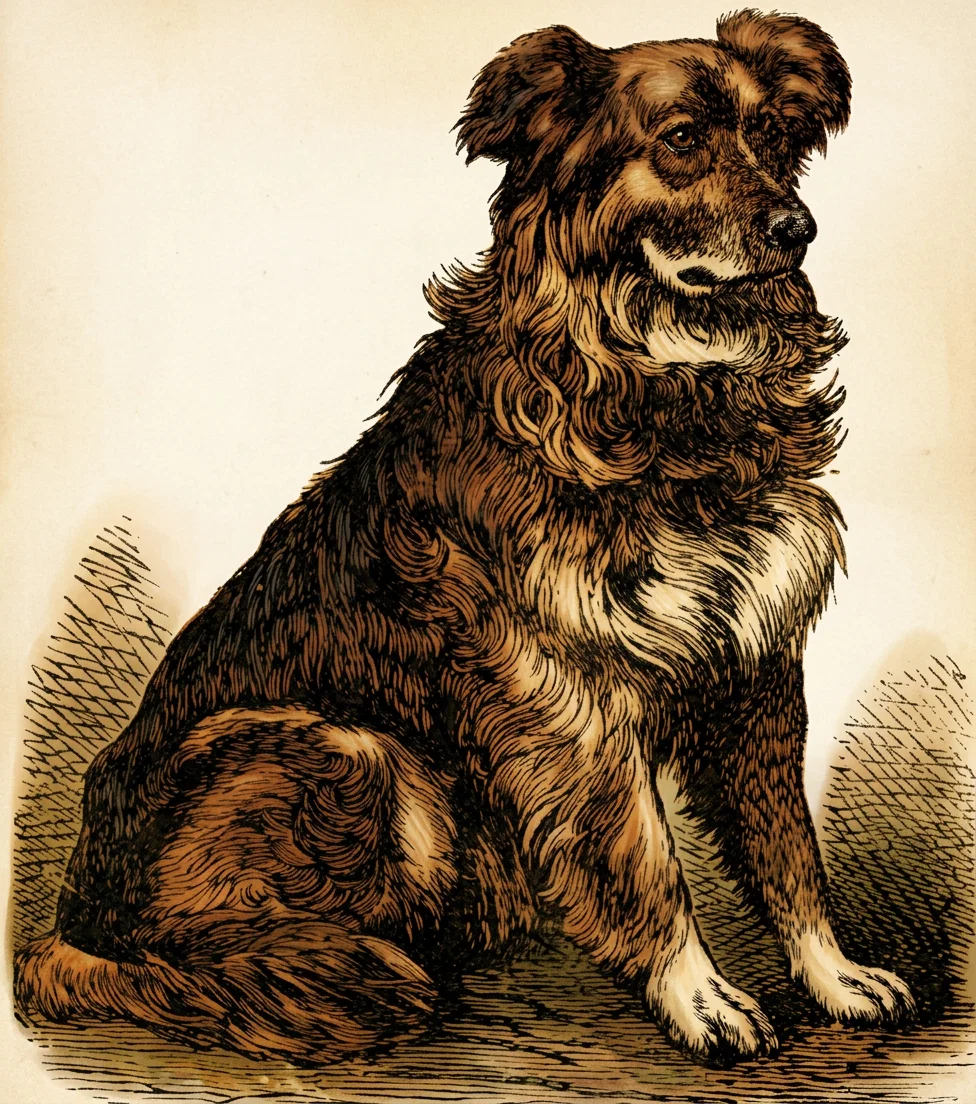
The picture on this page is copied from the photograph of a real dog. His name is Jack Willard. His master has taught him quite a number of tricks. He has learned to go to the meat-market alone and buy his own dinner. Many persons, knowing this, give Jack money; and so sometimes he gets more dinners than are good for him, and is made sick. So his master told the man who keeps the market to give Jack but one dinner a day. At first the dog did not like it at all because he could not get meat for his money every time he went. Now how do you think he saved his money! He dug a hole out by the ice-house and buried it there. His master saw him do it, and so would give him no money to buy his dinner next day. Finally Jack went and dug up his money and bought his dinner. He has often been watched since then, and always carries his extra money to the same spot, and never forgets that he has money in his bank. Jack still lives, and goes to market every day, besides doing many errands for his master.
Many children might take lessons from the dogs, and so learn to be quick and faithful in doing the errands on which they are sent. A. L. S.