THE TELESCOPE

7%

S. D. A. Publishing Association · Battle Creek, Mich. · Feb 14, 1883

FromThe Youth’s Instructor, Vol. 31, No. 7.

Read the full edition

THE TELESCOPE

Restored with AI
Written for the INSTRUCTOR.

THE TELESCOPE.

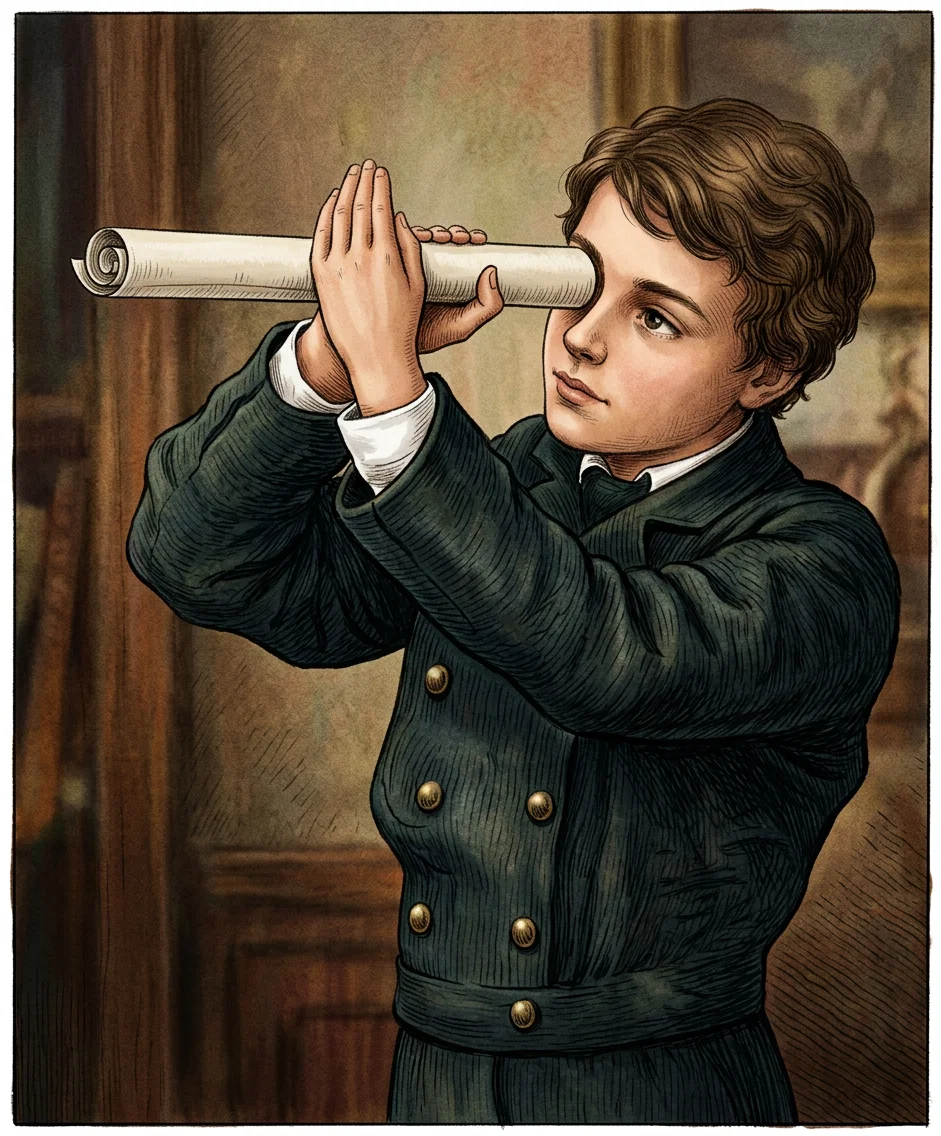
“Father,” said Frank one evening, “this afternoon as I was coming home after school, I stopped at the bookstore and bought a large sheet of drawing-paper for my lesson to-morrow.”
“It was tied up in a roll, and when I had come home and taken off the string, it still stayed rolled up. So I began to play with the tube,—to look through it and talk through it, and then Effie talked to me through it. We were very sure that a whisper through it sounded as plain as words spoken aloud at the same distance without it. And we found, too, that by looking through it, we could seem to see plainer. Now we did not know what to think of this, and so thought we would ask you to tell us about it when you came home.”
“Well, my children,” said Mr. Bruce, “you have found out some very interesting things. You are still too young to fully understand the principle of them, but I will tell you that the tube is said to gather the waves of sound and the rays of light, and keep them from scattering, so they are brought to your ear and eye more directly than they would be if you heard and looked without the tube. When you are older, you will be able to read and study into these things, and understand all about them.”
“And now I will tell you a little story which your discovery this afternoon brings to my mind. Nearly three hundred years ago, in a country far over the seas from here, lived a poor man who made spectacles, or eyeglasses, for a living. One day he was working in his shop, and his children were there with him, playing about and amusing themselves with his tools, though I hope they were not meddling with things their father did not want them to have. All at once the little girl said,—
“‘O papa! see how near the church steeple comes.’”
“The child had two of the lenses, or little round pieces of glass which go in the spectacles, one in each hand; and her father found by holding them, one behind the other as she did, and looking through them both, that the church steeple did seem to be brought into their very faces. He then made a tube of pasteboard, and set these lenses in it in such a way as to give this effect every time. Soon after, he made a better one, and took it to the ruler of the country, who thought it was a very nice thing. So this poor spectacle-maker came to be the inventor of the telescope, which he called ‘an instrument by means of which to see at a distance.’ The telescope has since been improved until it is a wonderful instrument; and without it men could not see the sun, moon, and stars, and tell us so many interesting things about them, as they do. Some clear evening I will take you to the observatory of the high-school building, and let you look through a telescope, and then you will better understand what it is.”
“Well,” said Effie, when her father was done, “it was the little girl who first found out about it anyway; and maybe, Frank, you and I will some day find out something new that nobody knows.”
“You may not be likely to do that,” said their father, “but if you keep your eyes open, you may learn some very useful things in a pleasant way, which will be a help to you when you are older and come to study about all these things.”
E. B. G.
Restored with AI