WHO WAS LINNÆUS?

8%

S. D. A. Publishing Association · Battle Creek, Mich. · Jun 11, 1884

FromThe Youth’s Instructor, Vol. 32, No. 24.

Read the full edition
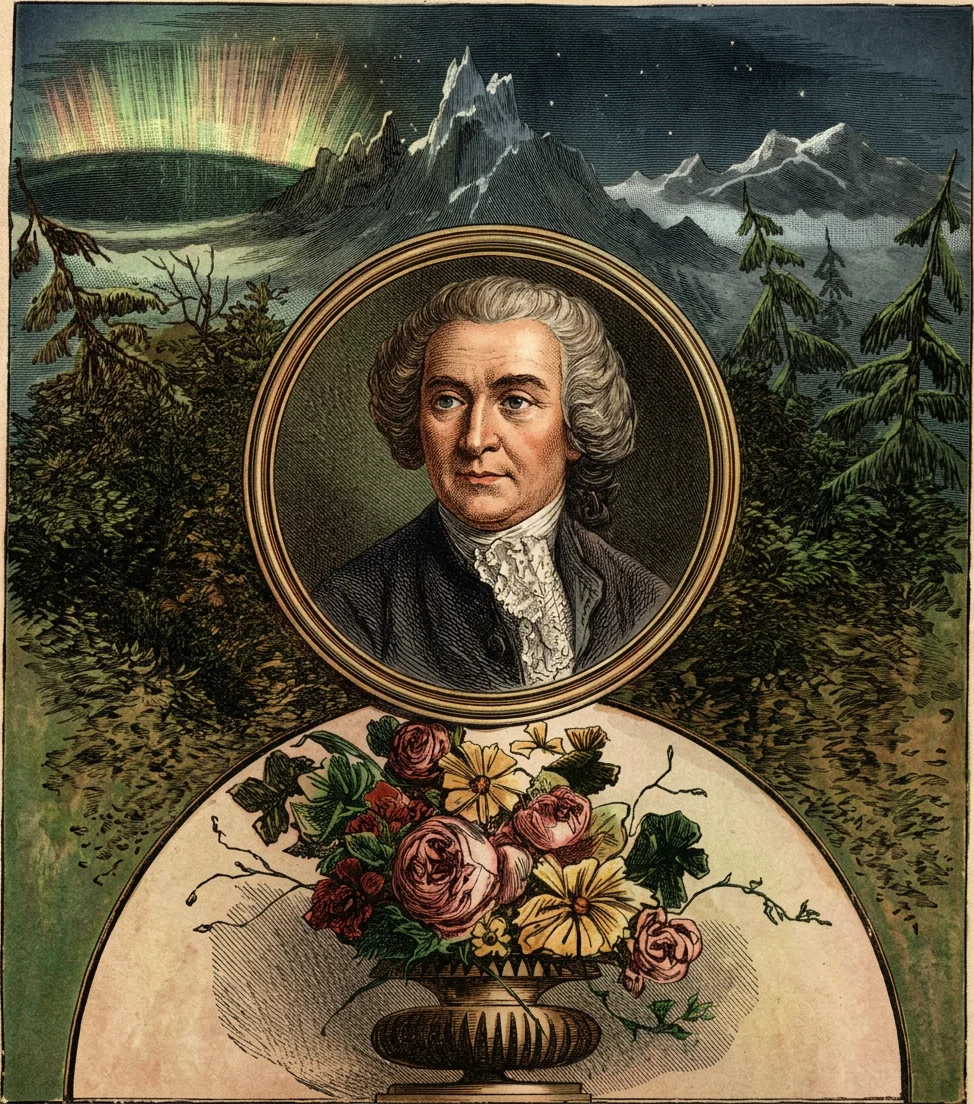
Restored with AI

WHO WAS LINNÆUS?

In an obscure little Swedish village, at the beginning of the last century, was born a boy who was destined to teach men more of the nature of plants than had been gathered by all the observers since the time when Solomon, with curious eye, noted the ways of the “hyssop on the wall.” This was Karl Linné, the son of a poor Swedish clergyman. As Linné he was known by his boyhood comrades, but when he came to address the learned world through books, he followed the custom of the old scholars, and wrote his name, as he wrote his works, Latin-wise; so that it is as Linnæus that we speak of the illustrious Swede.
Linnæus seems to have been born a botanist, and according to his own declaration, he was at once transferred from his cradle to a garden. His father had some knowledge of plants, and his uncle, who was his first teacher, had still more. In his diary he records that when he was four years old, he went to a garden-party with his father, and heard the guests discussing the names and properties of plants. He listened carefully to all he heard, and “from that time never ceased harassing his father about the name, quality, and nature of every plant he met with,” so that his parent was sometimes quite put out of humor by his constant questioning.
The lad was taught in a small grammar-school, where he showed so little taste for books that his father would have apprenticed him to a shoemaker, if a physician named Rothmann, who saw the boy’s love of natural history, had not taken him into his own house, and taught him botany and physiology. At one-and-twenty we find him, with an allowance of eight pounds a year from his father, a struggling student at the University of Upsala, putting folded paper into the soles of his old shoes to keep out the damp and cold, and trusting to chance for a meal. Nevertheless, he diligently persevered in attendance upon the courses of lectures—the more diligently, perhaps, because of his poverty.
In 1736, after meeting with many kind friends in his straitened circumstances, and making a long botanical journey to Lapland, he went to Holland, where he formed the acquaintance of a rich banker named Cliffort, who was also a great botanist. This was the turning-point of Linnæus’s life. Mr. Cliffort invited him to live with him, treated him like a son, and allowed him to make free use of his magnificent horticultural garden. He also sent him to England to procure rare plants, and gave him a liberal income. This continued for some time, till Linnæus’s health began to fail, and he found, besides, that he had learned all he could in this place, so he resolved to leave his kind friend, and pursue his travels.
At last he settled down as professor of medicine and natural history at Upsala, where he founded a splendid botanical garden, which served as a model for many such gardens in other countries. His struggles with poverty were now over forever, and his fame as a botanist became world-wide. He used to go out in the summer days with more than two hundred pupils to gather plants in the surrounding country, and many celebrated people came to Stockholm to attend Linnæus’s “excursions.” Then, as his pupils spread over the world, he employed them to collect specimens of plants from distant countries, and he himself worked incessantly to classify them into one great system.
In 1774, while lecturing on botany, he was seized with apoplexy, and two years later a second attack paralyzed him and impaired his faculties; so that the remaining months of his life were passed in mental darkness, which the sight of the flowers and opening buds and other familiar and beloved objects could never wholly dispel. His death, in 1778, was the signal for a general mourning in Upsala; a medal was struck, and a monument erected to his memory, and the king of Sweden pronounced a eulogy on him in a speech from the throne.
In stature, Linnæus was diminutive, with a large head and bright, piercing eyes. It is said that his temper was quick, but he was easily appeased, and he had pleasant relations with his scientific friends and associates. His was indeed a noble life. Truth-loving and enthusiastic, he had toiled, even when poor, for science and not for wealth; and when he became famous and rich, he helped his pupils, and lived simply and frugally till his death. After the death of Linnæus, his mother and sisters sold his collection of plants to an Englishman named Dr. Smith. The king of Sweden was at this time away from Stockholm, but as soon as he returned, and learned that such a valuable national treasure was on its way to England, he sent a man-of-war to try and bring it back. A very amusing chase then took place. Dr. Smith did not mean to lose his prize if he could help it; so he set full sail, and by good seamanship reached London without being overtaken. Thus the Linnæan collection was transported to England, where it still is.
Some persons suppose Linnæus to have been the founder, or father, of botany. But to think in this way about any man is to think very superficially. No science is ever the creation of any one man or of any one age, but of many men through many ages. Every science “cometh from afar,” and is a plant that has its roots deep in antiquity. Nevertheless Linnæus did a great many things for the science he loved. And the first and greatest thing of all was that he gave a second or specific name to every plant.
Before the time of Linnæus, botanists had given but one name to a set of plants; calling all roses, for example, by the name rosa, and then adding a description to show which particular kind of rose was meant. This was, of course, extremely inconvenient. It was as if all the children in a family were called only by their father’s name, and we were obliged to describe each particular child every time we mentioned him; as, “Smith with the dark hair,” or “Smith with the long nose and short fingers.”
The other useful point in Linnæus’s system was the accurate and precise terms he invented for describing plants. Before his time, naturalists used any words which suited them, and, as different people have often very different ideas as to what is meant by long or short, round or pointed, etc., the descriptions were often of very little value. But Linnæus could not work out his system without using very clear terms, and explaining beforehand what he meant by them; and as his system of names was soon followed in other countries, botanists in all parts of the world were able to recognize at once what was meant by the description of any particular plant.
Since the death of Linnæus, very great advances have been made in the study of plants, and his artificial system has been for the most part replaced by the natural system of later botanists. Nevertheless, his glory can never fade. If they are the greatest philosophers who bring together the largest number of separate facts under a common law, then does Linnæus rank high in this illustrious company; for his mighty hand it was that first seized the infinitely varied forms of vegetable life, from tropic palm to Arctic lichen,—that seized them, and, binding them together by the band of a great generalization, gave to the world, in one colossal bouquet, all the children of Flora.—A. B. Buckley, as adapted for Readings in Nature’s Book.