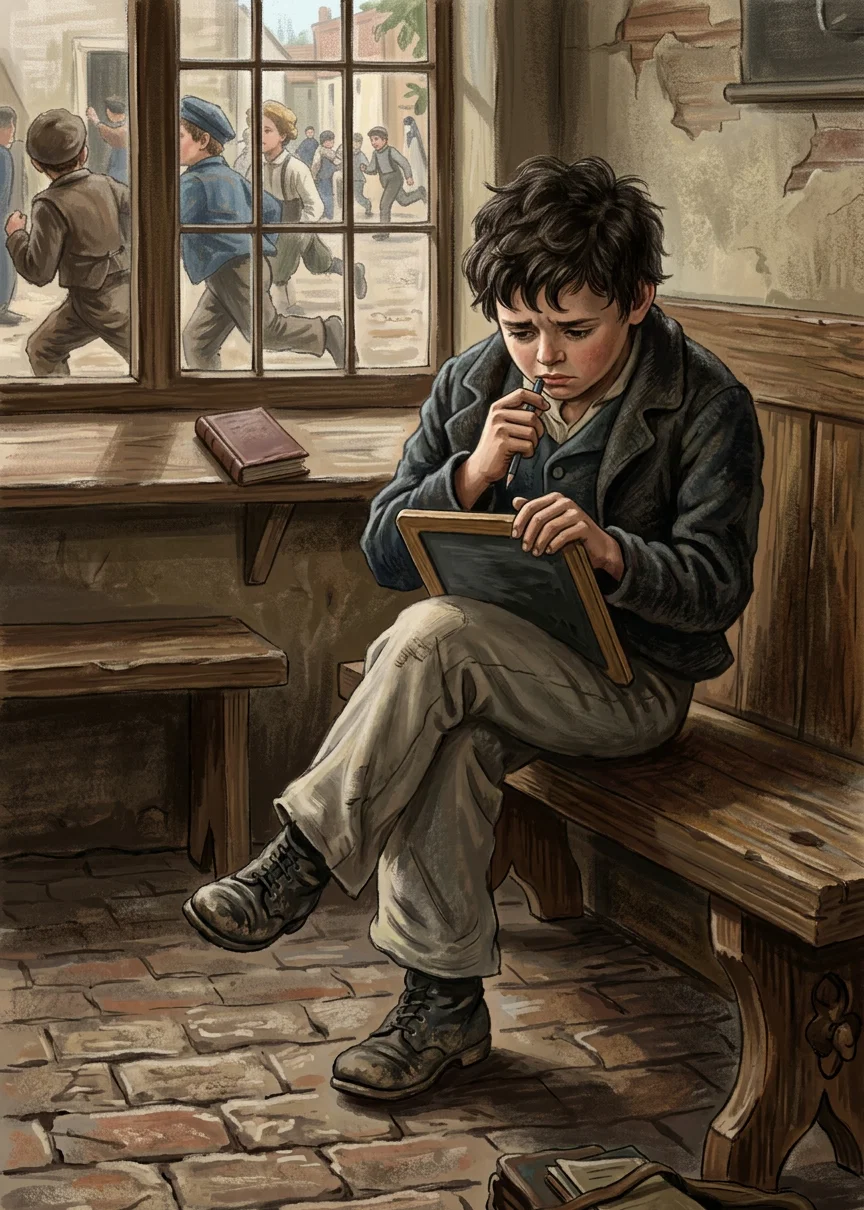
I am now going to tell you about one of the most important things you ought to learn,—a thing which you will probably never learn at all unless you learn it while you are young. I mean that you should learn to have order about everything you do. Have a time for everything, and do it at that time. Have a place for everything, and keep it in its place.
Restored with AI
If you do not do this, if you do things in a hap-hazard, disorderly manner, you will never be able to do a great amount of work in this world. You will always be in trouble because you cannot find things. How often I have heard children, when they lost things, call: “Mother, where is my hat? Jane, have you seen my hat? I can’t find my hat!” Then, perhaps the little boy sits down and cries; the rest are all at school, and he can’t go because he has lost his hat. Did you ever see children that were troubled in this way?
When the time comes for school, Mary can’t find her slate, she has lost her pencil, or she has forgotten where her atlas is. Mother and sister have to stop to find her lost things, and she goes off in a pet, because she is late to school. All this trouble comes from the bad habit Mary has fallen into of being disorderly.
When you take off your hat, always have a nail to hang it on, and put it there every time. Don’t fling it on to the lounge or chair. It does not take but a few seconds to hang it up, and then you will know where to find it. Put your playthings in their proper places. Always lay your books on the same shelf. An orderly boy has great advantage over a disorderly one, because he can gain time, and thus do things better.
I hope each boy and girl has a room of his own. I would like to get a peep into some of these rooms. They ought to be kept as neat as your mother’s parlor. The girls should take especial pains in this matter. Any one dislikes a disorderly, dirty house; and the little girl who keeps her room all cluttered up, will keep her house that way if ever she has one to keep. The boy who leaves his wagon out in the rain, his hammer under the tree, his jackknife in the barn, and his hat under the lounge, will never know where to find anything. When he gets to work for himself, he will always be in trouble, for no one will want to hire him.
It takes less time, children, to put things where they belong, than it does to hunt them up when you don’t know just where they are.
We judge people not only by their orderly habits, but we judge them by their dress. If their clothes are soiled and ragged, and their hair unkempt, we say right off that they do not amount to much. However poor we are, however old and cheap our clothes may be, we can always keep them neat and clean. It is not necessary to get your clothes all dirt whenever you work or play. Be careful with your clothes; they cost money and hard work, as you will find out when you have to earn them yourselves. If you do not learn to be careful of them now, I am afraid you will not do so when you are older. D. M. CARRIGHT.