JACK'S LESSON

5%

S. D. A. Publishing Association · Battle Creek, Mich. · Feb 3, 1886

FromThe Youth’s Instructor, Vol. 34, No. 5.

Read the full edition
Restored with AI

JACK'S LESSON.

The short afternoon sun was fast sinking behind the hill-tops. Nearly all the merry coasters had gone home by the time Jack and Jill reached the top, drawing their sled up after them. Jill's cheeks were red with the unusual exercise, and the wind had caught the soft brown curls from under her closely drawn cap, tumbling them about in wild disorder.
“Come on,” cried Jack, getting the sled ready for another ride, “I'm going down the steepest side.”
“Oh, don't,” replied Jill, clapping her hands, which were aching with the cold; “I'm half frozen. Let's go home.”
“You'd better not go down there, youngster,” said one of the large boys, coming around where Jack was; “little boats should keep near shore.”
“I guess I can steer down straight,” retorted Jack. “Do hurry up,” he said impatiently to Jill, as she stood shivering and hesitating, afraid to go down the steep descent. “I'm glad I'm not a girl; they're such 'fraid cats, anyway!” he added scornfully.
“I'm not a 'fraid cat,” said Jill, flashing an angry look at him, “and I dare go anywhere a boy does!” And without more ado, she took her place on the front of the coaster, and away they went, faster and faster, till they almost lost their breath.
But alas for Jack and Jill! Near the foot of the hill the road turned suddenly to avoid a stone pile, and here the ground was bare in several places. When they reached this spot, the sled swerved, plunged, and threw Jill against the rough stones. Jack soon sprang to his feet. There lay Jill, oh! so still, with the red roses faded from her cheeks, which were now almost as white as the snow itself.
“Jill! Jill!” cried Jack, going down on his knees beside her, “are you dead or hurt? do wake up and tell me!” But only a faint moan came in reply from Jill's pale lips.
“Hello! over there!” frantically called Jack, running toward two coasters just leaving the hill. “Hold on! I say; come and help me!”
The two turned and came where Jill lay. “Mercy to us! if it isn't Jill Brown,” they exclaimed in one breath; “and she's hurt her on those stones.” Very tenderly and carefully they laid her on their long coaster, taking off part of their wrappings to make her more comfortable; and then the sorrowful little party went slowly toward Mrs. Brown's snug cottage.
How long the road seemed to Jill! Every jolt of the sled sent a pain all through her as sharp as a knife; but she bravely bit her lips and kept back the moans, although the tears would come. The sun had set by the time they reached the gate, and the stars began to twinkle, one by one, in the deep blue of the sky. Through the window, Jill could see the red hearth-fire burning, and her mother lighting the evening lamp. And then she knew no more until she found herself in her own warm bed, with her mother and the doctor bending over her.
“I think she will get over it in time, madam,” she heard the doctor say; “but it will take a long while. She must not be allowed to use her back in any way for weeks. Perfect quiet will be needed for a short time. I will call again in the morning.” And then she heard him latch the gate, and drive off, the jingling of his sleigh bells rapidly growing fainter and fainter, at last dying out in the distance.
How long the doctor's “few weeks” seemed to Jill, and to Jack, too, who had never been near the hill since that last eventful slide. Very repentant, he lingered around Jill's bed, bringing all his treasures for her to look at, and generously giving her the one he thought more of than all the others put together,—a scrap-book half full of all sorts of postage stamps. It cost Jack a hard struggle to give this up; for he had the largest collection of any boy in town.
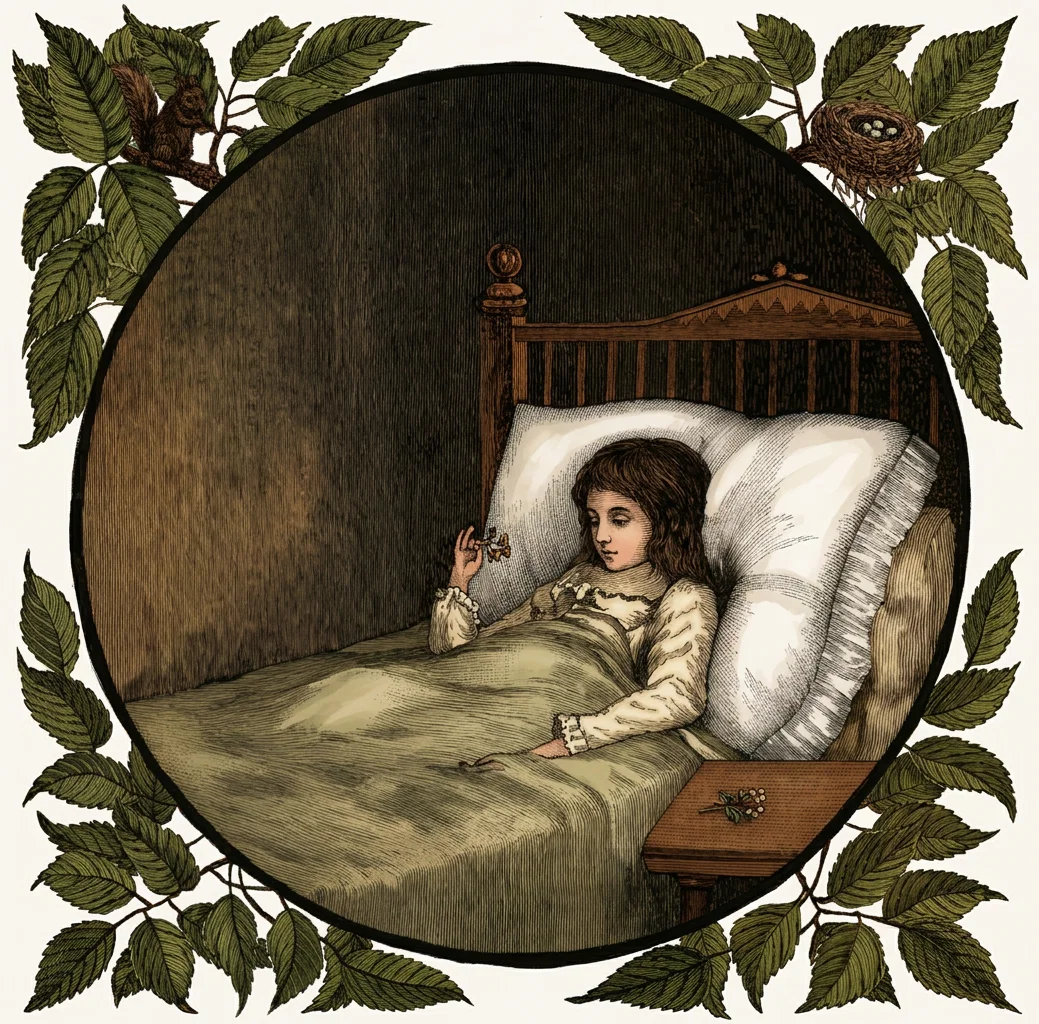
The lagging weeks brought March and April before Jill had left her bed. She could be bolstered up now, a part of the time; and one warm morning the window was thrown open so that she could hear the robins chirping in the tree-tops, and the swallows twittering under the eaves, all busy and happy at their house building. Jack was out, too, scouring the woods and fields for the early spring flowers that Jill loved so well,—the yellow buttercups, and pink May flowers, the pure white wind-flowers, and the blood-root blossoms, whose sweet fragrance and dainty freshness seemed to put new life into Jill. And there were odd green leaves, mosses, and lichens, and little fuzzy ferns, just uncurling to the light, and Jacks-in-the-Pulpit—how many hours they two had spent in imagining the strange things that Jack-in-the-Pulpit said to his flower-bearers.
By May, Jill could go outdoors if she walked slowly, and then she gained right along. You would hardly have known the careful, thoughtful boy who walked beside her for the old, hasty Jack of other days. He had learned a sad, bitter lesson in the long weeks when he thought Jill would never walk any more. And his mother had hung a motto in his room, where he would see it every morning when he first opened his eyes. It was,—
“Vessels large may venture more, But little boats should keep near shore.”
W. E. L.