ABOUT COBWEBS

10%

S. D. A. Publishing Association · Battle Creek, Mich. · Mar 10, 1886

FromThe Youth’s Instructor, Vol. 34, No. 10.

Read the full edition
Restored with AI

ABOUT COBWEBS.

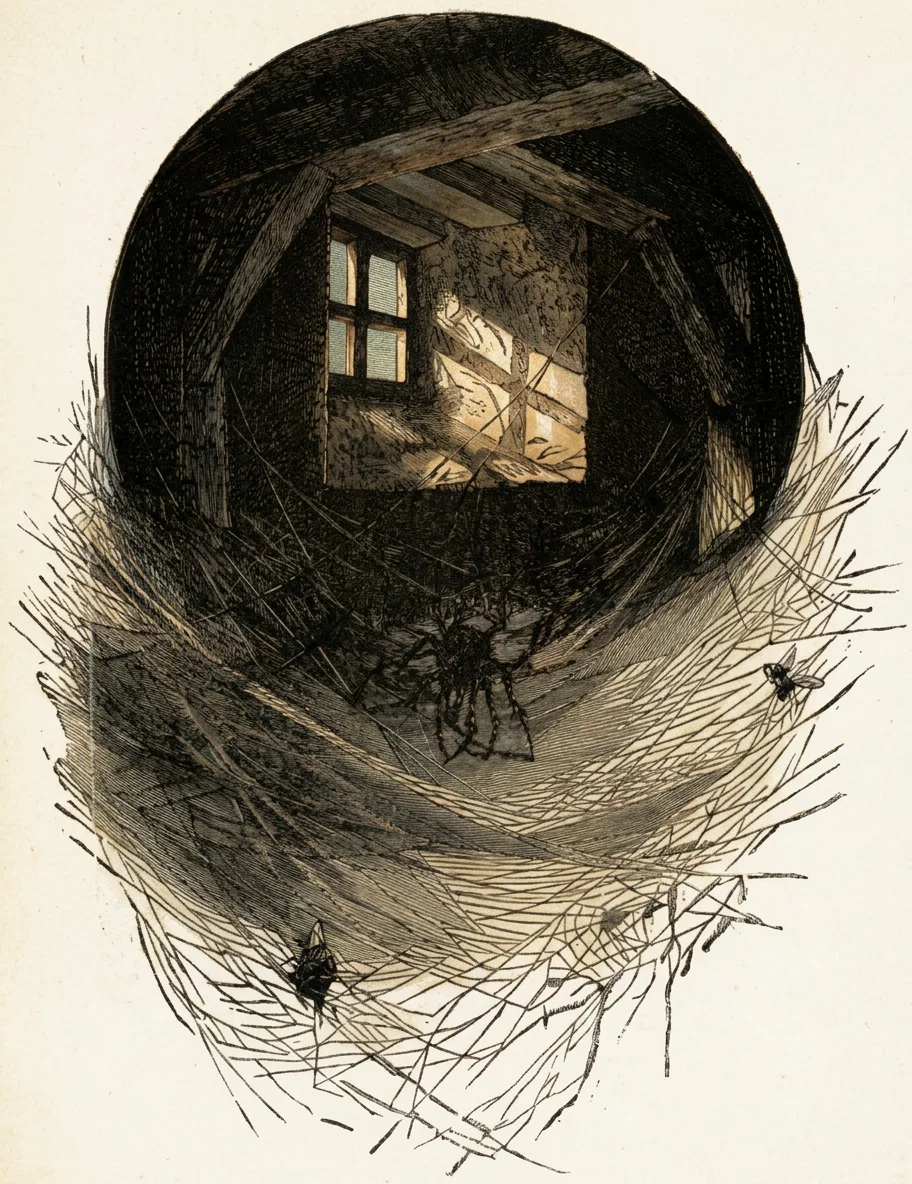
There it hangs, from the rafters in the old barn, an unsightly cobweb, thick and heavy with dust. Before you ruthlessly tear it down, let us examine it a little. Only a spider’s web, but how delicate the threads are, finer than the finest silk! How patiently the spider toiled, back and forth, back and forth, hundreds of times before his weaving was completed. Here hang two luckless flies, literally wound up hand and foot by their captor. Over in the darkest corner sits the grim bluebeard waiting for another fly to fall into his toils.
Restored with AI
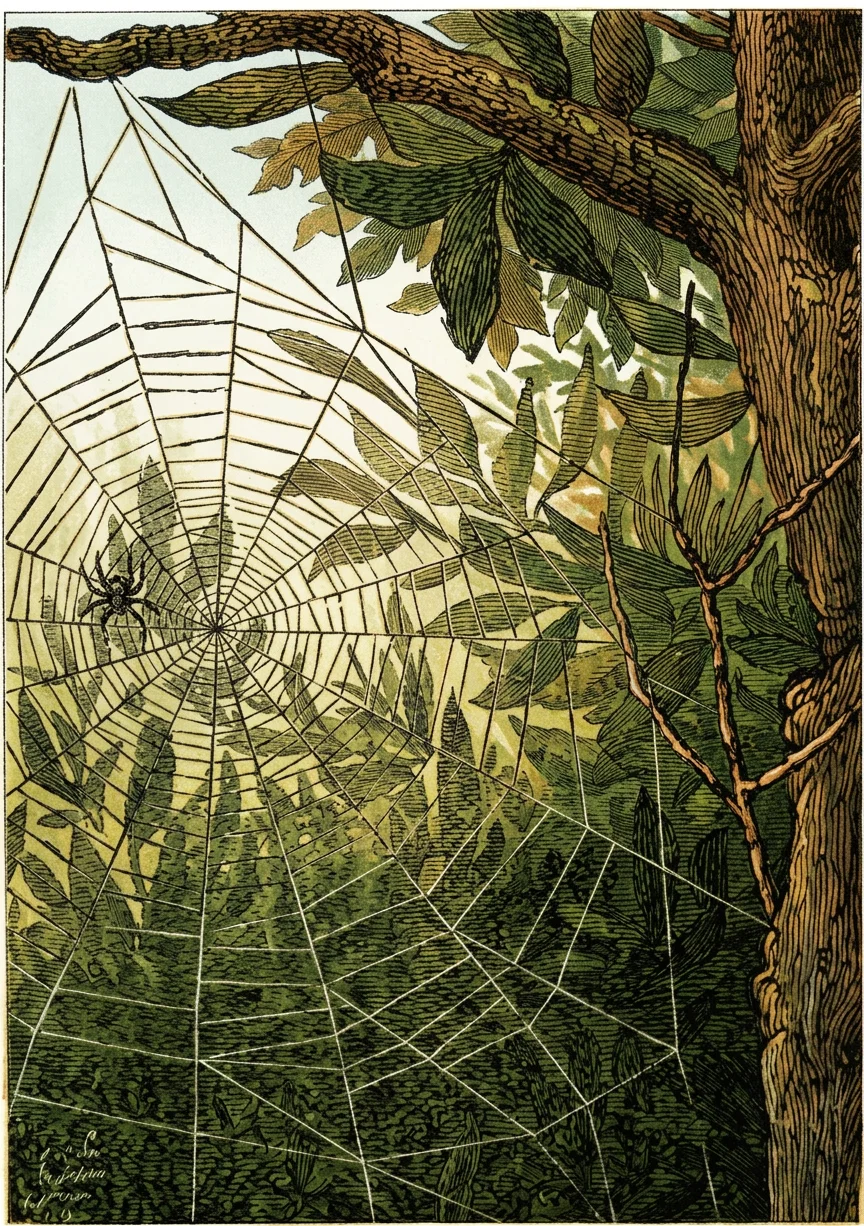
Out in the garden you may see these webs in greater perfection, as they hang suspended between the grass blades, and sparkling with the morning dew. You will almost invariably find the hostess at home, hanging in the middle of the web; or perhaps she is hidden under a leaf near by, with a telegraphic cord running up to her house to tell her when an intruder comes. Here is a fly, lazily brushing along, hardly awakened from sleep. Just a little too close he sails, and is tangled fast in the sticky, beaded threads that the spider has woven in among the others. The spider feels the vibration, and putting out her foot, tries all the threads that radiate toward the center, till she finds the one her prisoner is on. Then she runs out, and approaching the fly, throws out a fine thread which she guides with her hind foot, winding it round and round until her captive is compelled to forego his struggles. She remorselessly eats him, throwing away those parts that she is unable to chew. After that she repairs her broken net, and goes back to wait for another unhappy victim.
Let us take a closer look at her. She has eight long, hairy legs, which she is careful to keep free from dust and dirt. There are six or eight eyes on the top of her head.
Spiders are different in a great many respects from insects. The butterfly, you know, is first a caterpillar, and after a time he rolls up in a silk cocoon, next year to come out a beautiful butterfly. With the spiders this is not so, though the young are not at all like the old ones. Perhaps you have found in the autumn a little silken ball hidden away in some corner of the piazza, or tucked under the loose bark of a tree. This is the soft nest that the mother spider spins for her little ones. In this ball are a hundred or more eggs, only waiting for the warm spring weather to come and hatch the little spiders out, when they will make themselves free from their covering. At first they are so small you could hardly see them. They cast off their old clothes a good many times before they are fully grown.
The most wonderful thing about the spider is her ability to spin gossamer threads. This is how she does it. On the under side of the abdomen are six little spinnerets, each having, at least, one hundred holes. In the engraving at the right you can see these six spinnerets greatly magnified. Behind these are glands which secrete the fluid, and this hardens into silk when exposed to the air. Think how very fine these threads must be so that when six hundred of them are put together, it would still take over a million of the larger threads to make one as great as a hair. The spider can control these spinnerets perfectly, opening and closing them at will, and making the threads fine or coarse.
There is another wonderful thing in regard to their spinning. Spiders’ eyes, as I have told you, are in the top of the head, and their spinning apparatus is on the under side of the back part; so they cannot see what they are spinning. They do it by the sense of touch, for they spin as good webs in the dark as in the daylight.
Notwithstanding spiders spin such quantities of silk, they are very economical in regulating the supply, and never spin when there is a storm approaching. If they did not take this precaution, the quantity of silk would soon be used up in rebuilding their homes so many times. There are many curious things you can learn by watching the habits of these interesting little creatures. And now spring is coming, in fact, is really here, and all created things are waking up from their long winter’s sleep, I hope the boys and girls of the INSTRUCTOR family will make good use of their eyes, and really find out for themselves what a wonderful world they live in. W. E. L.