THE POET BRYANT

9%

S. D. A. Publishing Association · Battle Creek, Mich. · Dec 1, 1886

FromThe Youth’s Instructor, Vol. 34, No. 48.

Read the full edition
Restored with AI

THE POET BRYANT.

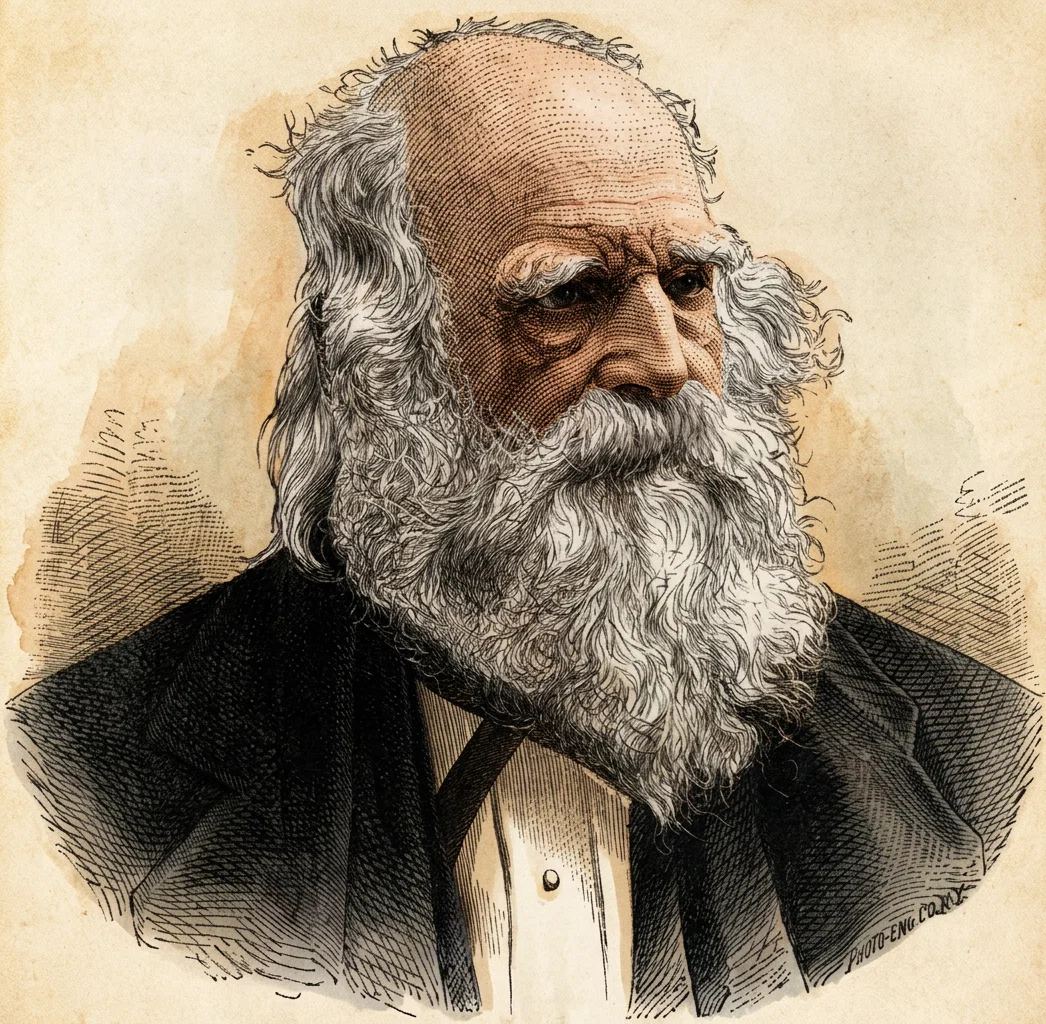
In the picture on this page you may see the portrait of the one who wrote the beautiful poem, “The Death of the Flowers,” which you have just read. It has been said, and justly, that he was the greatest poet we have had in America.
He was born in 1794, while Washington was still president, and he died in 1878; just think how much of the important history of our country Bryant was familiar with, because he had lived through it all. No doubt you would prefer to have him tell his own story about his boyhood, which he once did for the young readers of the St. Nicholas. In speaking of the way in which children were brought up in those days, he says:— “The boys of the generation to which I belonged—that is to say, who were born in the last years of the last century or the earliest of this—were brought up under a system of discipline which put a far greater distance between parents and their children than now exists. The parents seemed to think this necessary, in order to secure obedience. They were believers in the old maxim that familiarity breeds contempt. My own parents lived in the house with my grandfather and my grandmother on my mother’s side. My grandfather was disciplinarian of the stricter sort, and I can hardly find words to express the awe in which I stood of him—an awe so great as almost to prevent anything like affection on my part, although he was in the main kind, and certainly, never thought of being severe, beyond what was necessary to maintain a proper degree of order in the family.”
“One of the means of keeping the boys of that generation in order was a little bundle of birchen rods, bound together by a small cord, and generally suspended on a nail against the wall in the kitchen. This was esteemed as much a part of the necessary furniture as the crane that hung in the kitchen fireplace, or the shovel and tongs. It sometimes happened that the boy suffered a fate similar to that of the eagle in the fable, wounded by an arrow fledged with a feather from his own wing; in other words, the boy was made to gather the twigs intended for his own castigation.”
Then he tells of his school-days and the visits of the committee men; of the merry-makings, “raisings,” huskings, and apple-parings; of the meetings, and the grim tything-men, who kept the young folks in order, and woke up the drowsy ones; and he concludes it all with the remark, “It is yet to be seen whether the different system now adopted in training the youth of our country will give it a better class of citizens.” But I think you would best like the story of his life as he tells it in a touching poem called “A Lifetime.”
Bryant did not depend on his verses for a living, for that would have been starvation seventy years ago. For a time he practiced law, and bid fair to rise to a distinguished place in the profession; but it was distasteful to him, and at length he moved to New York City, where he took a place as editor on a daily paper. As he says in his poem:—
“Another change, and I see him Where the city’s restless coil Sends up a mighty murmur From a thousand modes of toil. “And there, with the clash of presses, He plies the rapid pen In the battles of opinion, That divide the sons of men.”
For a period of over fifty years, to the time of his death, he continued to edit the paper, walking daily from his up-town home to his office, a distance of three miles, and back again, in all kinds of weather, till within two weeks of his death.
In his editorial work, Mr. Bryant was very careful of the feelings of others. There is a pleasing little story of this trait of his character told by one of his fellow editors: “Soon after I began to do the duties of literary editor, Mr. Bryant, who was reading the review of a little book of wretchedly halting verse, said to me: ‘I wish you would deal very gently with poets, especially with the weaker ones.’ Later I had a very bad case to deal with, and as Mr. Bryant happened to come into the room while I was debating the matter in my mind, I said I was embarrassed by his injunction to deal gently with poets, and pointed out to him the utter impossibility of finding anything to praise or lightly to condemn in the book before me. After I had read some of its stanzas to him, he answered: ‘No, you can’t praise it, of course; it won’t do to lie about it, but’—turning the volume in his hand and inspecting it—‘you might say that the binding is securely put on, and that—well, that the binder has planed the edges pretty smooth.’”
But you must read his poems for yourself if you wish to become really acquainted with this great man; and I think you will not regret doing so, for his pure thoughts, told in such beautiful words, will leave a good impression on the mind. W. E. L.