SOMETHING over seventy years ago there lived in a settlement of Scotch-Irish in Londonderry, New Hampshire, a lad by the name of Horace Greeley. He was a sickly child, often under medical treatment; but the tender care his mother was called upon to bestow on him only endeared him to her the more. “I was,” he wrote in after years, “her companion and confidant about as early as I could talk; and her abundant store of ballads, stories, anecdotes, and traditions was daily poured into my willing ears. I learned to read at her knee,—of course, longer ago than I can remember; but I can faintly recollect her sitting spinning at her ‘little wheel,’ with the book in her lap whence I was taking my daily lesson; and thus I soon acquired the facility of reading from a book sidewise or upside down as readily as in the usual fashion,—a knack which I did not at first suppose peculiar; but which, being at length observed, became a subject of neighborhood wonder and fabulous exaggeration.”
In those early days when spelling was the principal thing taught in the district school, young Horace made himself a neighborhood fame in this direction. “The spelling matches,” he says, “usually took place in the evening, when I could not keep my eyes open, and should have been in bed. It was often necessary to rap me sharply when ‘the word’ came to me; but I never failed to respond; and it came to be said that I spelled as well asleep as awake. I apprehend that this was more likely to be true of some others of the class; who, if ever so sound asleep, could scarcely have spelled worse than they did.”
As Horace grew stronger, he was obliged to do his part toward wrestling a living from their stony, sterile New England farm. But farming then was not the science which it has since grown to be; and the lad’s ambitious, active mind could find little that was congenial in this employment. “Our farmers’ sons escape their fathers’ calling whenever they can,” says Greeley, “because it is made a mindless, monotonous drudgery, instead of an ennobling, liberalizing, intellectual pursuit. Could I have known in my youth what a business farming sometimes is, always may be, and yet generally shall be, I would never have sought nor chosen any other. In the farmer’s calling, as I saw it followed, there was neither scope for expanding faculties, incitement to constant growth in knowledge, nor a spur to generous ambition. To preserve existence was its ordinary impulse; to get rich, its exceptional and most exalted aim. So I turned from it in dissatisfaction, if not in disgust, and sought a different sphere and vocation.”
When about fourteen years old, Greeley bade adieu to the farm, and entered a printing office; for from early childhood he had, as he said, “loved and devoured newspapers.” He worked at printing until he became accurate and proficient at the trade; and when barely twenty-two, he, in company with another young man, set up a small printing house in New York City, where he had come two years before with but ten dollars in his pocket. It would be too long a story to recount all his successes and failures before he fairly launched out in the great enterprise of his life,—the founding and editing of the New York Tribune, a political paper which wielded great influence in the abolition of slavery and other social and political reforms. “Writing,” as he says in his Autobiography, “the plainest and squarest Anglo-Saxon I know, and often speaking of political opponents, their works, ways, and words, in terms that could by no possible stretch of courtesy be deemed flattering,—terms, doubtless, sometimes misjudging and undeserved,”—he made himself many bitter enemies, but also many warm friends.
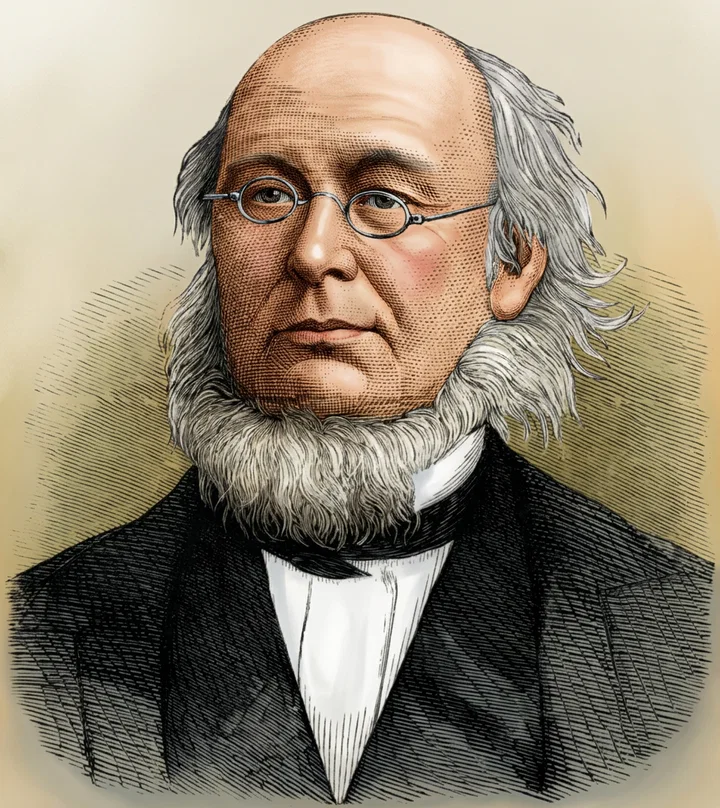
His journalism lay very near to his heart. “Fame,” he says, “is a vapor; popularity an accident; riches take wings; the only earthly certainty is oblivion; no man can foresee what a day may bring forth; while those who cheer to-day will often curse to-morrow; and yet I cherish the hope that the journal I projected and established will live and flourish long after I have moldered into forgotten dust, being guided by a larger wisdom, a more unerring sagacity to discern the right, though not a more unfaltering readiness to embrace and defend it at whatever personal cost; and that the stone which covers my ashes may bear to future eyes the still intelligible inscription, ‘Founder of the New York Tribune.’”
In 1872 Mr. Greeley ran for President, but was defeated in the election of General Grant. The intense excitement preceding the election, together with the sickness and death of his wife, told severely on Mr. Greeley, both mentally and physically. He sank beneath the strain, and died Nov. 29, 1872, closing sixty-one years of the most incessant toil for the benefit of his countrymen.
Like many other men of strong convictions and generous impulses, he sometimes made mistakes, but we may admire his willingness to help the needy, his industry, and his unswerving integrity to be true to his convictions regardless of the political favors he might lose by so doing. W. E. L.