WHEN, about one hundred and eighty years ago, Captain Cook, the English explorer, visited New Zealand, he predicted that its agricultural advantages and pleasant climate would some day make it a prosperous British colony. Could he now rise from his grave amid the South Sea isles, and again view this place, no doubt he would find a prosperity far beyond anything he had anticipated. At that time the island was inhabited by a nation of cannibals; but to-day there are large cities and fruitful farms scattered throughout this far-away land. And not only is the land reclaimed from its wild condition, and the rich soil made to produce abundant harvests, but the Maoris, the aboriginal inhabitants, have been turned from heathenism to the worship of the true God.
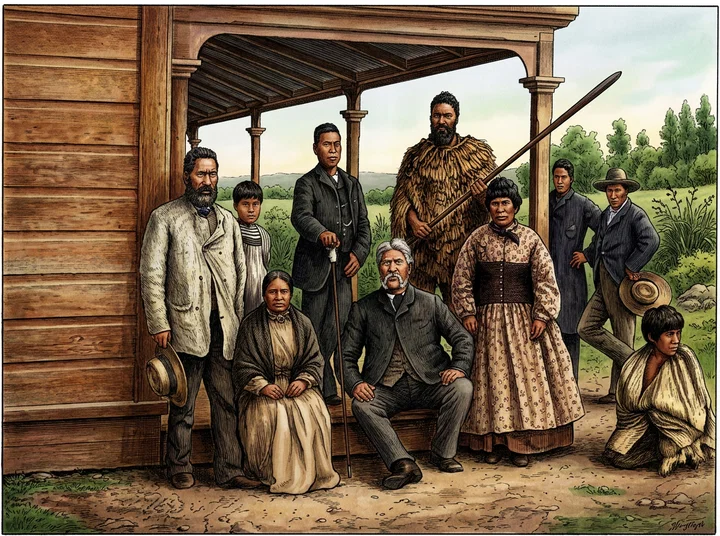
In 1814 the first missionaries landed upon the shores of New Zealand; and for the next score or more of years, savage barbarism slowly retreated before the advance of the gospel, until in 1840 the whole land was nominally Christian. Now began the regular colonization of the English, land being purchased of the tribes; and for twenty years, at various intervals, the country became the scene of war and bloodshed, caused by dissatisfaction and jealousy on the part of the natives as they saw their land given up to the white man. For many years, however, peace has reigned, and the Maoris show themselves to be ready learners and open to civilizing influences. They still own millions of acres of land, and one class is intelligently represented in the Colonial Legislature by their own people. Another class inhabit what is known as the “King Country,” having little to do with their English neighbors, and keeping up their own government. Those chiefs who ally themselves to the Government are presented with a substantial frame house as a residence; and in the picture we see a typical Maori household of the more advanced order. In the background stands the chief of his tribe, having on his shoulders a tunic woven of the native flax, and holding in his hand the baton of his authority. The Maoris are fond of patterning after the English customs of dress, and many, as we see, are well clothed. Doubtless the old man in the foreground could tell strange stories of his boyhood days, and of the marvelous changes wrought before his eyes in the past half century. He must have been a young man when Hone Heke, the renowned Nagpuhi warrior, led his barbarian followers against the colonists; and in the prime of life when in 1864 the British troops were again called upon to quell insurrection among the natives. As Christianity brushes away from the minds of this people the trammelings of centuries of ignorance and sin, it brings to light a heart of honesty and integrity, a gem which sparkles none the less brilliantly for lying beneath the dusky breast of these children of nature. And all can but feel a sympathy for them, with a hope that many, because of their integrity and their faith in Christ, will be called to glorify God in his kingdom, and show forth the marvels of his grace.
W. A. SPICER.