THAT BLESSED BOY

5%

S. D. A. Publishing Association · Battle Creek, Mich. · Jul 27, 1887

FromThe Youth’s Instructor, Vol. 35, No. 30.

Read the full edition
Restored with AI

"THAT BLESSED BOY."

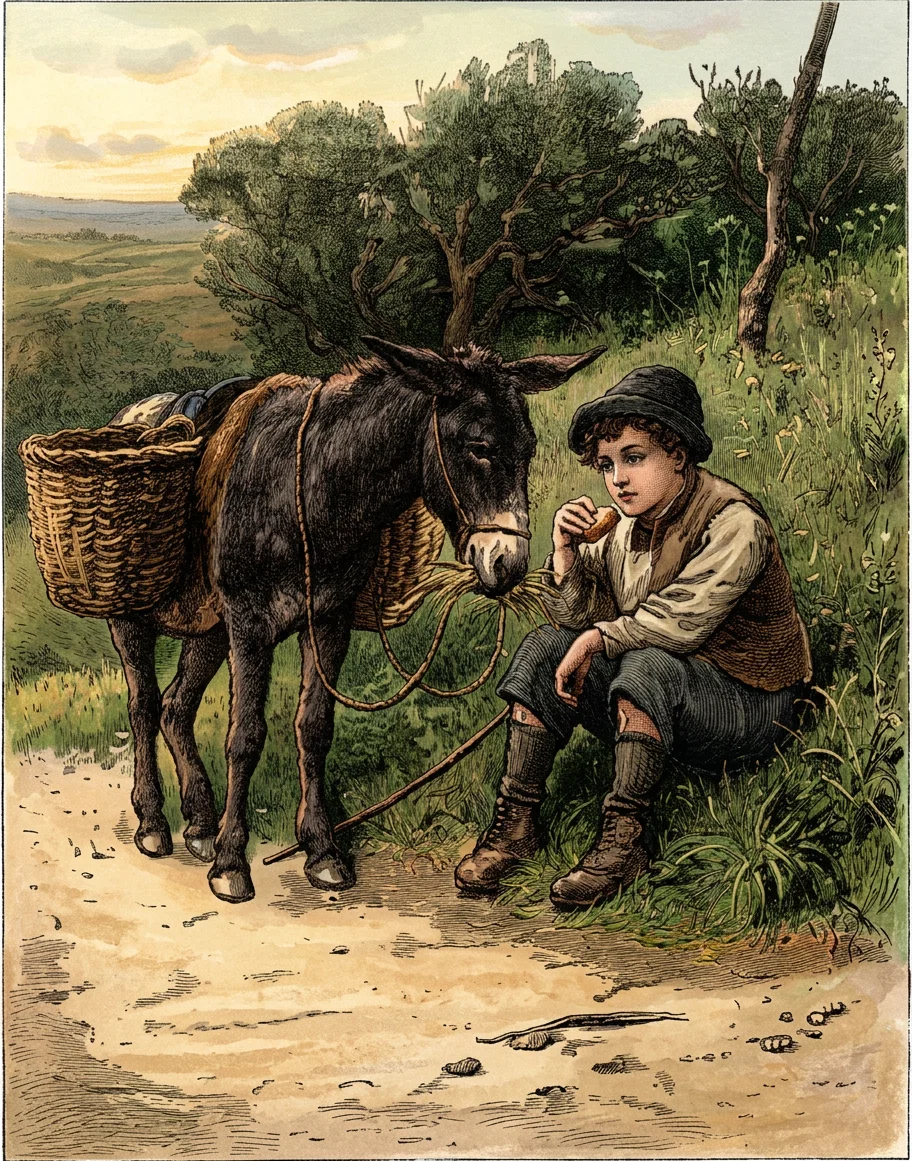
Joe sat down by the roadside to eat his luncheon. It was early morning. The sun had risen with never a cloud in which to wash his great, yellow face, and was even now pouring down beams of heat. If you were to follow this same sandy, dusty road for about four miles, you would at last come to a little, unpainted cottage nestled among the apple trees, and covered with morning glories and woodbine. You would hardly have thought it worth looking at the second time; but to Joe it was the dearest spot in the world—it was home.
Indoors a patient little mother glided quietly about between the kitchen, with its clutter of dishes and milk-pans, and the cool, shaded sitting room, where, on a couch in one corner, lay a little girl about ten years old. Poor little Beth! For many weary weeks she had not stepped across the room,—not since she and Joe had taken that last leap from the haymow, and Beth had slipped down through a hole in the floor, and was carried into the house, white and limp from the sharp pain of a broken ankle.
Just yesterday morning the jolly old doctor had stopped to see little Beth, and bandage the ankle again. He was a kind-hearted man, poor so far as money went, but rich in good works. Many a poor man, if you had stopped to listen, would have told you what the doctor had done for him when want and sickness had left him little hope. The cases the good man took pay for were fewer than the ones he visited for nothing. There was a cloud on his face as he went out of the door this morning. Beth's mother saw it, and followed him, with an anxious inquiry in her eyes.
“Ahem!” said the old doctor, clearing out his throat, “may as well tell you, Mrs. Mason, what I've been afraid of all along. You'll have to take Beth to the hospital if she is ever to be able to walk again. She needs some skillful treatment for awhile. Maybe I can help you about it,” he added, as he saw the clouds gather on Mrs. Mason's face; “I'll call again to-morrow.” Then he sprang into his gig and was gone.
Joe was around the corner of the house, weeding in his garden. The vines hid him from sight, but he heard every word the doctor said. Joe knew how empty his mother's purse was, and that the hospital was out of the question.
All day the thought troubled him, as he weeded in the garden or ran errands for his mother. Mrs. Mason was so perplexed herself that she did not notice Joe. He was glad when night came, and he could be by himself.
He was up very early the next morning, and long before sunrise had started to town with two huge baskets carefully packed with vegetables and early garden sauce. The garden was Joe's pride. He had planted and tended it all himself, and had marketed the stuff in the town every day that spring. The nickles, dimes, and half dollars were slowly filling his strong little box; for Joe meant to go to the city school that winter, and may be, sometime—who knew?—perhaps he could save enough to go to college. Though Mrs. Mason could never send Joe herself, she was perfectly willing he should help himself to as good an education as he could get.
This morning Joe sat down in the grass to eat his lunch before starting on the long walk home. Old Dobbin, the donkey, was hungry too, and thoughtfully munched the grass while Joe ate.
“It's dreadful hard to be so poor, Dobbin,” Joe began, and Dobbin inclined his long ears to hear what Joe had to say. “You don't mind it when you're well,” continued Joe; “but it's pretty hard when your folks are sick and can't have things. Come, old fellow,” he said, patting Dobbin on the nose, “help me think of a way out.”
Dobbin blinked his wise, patient eyes. Joe had finished his luncheon, and pulled his wallet out to count his morning's sales. “Ninety-five cents,” he said, as he finished counting, and put the money back in his pocket.
Suddenly he jumped up, giving old Dobbin such a hard pat on his nose, that he gave a loud, surprised he-haw, and started down the road. “Why not,” said Joe, his dark eyes lighting up with the thought—“why not let her take my school money? I guess I can learn a little more in this district if I try;” and he hurried up the road towards home.
Rushing up stairs, he seized his precious money box, and tumbling down two steps at a time, put it in his mother's lap as she sat shelling peas for dinner.
“Mother!” he exclaimed, “I heard what the doctor said; and I want you to take this and send Beth to the hospital.”
“But Joe!”—
“Yes, I know,” said he interrupting her. “I thought it all over on the way home, and I can wait about going to school if Beth can only walk again.” Then he rushed outdoors so that his mother should not see the tears in his eyes.
“That blessed boy!” said Mrs. Mason, wiping her own eyes with the corner of her apron. Then she put the money away in the bureau.
When the doctor came, she told him what Joe had done. “Bless him!” said the old man, with a thump of his cane on the veranda, “he's got the right stuff in him.”
When, through the long summer that followed, Mrs. Mason saw how careful and kind Joe was growing toward every creature that was feeble or sick, and how cheerfully he sacrificed his own plans for the good of others, she did not regret that she let him give away his money. For though he might not grow to be as wise a man as he had hoped, and might never get through college, she was certain he would be a better man, and so she was contented. W. E. L.