A WONDERFUL DISCOVERY

10%

S. D. A. Publishing Association · Battle Creek, Mich. · Sep 14, 1887

FromThe Youth’s Instructor, Vol. 35, No. 37.

Read the full edition

A WONDERFUL DISCOVERY.

LONG, long while ago, over four thousand years ago, there lived on the other side of the world a woman whom I am sure we should remember gratefully. I do not suppose she was very handsome, with her straight, black hair, and little almond-shaped eyes. Her name was as odd as she was herself, for she was called Se-ling-chi. Now you will know she was a Chinese woman.
Restored with AI
Her husband's name was Shin-nung. But I suppose he could get along very well with his name, since he was emperor and could rule over such a vast country, and be called the “father of the people.” He was truly a father to his subjects, and tried to make the country better.
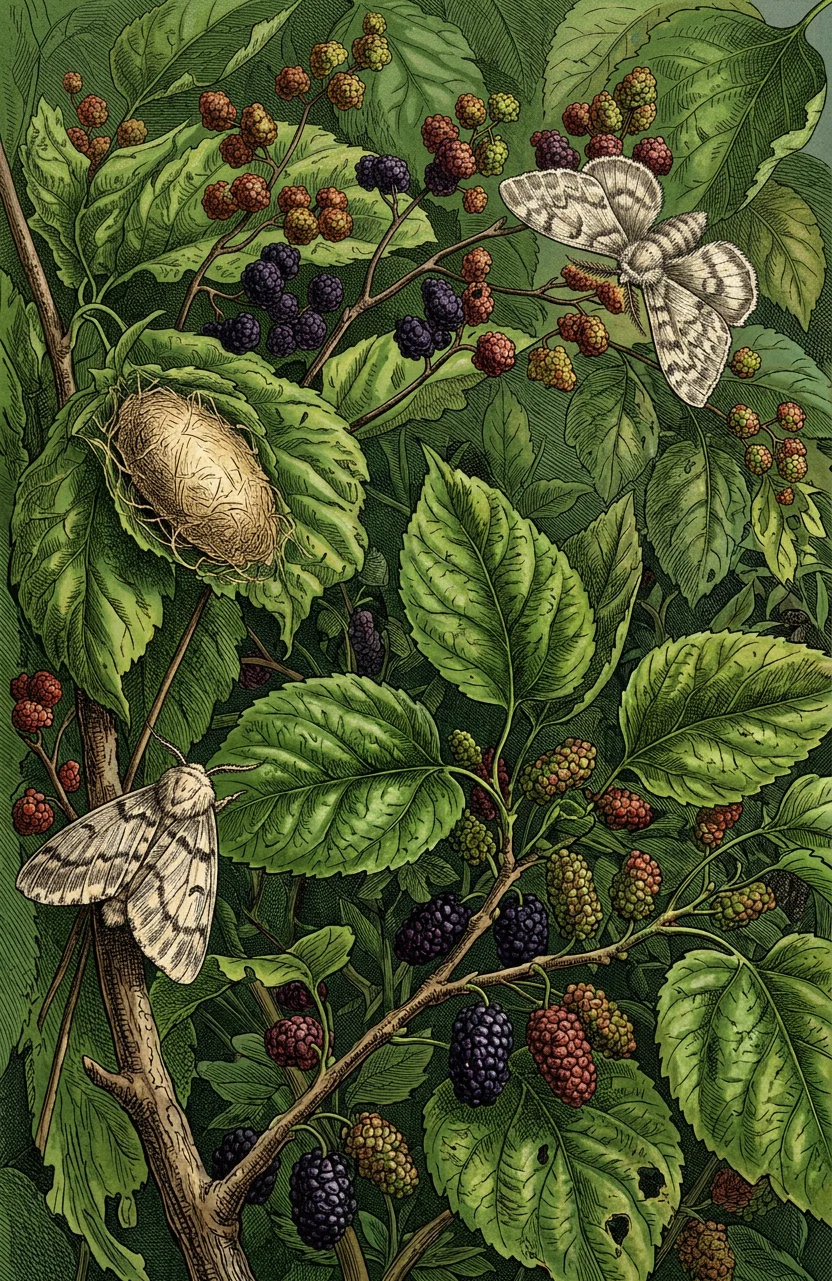
I should not wonder but that, when walking under his mulberry trees, he had often seen greedy little worms munching the leaves, and spoiling the beautiful foliage. Perhaps he grew vexed with them at first, and then interested, as he watched them winding themselves up into little oblong rolls of rich, creamy threads, oh, so soft and fine!
“Ah! I must speak to my dear Se-ling-chi about these wonderful threads,” he no doubt thought. “The women are really wonderfully handy about some things, and perhaps she will know of a use to which these threads can be put.” So Se-ling-chi was shown the worms.
Then she caused her maids and the princesses to gather large quantities of the worms, and carry them to a place made on purpose for them, where she fed them every day with fresh mulberry leaves, and watched them so carefully, from the time when they hatched out of the tiny eggs till they turned to butterflies.
The little worms were very greedy, and munched and munched so many leaves, that at last they grew too fat to eat any more. Then they began to move about; they had been too hungry to think of that before. Se-ling-chi saw them, after they had found a convenient corner, throw off threads of silk, and fastening themselves securely, begin to wind the delicate threads around their body until they were completely hidden.
Now Se-ling-chi set her wits to work to learn how to unravel this long thread of silk. It would be interesting to know how many times she failed—for I have no doubt it was more than once—and just what way she found successful at last; but that, I suppose, we will never find out. That she did succeed at last, we know, not only finding a way to wind off the silk, but weaving the most beautiful fabrics.
Shin-nung guarded his secret well, and so did the emperors who ruled after he died; so that it was many, many years before any one outside of the Empire found out how to make silk, or could get the worms that spun such fine threads. But at last two cunning priests succeeded in carrying away a few silk worm's eggs in a hollow cane, and then the Chinese secret was a secret no longer. And that is how it came about that everywhere silk is made. But nobody, not even the Chinese, can now make such beautiful silks as came from the royal hands of Se-ling-chi. W. E. L.