SUCH a queer looking plant, you say. Yes, it is odd looking, with its stiff, thick, narrow leaves all growing in a cluster near the ground. The fruit looks something like a huge pine cone, but you may be sure it does not taste at all like one. It is one of the most delicious things Dame Nature keeps in her storehouse.
South America is the home of the pine-apple; but it has been carried into Asia and Africa, where it has lived such a long time, and thrives so well, that it is hard to believe it has not always grown there.
Almost all the pine-apples used in England are raised in that country in hot houses, or “pineries,” as they are called, because they are used solely for raising pine-apples. Pine-apples raised this way are much nicer than the wild ones.
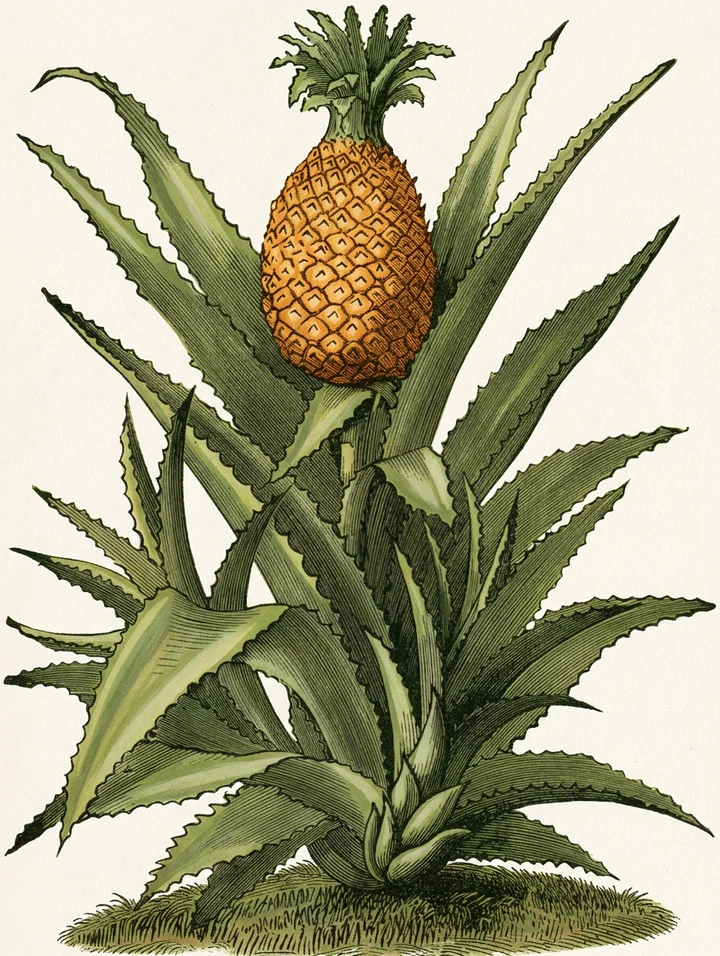
At the top of the fruit grows a little cluster of leaves, that the gardeners set out to raise more pine-apples from; for each plant produces but a single pine-apple.
The leaves of this plant are useful, too; for out of the fine, tough fibers, that give strength to the leaf, is woven a very delicate, light fabric, called pine-apple cloth.
Perhaps you have seen a relative of this plant growing in greenhouses, where its thick leaves, with a wide margin of cream color, make a fine showing among the other plants. W. E. L.