We have just been reading a beautiful story about two German peasant children. Now Germany is a country away across the ocean; can you point it out on the map? The chief ruler in the United States is called a president, but in Germany he is called a kaiser, which means emperor in English. The name of the present German emperor is Wilhelm Friedrich Ludwig. Wilhelm means William, so when you hear any one talking about William I. of Germany, or Kaiser William, or Wilhelm, as he is sometimes called, you may know it is the ruler that this story tells about.
Well, this emperor is a very aged man. He was born in 1797, which makes him about ninety years old. He is very kind, and rules so well that his subjects are exceedingly fond of him, and love to show their gratitude when they have a chance.
Once two little girls wanted to show him favor. They had heard that the king admired a certain kind of flower which grows among the wheat in Germany, known as the corn-flower, or Kaiser Blumen. It is described as a wild flower, with the petals like our dandelion, but of a bright blue color. Kaiser Blumen means in English “emperor’s flower,” and it is from Kaiser Wilhelm that the name comes. The story is like this:—
“Two little peasant girls, knowing that the emperor loved the corn-flower, gathered a large bouquet of it and went all alone, several miles, into Berlin, intending to present it to him.
“After much trouble they reached the door of the palace, where the guard, dressed in his brilliant uniform, stood. They managed, in great trembling, to tell their story, and thought at first this splendid man was the emperor. He heard them through, and was about sending them home when a plain, kind old man came out and asked them what they wanted.
“The fierce guard stood back at his approach. The girls told their story again, and he, taking their flowers, asked them in, and told them to sit down, and he would present the flowers to the emperor.
“The old gentleman then went away. In a moment a gorgeous guard appeared, and told the children the king wanted to see them. He led them into another room, royally furnished, and there they saw the same kind old man, holding their flowers in his hand. It was the emperor. He gave each of them a present, talked kindly to them, had his servants show them the palace, and sent them home the happiest children in Germany.”
As we read the story, we could but think of another Ruler who loves children,—a King who is going to rule here by and by. There are kings many, and lords many now upon the earth, but this King will have a title high above every name; for he will be “King of kings, and Lord of lords.”
This great earth belongs to him. Do you remember the price he paid for it? And he is coming to set up his kingdom upon it in a little while. He will have a great many people with him when he comes,—do you know who they will be? Shall you be of the number that will live with him upon the new earth? Are you serving him now? Then he is already your king.
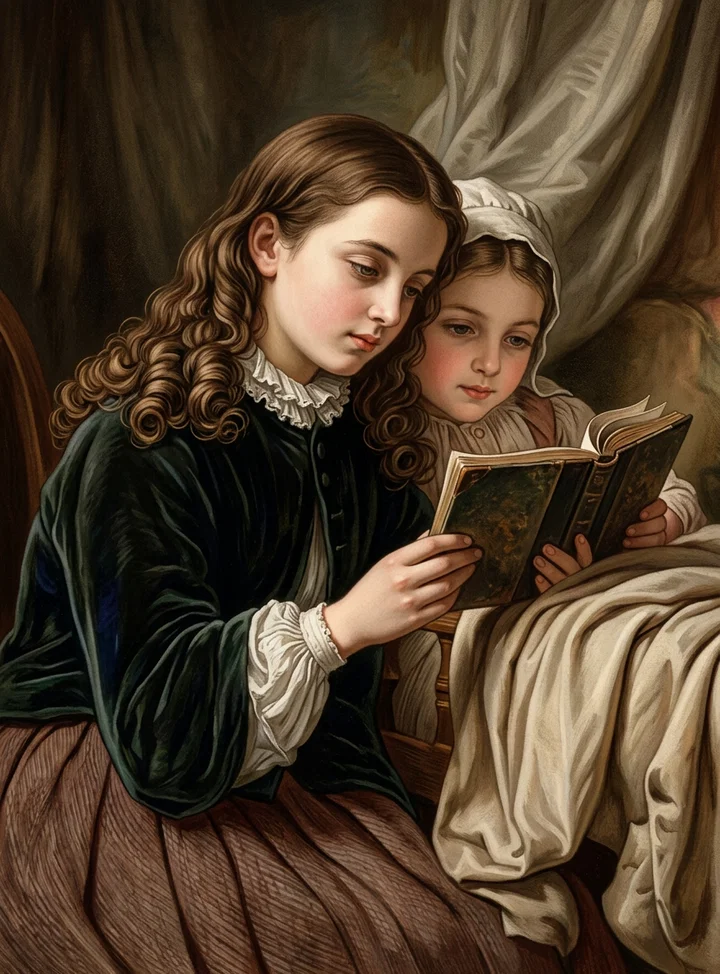
The little peasant children loved their king, because he loved them. Have you any proof that the King of kings loves you? What was the price he paid for you?—He gave his own life. Would you be willing to give your life for another? You would need to love a person pretty well to do this, wouldn’t you? The Saviour will always love the children just as tenderly as he did when he took them in his arms and blessed them, so long ago.
It may be you would like to show your King favor. What do you suspect is the best thing you could give him? Would you give riches? There is something due before these. He says, “Son, give me thy heart.” If he really has that, he will surely have your treasure; for that goes with the heart.
If you are so favored as to be a subject of this King, he will himself show you, not merely the king’s palace, as the Kaiser’s servants showed the little girls, but the many mansions he is preparing, the beautiful New Jerusalem with its golden streets, its shining river, with the tree of life on either side. And more, instead of being sent home, as the peasant children were, you will have eternity to see and admire the King’s riches. Best of all, you can look upon the face of the One who bought them for you.
But whether you will have any right there, everything depends—upon what?—whether you are faithful now. So keep your loving King in mind all the day, whether at work, or at your play, doing always as he would like to have you, and you will surely have a hearty welcome at the gates of his City.
M. J. C.