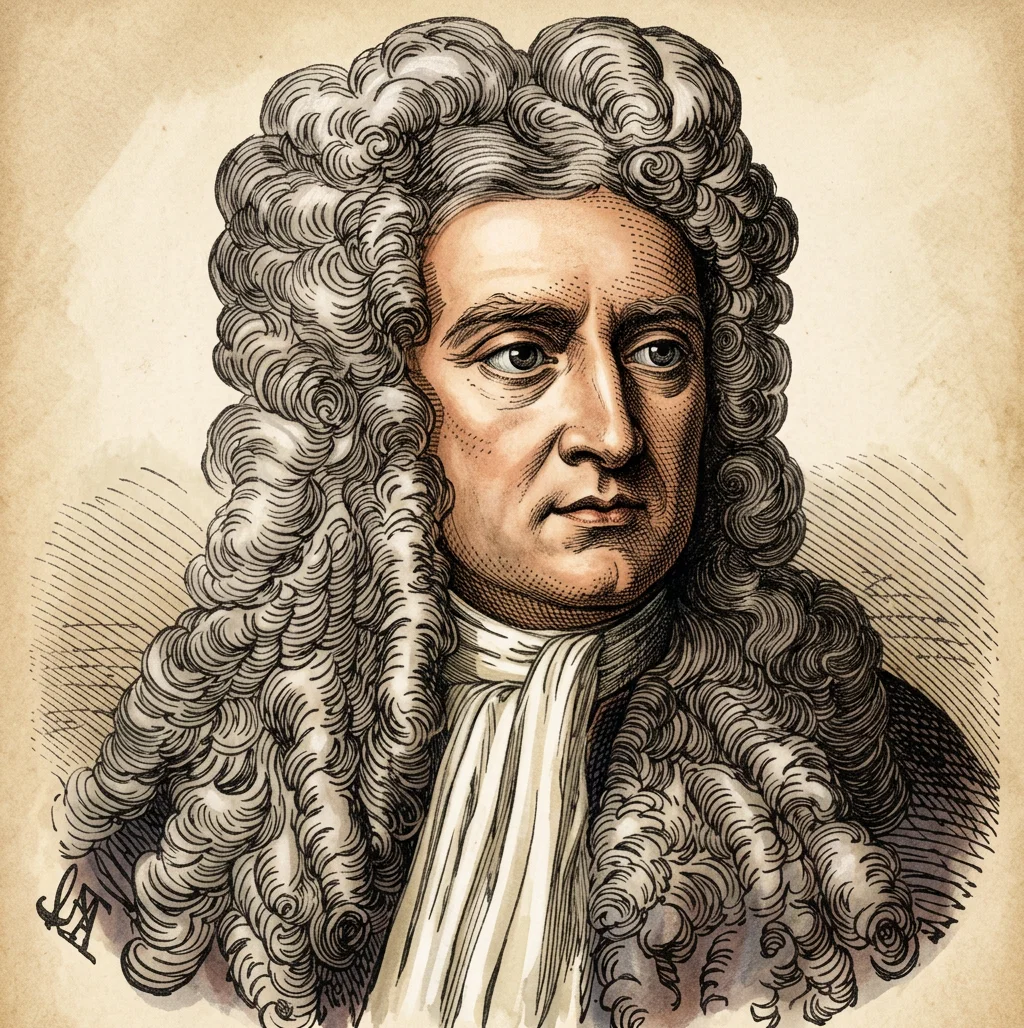
A GREAT PHILOSOPHER

8%

S. D. A. Publishing Association · Battle Creek, Mich. · Jun 20, 1888

FromThe Youth’s Instructor, Vol. 36, No. 25.

Read the full edition

A GREAT PHILOSOPHER.

There were two boys quarreling. It was the lowest boy in school, and a boy who stood above him. The upper boy kicked the other boy severely, giving him great pain, and the dull boy determined to be revenged. But he took an unusual way to do it; and I am sure that if all insults were revenged in the same way, the world would be better off. The dull boy set out to get above the boy who had injured him. He studied with might and main, until from being the lowest scholar in school, he rose to be the head boy. And what is better still, he did not drop his studious habits as soon as he had attained his immediate object; for he found it such a delight to learn, that he continued to study diligently and vigorously throughout his life. This happened over two hundred years ago, in a boys’ school at Grantham, England, and the boy was Sir Isaac Newton.
The common sports of the play-ground were little to his taste. He preferred to work with his tools, making all sorts of mechanical contrivances; and up in the chamber of the house where he boarded, he made a water-clock, carrying up every morning water sufficient to run it for the day. This was in the days when clocks were more of a rarity than at the present time, and for many years “Isaac’s clock” was consulted daily by the family.
Isaac introduced kite-flying into school, and took much pains to perfect his kites, experimenting to get the sticks just the right length, the strings fastened in the best place, and the tail of the proper length and material; for even in play nothing was “good enough” or “would do” if he could think of a way to make it better.
Sometimes on dark nights he would tie to the tail of his kite a paper lantern, whose bright, erratic light inspired the simple country folk with the belief that it was a comet. He made at one time a toy wind-mill, modeled after one which he watched the workman erect on the Grantham road. He studied every detail of the large mill, and made his little one such an exact counterpart that it excited universal admiration. His playmates spent many a delightful hour in pouring in grain into the tiny hopper and watching it turn into snowy flour. Isaac placed his wind-mill on top of the house, where it was operated by the action of the wind on its sails. But not content with this mode of working his toy, he one day captured a mouse, which he called the miller, and made him run the mill by means of a tread-wheel, in an endless chase after a bit of corn that lay just out of reach.
Restored with AI
Water-clocks did not give this young genius all the satisfaction he desired; for impurities in the water frequently clogged the machinery, and made them keep inaccurate time. So he turned his attention to sun-dials; and by closely observing the lights and shadows on the walls and roofs of buildings, he succeeded, by means of fixed pins, in marking the hours and half hours. One of these, the result of several years’ observations, was known as “Isaac’s dial,” and served as a town clock, being often consulted by the country people.
As Newton grew older, he became devoted to the study of philosophy and mathematics, and made many discoveries about the properties of light and heat, gravitation, and the motions of the heavenly bodies,—discoveries so far-reaching in their results and so important to science that we marvel at the strength of mind and the keenness of intellect which enabled him to grasp these difficult truths and make them so plain that others could understand them. Till near the close of his life, he lectured on philosophy and mathematics before the students at Cambridge, and was reckoned the wisest man and the most profound thinker of his time. He was made a fellow of the Royal Society,—a company composed of the most learned men and philosophers of the day; and the queen so much admired his genius and learning that she made him knight. He was appointed to a lucrative office in the government, so that, though he was for the greater part of his life a poor man, he was enabled to end his days in ease.
Yet with all his learning, and the honor that was shown him, and the wealth that came to him, he remained one of the most humble of men. “I do not know how I may appear to the world,” he said; “but to myself I seem to have been only like a boy playing on the seashore, and diverting myself in now and then finding a smoother pebble or a prettier shell than ordinary, while the great ocean of truth lay all undiscovered before me.” True wisdom always makes one humble, for it enables him to see how very much more there is to learn, which, try his utmost, he will never be able to master in one short lifetime.
It will be interesting to know to what source Sir Isaac attributed his success. A statement he makes in one of his letters contains the secret, and it is a secret of such importance that it will be well to think of it more than once. “If I have done the public service this way,” he said, “it is due to nothing but industry and patient thought.” To be sure, Newton could not have accomplished what he did unless he had had a strong and powerful mind. But the strongest mind can accomplish no great good without these two requisites,—“industry” and “patient thought.” And when boys and girls plan for the great things they mean to do in the world, they should remember that they will not gain these things simply by wishing for them, or admiring them. They will succeed only in proportion as they work; for success rarely comes except as the result of steady and persistent toil.
Newton’s generosity knew no limit, we are told. He valued wealth only for the good it enabled him to do; and he used to remark that “they who gave nothing away till they died, never gave at all.”
Another thing that should be remembered of him was his simple, heartfelt piety. He took great delight in studying the Bible; and whenever his learned friends ventured to say anything in his hearing which was disrespectful to religion, he never failed to check them, sometimes remarking, “I have studied these things,—you have not.” The more he pried into the laws that govern the universe, the more he became impressed with the infinite wisdom and power of the Creator. Though it is only at rare intervals that a man attains to the degree of wisdom Newton reached, all may admire and imitate his modesty, his industry, his generosity, and his sincere piety.
W. E. L.