TIMOTHY

13%

S. D. A. Publishing Association · Battle Creek, Mich. · Sep 5, 1888

FromThe Youth’s Instructor, Vol. 36, No. 36.

Read the full edition

TIMOTHY

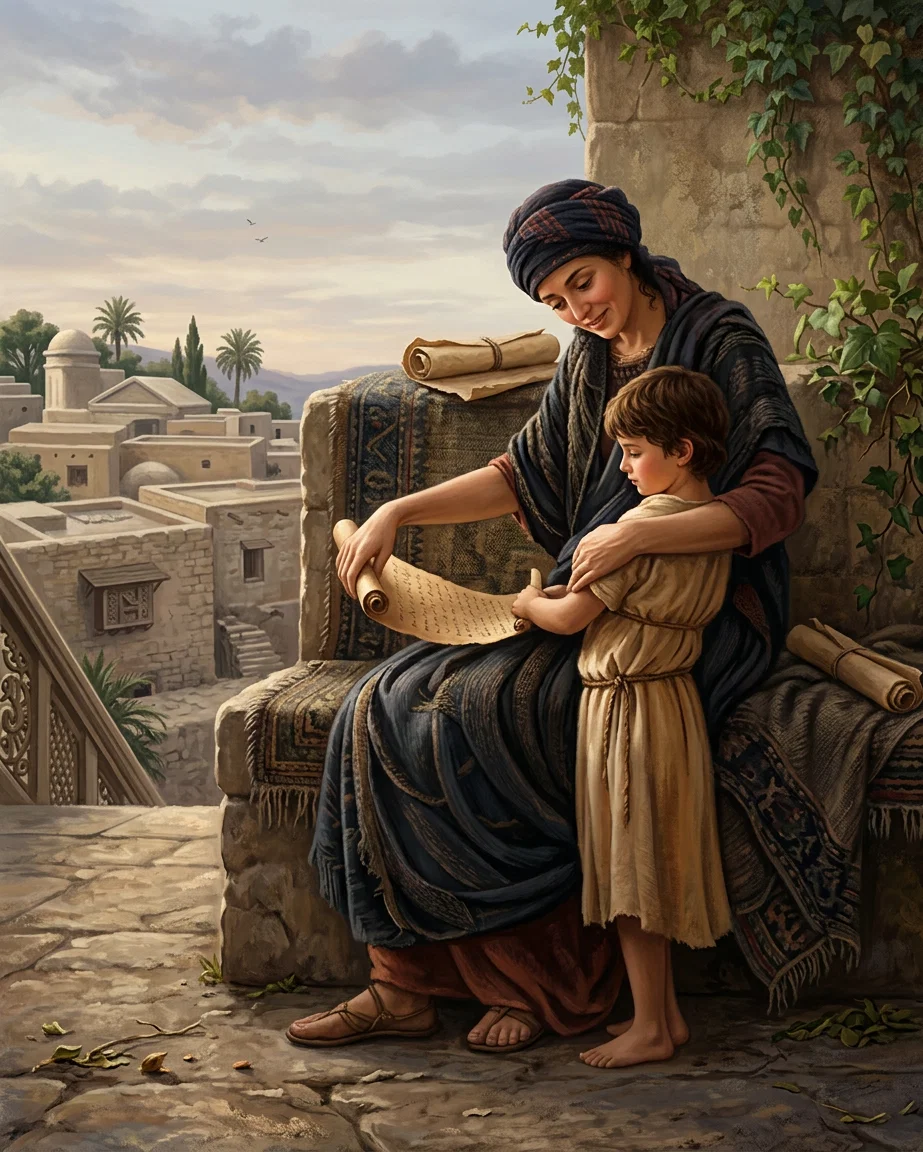
Far away over the ocean, in an old town, and in an old house, there once stood a little lad at his mother’s knee, reading with reverent face from a curious book. It was made of one long strip of parchment, written over with strange characters; and when the daily task was ended, instead of clapping the covers of his book together joyfully, the lad carefully rolled it up on the rollers fastened to either end. And this care was necessary; for years of busy labor were needed to produce another copy. It was a wonderful book from which he read,—wonderful in context, and wonderful in that, instead of falling into disuse and obscurity, as even the best of books are liable to do in time, its copies have been multiplied by thousands and hundreds of thousands, and it is loved and read everywhere. In this old book the lad read, “Blessed is the man that walketh not in the counsel of the ungodly,” and “The fear of the Lord is the beginning of wisdom;” and the words of the book made him “wise unto salvation.”
This boy’s father was a Greek. His mother was a Jewess; and not only that, but a good Christian. So while little Timothy was carefully trained in the doctrines and usages of the Jews, he learned also of the coming of the Just One, who gave redemption to mankind. And love for this dear Saviour, coupled with the “excellent spirit” that was his by inheritance from his mother Eunice and his grandmother Lois, constrained him to devote his life to spreading the doctrine of a crucified and risen Lord. With the great apostle he traveled among the early churches, strengthening and confirming those new in the faith; and exhorting them to steadfastness, sobriety, and a consistent Christian life. The apostle Paul found great comfort in the companionship of this young disciple; and when separated from him by the persecutions that befell the early church, he wrote him two letters which really contain the most we know about Timothy. These letters are full of loving counsel and encouragement, and it would do us good to read them often, as I have no doubt Timothy did.
Restored with AI
He exhorted him to hold fast the “faith and a good conscience” that he “might war a good warfare;” to be an “example of the believers, in word, in conversation, in charity, in spirit, in faith, in purity.” “Meditate,” he said, “upon these things; give thyself wholly to them; that thy profiting may appear to all.” “Follow righteousness, faith, charity, peace, with them that call on the Lord out of a pure heart.” And “study,” he said, “to show thyself approved unto God, a workman that needeth not to be ashamed, rightly dividing the word of truth.”
Timothy must have paid good heed to the advice given him; for he was well reported of by the people that were at Lystra and Iconium. But all people did not love him for telling them the truth. They were angry at him, and shut him up for a long time in a cold, dark prison. But he was released at last, and preached to the people again about the Christ who had died for all.
And now I wonder how many of the INSTRUCTOR boys and girls will do as Timothy did,—search the Scriptures from childhood, that they may become wise unto salvation? and give themselves wholly to things good and pure and true, meditating on them to such effect that it will change their lives, and thus their “profiting may appear to all”? If they do this, they will, as St. Paul wrote to Timothy, “lay up in store for themselves a good foundation against the time to come, that they may lay hold on eternal life.”
— W. E. L.