The following article, taken from the Gospel in All Lands, will prove interesting to our youthful readers as giving in brief form the history of this intrepid explorer’s adventures in the Dark Continent Mr. Stanley has but just returned to England, from a long and difficult journey into the heart of Africa, and all await with interest his account of the undertaking, and its effect in helping to solve the problem of the civilization of the African races.
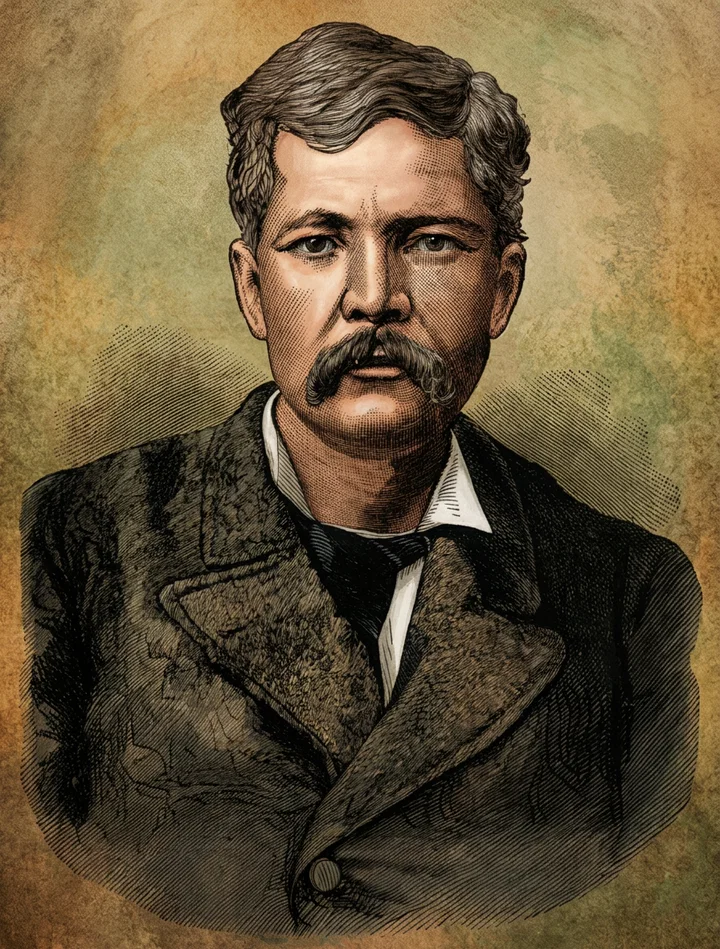
The name of Stanley is a proud one in English history. And when this name is mentioned to-day, all minds turn to him to whom God has, through strange leadings, assigned so prominent a part in the deliverance of Africa from its thraldom.
It is now well known that his original name was John Rowlands, and that his parents had so little means that he was sent when three years old to the poor-house at St. Asaph to be brought up, whence at the age of thirteen he was turned loose on the world to shift for himself. He was born near Denbigh, Wales, in 1840, the very year that Livingstone, aged twenty-three, first entered Africa as a missionary.
When about fourteen, he found his way to New Orleans from Liverpool as cabin boy of a sailing vessel, and there a kind merchant named Stanley, little knowing what he did, adopted him. But Mr. Stanley died before Henry came of age, leaving no will, and the lad was again thrown on his own resources. On the breaking out of the rebellion in the United States in 1861, young Stanley went into the Confederate army. He was taken prisoner by the Federal forces, and, being allowed his liberty, he volunteered in the Federal navy, being already fond of seafaring and adventure. In course of time he was promoted to be acting ensign on the ironclad Ticonderoga. When the war was over, his love of adventure led him to travel, and he went to Asia Minor, saw many strange countries, wrote letters to the American newspapers, and even then was making for himself a name and fame. Returning to the United States, he was sent by Mr. Bennett, of the New York Herald, to Abyssinia in 1868, a war having broken out between the British and the king of that country. There Stanley got his first taste of African adventure.
In the autumn of 1869, the world was beginning to wonder whether Dr. Livingstone, the devoted Christian missionary and African explorer, was alive or dead. More than twenty months had passed since his last letter was written, and the world began to believe he had died in the heart of the Dark Continent. James Gordon Bennett, the editor of the New York Herald, was at this time in Paris, and telegraphed Stanley to meet him there, which, with his customary promptitude, he immediately did. On his arrival, he was confronted with the startling and wholly unexpected question, “Will you go to Africa and find Livingstone?” After a moment’s reflection he answered “I will,” and the agreement was at once concluded.
The 21st of March, 1871, found Stanley at Zanzibar, with a caravan of 192 followers, ready for the great expedition. On the 24th of October at Ujiji, on the shores of Lake Tanganyika, he first met the famous missionary who was so powerful to influence all of his after life. They remained together till March 14, 1872, the younger man drinking in the spirit of the elder, and becoming, as he often declares, converted by him. The Rev. David Charters, of the Congo Mission, reported Stanley saying, “If Dr. Livingstone were alive to-day, I would take all the honors, all the praise that men have showered upon me, I would lay them at his feet and say, ‘Here you are, old man; they are all yours!’”
Two years later, in the spring of 1874, when the remains of Livingstone were carried back to England in one of the Queen’s ships, for burial in Westminster Abbey, Stanley was one of those who bore him to his grave. It was then, he tells us, that he vowed he would clear up the mystery of the Dark Continent, find the real course of the great river, or, if God should so will, be the next martyr to the cause of geographical science.
The outlet of Lake Tanganyika was as yet undiscovered; the secret sources of the Nile were unknown, and even the then famous Victoria Nyanza was only imperfectly sketched on the maps. Discussing such matters one day with the editor of the London Daily Telegraph, Stanley was asked whether he could settle these questions if commissioned to go to Africa. He said, “While I live, there will be something done. If I survive the time required to perform the work, all shall be done.” The proprietor of the Telegraph cabled Bennett, asking if he would join the new expedition. “Yes, Bennett” was the answer speedily flashed back under the sea, and the thing was determined. Stanley left England in August, 1874, attended by only three white men, and at Zanzibar the party was increased by porters and others, mostly Arabs and blacks, to the number of 224 persons, some of the men taking their wives with them; and on the 13th of November the column boldly advanced into the heart of the Dark Continent, having for its twofold object to explore the great Nile lakes, and, striking the great Lualaba where Livingstone left it, to follow wherever it might lead. It has been rightly called “an undertaking which, for grandeur of conception, and for sagacity, vigor, and completeness of execution, must ever rank among the marches of the greatest generals, and the triumphs of the greatest discoverers of history.” August 9, 1887, Stanley emerged at the Congo’s mouth, and “a new world had been discovered by a new Columbus in a canoe.” On his return to England, he found an embassyp. 6
from the king of the Belgians, who had been planning an expedition to open up the Congo country to trade, and who wanted Stanley to take command. With great reluctance he undertook the management of the International Association, as the new organization was called, and returned to Africa in 1879, where he remained nearly six years, hard at work, doing more than any other man to found the Congo Free State south of the great bend of the Congo River, having an area of 1,508,000 square miles, and a population of probably fifty millions. In obtaining the concessions of over 400 native chiefs, not one shot was fired. It was a grand victory over barbarism without the guilt of bloodshed that too often has stained such triumphs.
While Stanley was in this country, during the winter of 1886-7, he was called back to Europe once more to take command of an African expedition, the one for the rescue of Emin Pasha. June 28, with 389 officers and men, Stanley left Yambungo, below Falls Station, not far from the mouth of the Aruwimi, and marched east at the rate of ten or twelve miles a day, amid great opposition from the natives and terrible sufferings due to the nature of the country, which consisted of gloomy and almost impenetrable forests. When they reached Ibiwiri, 126 miles from the Albert Nyanza, November 12, the party had become reduced, by desertion and death, to 174, and the most of those that survived were mere skeletons. Here, finding food and rest, they started on again November 24, and in another week had emerged from the deadly forest which came so near swallowing them up. December 13 they sighted the Nyanza, and soon were encamped upon its banks; but Emin was not there, as they had hoped he might be. They were too weak to march to Wadelai, its capital, far to the north; the natives would not let them have a boat; Stanley’s conscience would not permit him to seize one by force; there were no trees of sufficient size to make one, and his own boat had been left 190 miles in the rear, at Kilinga Longa, through the inability of the men to bring it. So there was nothing to do but go back for the boat. This was done, and in spite of Stanley’s severe illness, which required a month’s careful nursing, the force, or what was left of it, was back again in the vicinity of the lake by the last of April. Here they were rejoiced to find a note awaiting them from Emin, to whom rumors of their arrival had penetrated, and who begged them to tarry till he could make further communications. April 29, Emin himself arrived in his steamer, and great was the rejoicing. The two heroes remained together until May 25, when Stanley, rested and re-inforced, started back to Fort Bodo, where he had left men and supplies. From this he pushed still farther back, hoping to meet the other half of the expedition under Major Bartelott. But alas, the Major had been shot, and the rear column, thoroughly demoralized, had gone to pieces, believing that Stanley himself was dead, as had been reported. Stanley, though sorely disappointed and crippled by these untoward events, determined to go back again to the Nyanza by a shorter route and again unite with Emin. And now the news comes to the waiting world that the two heroes are returning in company to the realms of civilization. And soon the wonderful story, some premonitions of which have already reached us, will be unfolded.