IN INDIA

7%

S. D. A. Publishing Association · Battle Creek, Mich. · Nov 27, 1889

FromThe Youth’s Instructor, Vol. 37, No. 48.

Read the full edition

IN INDIA.

INDIA is a very warm country. It is on the opposite side of the world from where we live. If we should go there, everything would appear strange. The trees and flowers are such as we have never seen; the houses are built in an odd way; the people wear a queer dress, and their ways of doing things seem strange, too.
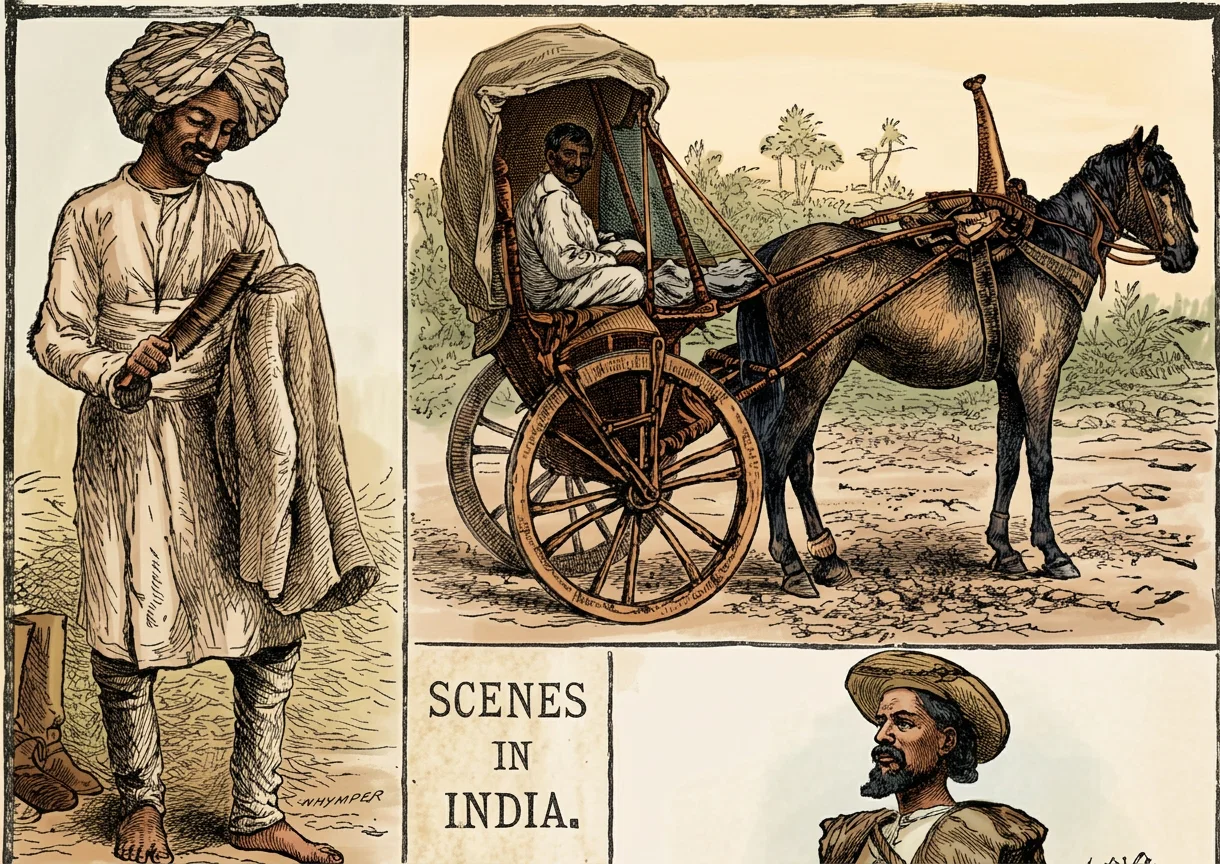
In our picture we see some of the strange sights in this land. The man in the upper left-hand corner is probably a servant to some Englishman who has moved to India. A person is obliged to have a great many servants in that country. For instance, the man who waits on you in your room will not bring your dinner on to the table. There must be another man for that. The one who brings clean water to fill your bath-tub will not empty it when you are done using it. He thinks it would be a disgrace for him to touch water that a white person has washed in.
SCENES IN INDIA.Restored with AI
SCENES IN INDIA.
SCENES IN INDIA.Restored with AI
SCENES IN INDIA.
The man who waits on you around the room, or the one who brings your dinner on to the table, will not pick up your book if you have dropped it on to the floor. Instead of that, you will have to send for the servant whose business it is to sweep the rooms, and ask her to pick it up for you.
And this same plan is followed in many other things. A native will do only the one thing he is hired to do. So it happens that the English people who live in India have to keep a great many servants, and they must keep a head man to look after the servants. If they want anything, they send to the head man, and he sends the right kind of servant to do the errand. I think we would find this a very slow and awkward way of getting anything done.
The man in the lower corner is a carpenter. It would seem strange to you to sit down to saw a block in two. Many of his ways of doing work are queer, yet he can build very beautiful buildings.
How would you like to take a jolting in the two-wheeled cart shown in the picture? Quite often a cow is hitched to a cart in the place of a horse. The cows of India have humps on their backs. They can trot quite fast. Often they go from twenty to thirty miles in a day.
Besides that, people ride on elephants. An elephant's back is not a very quiet or restful place to ride upon. The horses are afraid of the elephants. No matter how many times they have seen them, they never become accustomed to the sight of this huge beast, with his lumbering step.
Perhaps you would like better to ride in a palanquin. A palanquin is a little house carried on poles. It is not high enough to allow of sitting upright in it. But you can lie down, or sit in a half reclining manner, with pillows to support your head. It takes eight men to carry a palanquin. Four of them carry it until they are tired, and then change off with the other four. In this way they alternate until the end of the journey is reached.
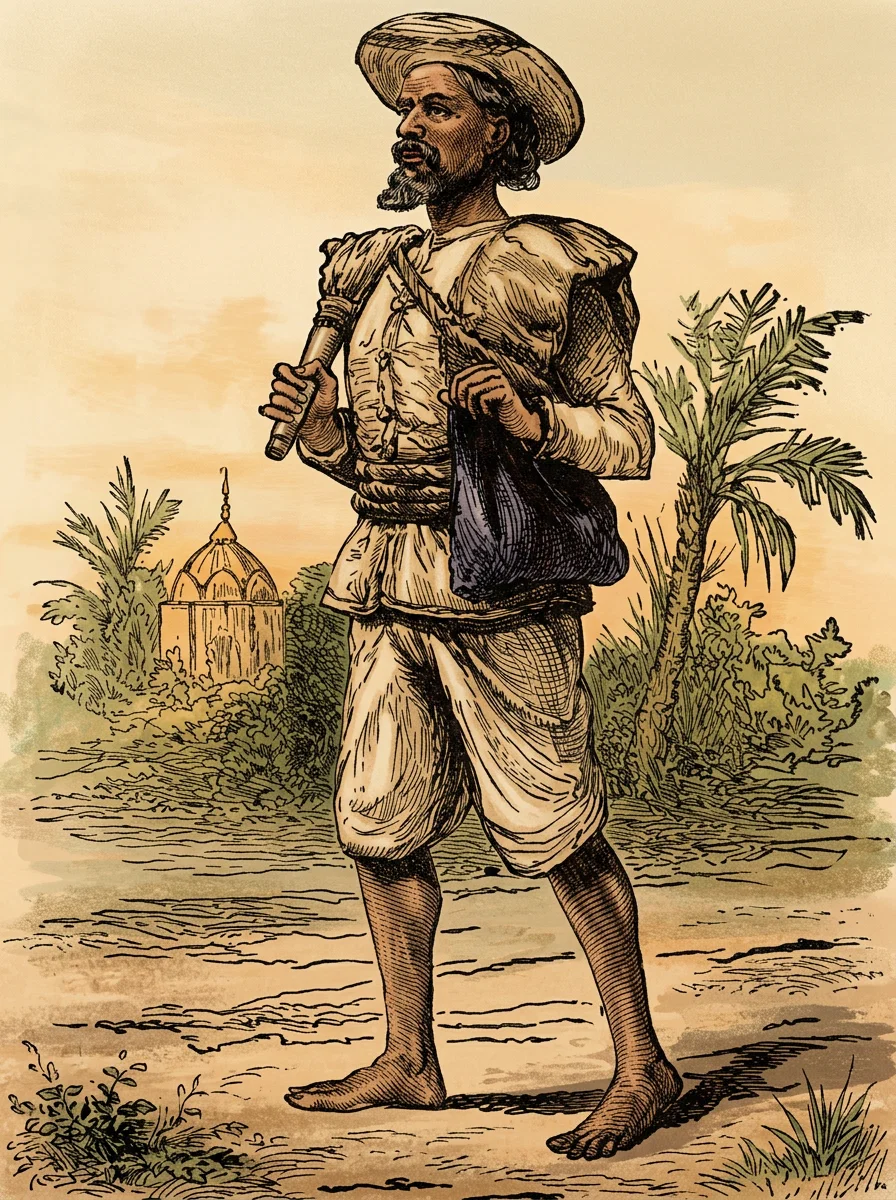
The man in the lower right-hand corner is often seen on the streets of the larger cities. He is a water-carrier. His bottle is made of a pig's skin or of a goat's skin. More often it is made of a pig's skin, because that holds water better than the other. He sells water to the people who do not have water fixtures in their houses. If he works very hard indeed, he will be able to earn twenty-five cents a day. That seems like a very small amount, does it not? Many people in India do not earn that much.
There are a great many people in that country, four times as many as in these United States; and the country is only one-third as large.
A good many English people live in the large cities of India. They have gone there to trade and make money, or else to do business for England. India belongs to the British Government.
Some of the English-speaking people have gone there to tell the natives about the true God, and Jesus his son; for the most of the people in India worship idols. Let us pray that God will help and bless these good people in their work. W. E. L.