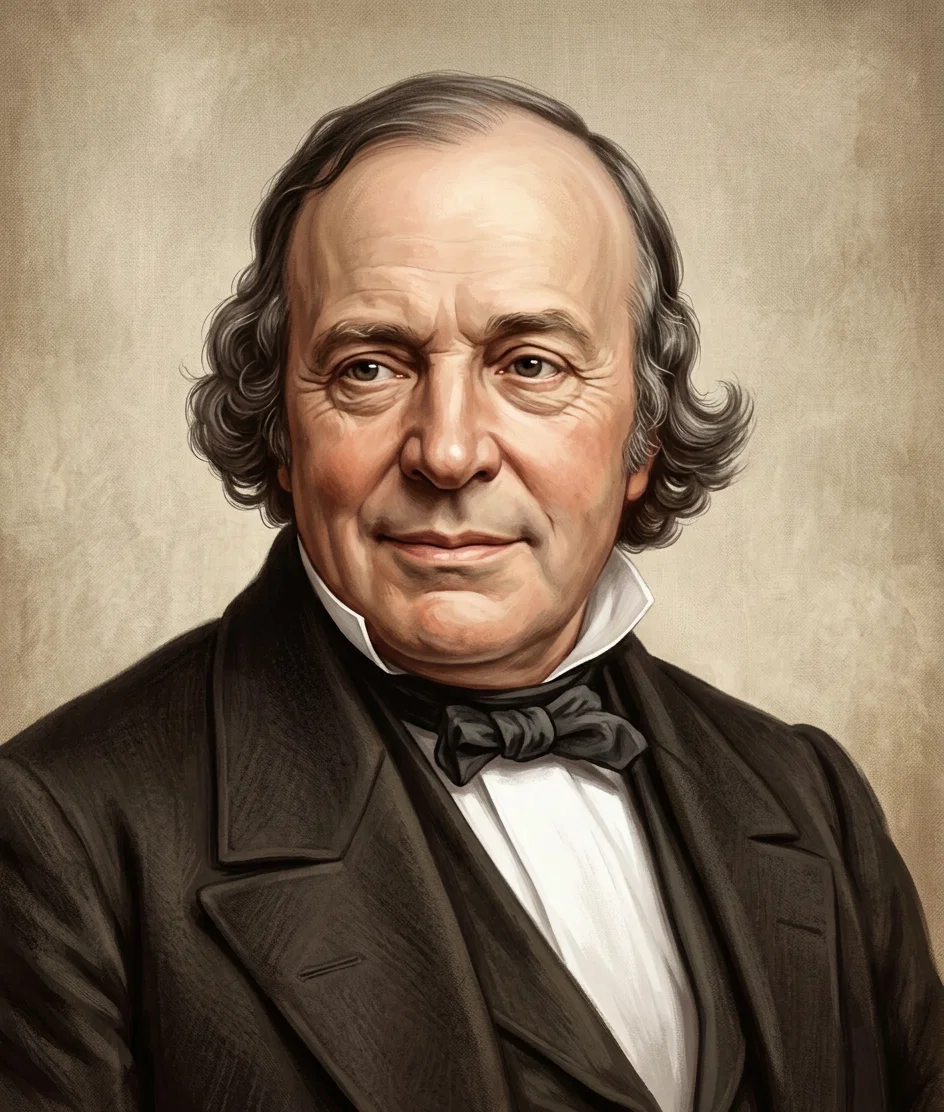
LOUIS AGASSIZ

10%

S. D. A. Publishing Association · Battle Creek, Mich. · Jun 5, 1889

FromThe Youth’s Instructor, Vol. 37, No. 23.

Read the full edition

LOUIS AGASSIZ.

Among the buildings around Harvard College, in Cambridge, is one which all would be delighted to visit. It is a museum, where one may see a specimen of almost everything. One visitor said: “It would be of little use to try to enumerate even a small part of the specimens of animals, of both living and extinct species, which meet our eyes as we wander through the spacious halls and galleries. There is the long-necked black alpaca and his brown brother; the tall giraffe; the queer black seals; the bison, with his immense head and thick brown fur; the Rocky Mountain goat, with long, yellowish-white fur; the rough, ancient-looking rhinoceros; the giant squid, from Newfoundland; and the skeleton of the finback whale, extending the whole length of the building. Then there are beautiful birds of all sizes, from the delicate little humming-bird to the gay flamingo. Perhaps the oddest is a jet-black bird with feathers projecting from the top of his head in the form of a little umbrella. Then you should see the actinoid polyps, so much like flowers,—some pink, some yellow, some brilliant green,—growing up, and radiating from the center; and the acalephs, which we can hardly believe are not made of glass. These are very beautiful, and of all shapes and colors; some like toadstools; some like plants with flowers; some with fine threads like fringe hanging gracefully around them.”
Restored with AI
This building and its valuable contents are due to the untiring industry and zeal of one of the greatest modern naturalists, Louis Agassiz, and it is appropriately called the Agassiz Museum. In the entrance-hall is a fine bust of Mr. Agassiz. Even the cold marble cannot hide the warmth of heart which molded all his features. Mr. Agassiz is said to have been a very genial and delightful companion, and to have possessed to a remarkable degree that faculty of making every one who came in contact with him feel at ease and at home. His students enthusiastically hunted specimens, and for him laborers would dig and delve, every one catching his spirit, and feeling for the time being that the study of nature was the only thing of any account. As one writer said, “To do something for Agassiz was a pleasing addition to the Whole Duty of Man in the region where he lived.”
Now Mr. Agassiz never could have gained this magnetic influence over those who placed themselves under his teaching, just by wanting to influence them; he could not have done it if he had had a desire to make himself famous and respected on account of the amount of learning he possessed; for such shams are very quickly seen through. But he did find in nature wonderful truths which so delighted him that he wanted other people to see them too. So forgetting Self in the great fields of truth that lay before him, he could, by his sympathy and geniality, lead many to find delight in this wonderful book of nature. It sometimes seemed that even the animals understood that he had only the kindest intentions toward their species, and that when he killed any of their number for specimens, it was only that he might introduce them to human kind, in order to benefit the lower part of creation.
The spirit in which Mr. Agassiz worked is shown by one little incident. When urged to give a lecture which would bring him in large returns, he refused, saying that he could not waste his time in making money. The man who could refuse to make money and advance his own interests because he had other work to do which would benefit his fellow-men, could not fail to influence those with whom he came in contact. Genuine unselfishness is sure to meet a response; and it is a good thing for every boy to remember that the best way to serve Number One is to forget about Number One.
Mr. Agassiz was born in Switzerland, near Lake Neufchatel, May 28, 1807. “He was liberally educated, studying at Bienne, Zurich, Heidelberg, and Munich, and received several degrees. . . . For seven years he studied fossil fishes, which he made the subject of one of his greatest works. He also wrote a Natural History of the Fresh Water Fishes of Europe. For a time he was professor of natural history in the university at Neufchatel.”
In 1846 he came to Boston, and made America his home. He lectured for a time, and was finally appointed professor of zoology and geology at Harvard. He made journeys to other parts of the world in the interests of his work; and one of these journeys, to Brazil, is told in an interesting book written by Elizabeth Agassiz, his wife, who went with him. Mr. Agassiz wrote many works telling of his theories and discoveries in nature.
He found a warm friend in the poet Longfellow, who was also a lover of nature; and on this page we give you a beautiful poem which Mr. Longfellow wrote for Mr. Agassiz when the latter had reached his fiftieth birthday.
Mr. Agassiz died at Cambridge in 1873. He lies buried in Mount Auburn Cemetery, and his grave is marked by a boulder from his native land. But the best monument to his memory is the fine museum, for which he worked so hard. W. E. L.