The pin was not known in England till near the end of the reign of Henry VIII., the ladies until then using ribbands, and skewers made of wood, brass, silver, or gold. At first the pin was so wretchedly made that its head must have had a habit of coming off; for in the thirty-fourth year of the king, Parliament enacted that none should be sold unless they were “double-headed, and have the heddes soudered faste to the shanke of the pynne.” Since that time, manufacturers have learned to make them with one head that will stay on, and dictionaries have become wise enough to spell the name pin.
The saw was first made by a nephew of Dædalus, who, as they say, having accidentally found the jaw of a serpent, when looking for something with which to divide a small piece of wood, used it successfully, and in this way obtained the idea of making a metallic instrument in imitation of it. It is also said that the idea of the file came from that of the saw.
The first piano was made about the year that our national independence was declared,—1776. The maker is believed to be a German named Bachers, as there is still in existence the nameboard of a piano inscribed Americanus Bachers, Factor et Inventor, Jermyn St., London, 1776.
The word news is generally supposed to be taken from the adjective new. But it is asserted by some that its origin can be traced to the custom in former times of placing on the newspapers of the day the initial letters of the cardinal points of the compass, thus:—
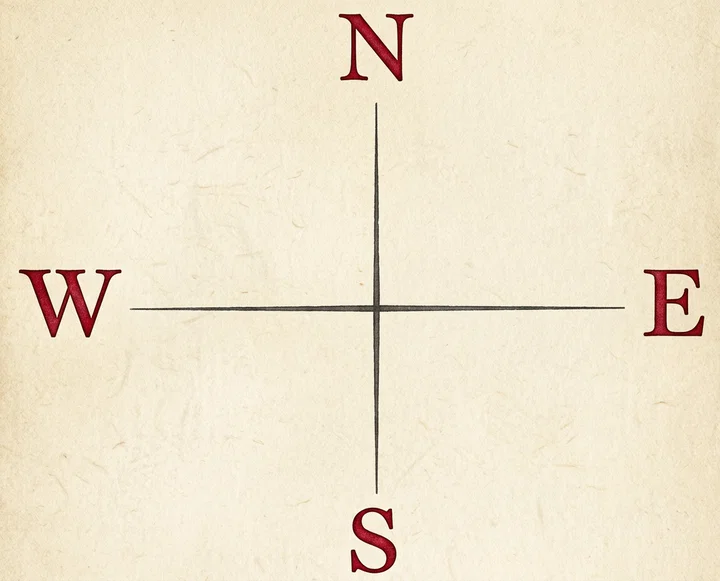
These letters were intended to indicate that the paper contained intelligence from the four quarters of the globe; but they finally came to assume the form of the word news, from which the term newspaper is derived. The first newspaper was published in England by Nathaniel Butler in 1662. The first in France in 1682. The first Russian in 1703 under the personal supervision of Peter the Great. The first Dutch in 1656. The first in North America was the Boston News-Letter, commenced April 24, 1704. It was but half a sheet of paper, twelve inches by eight, two columns on a page. B. Green was the printer. This paper lived till 1776, seventy-two years. It favored the British Government at the commencement of the Revolution, and this may account for its death.
From a copy of this paper printed in 1769 is obtained the following announcement:—
“The bell-cart will go through Boston before the end of next month, to collect rags for the paper-mill at Milton, when all people that will encourage the paper manufactory may dispose of their rags.
“Rags are as beauties which concealed lie, But when in paper, how it charms the eye! Pray save your rags, new beauties it discover; For paper, truly, every one’s a lover: By pen and press such knowledge is displayed As wouldn’t exist if paper was not made. Wisdom of things mysterious, divine, Illustriously doth on paper shine.” —Christian Advocate.