ALICE BARBER was sitting on the woodpile with the dish-pan in one hand, and the corner of her apron in the other. Her eyes were red and swollen, and the tears made rivers down her nut-brown face. She looked dejected and forlorn.
“Heigho!” called Marcus Noel, as he saw her through the fence. “What’s the matter? Got the blues?”
Marcus was the farm-hand on the next place, and he had just driven his team through the alley.
“Well,” sobbed Alice, emphatically, “I think you wouldn’t be so cheerful if you only had half the trouble I have.”
“Let’s compare troubles and see,” said Marcus, with a laugh.
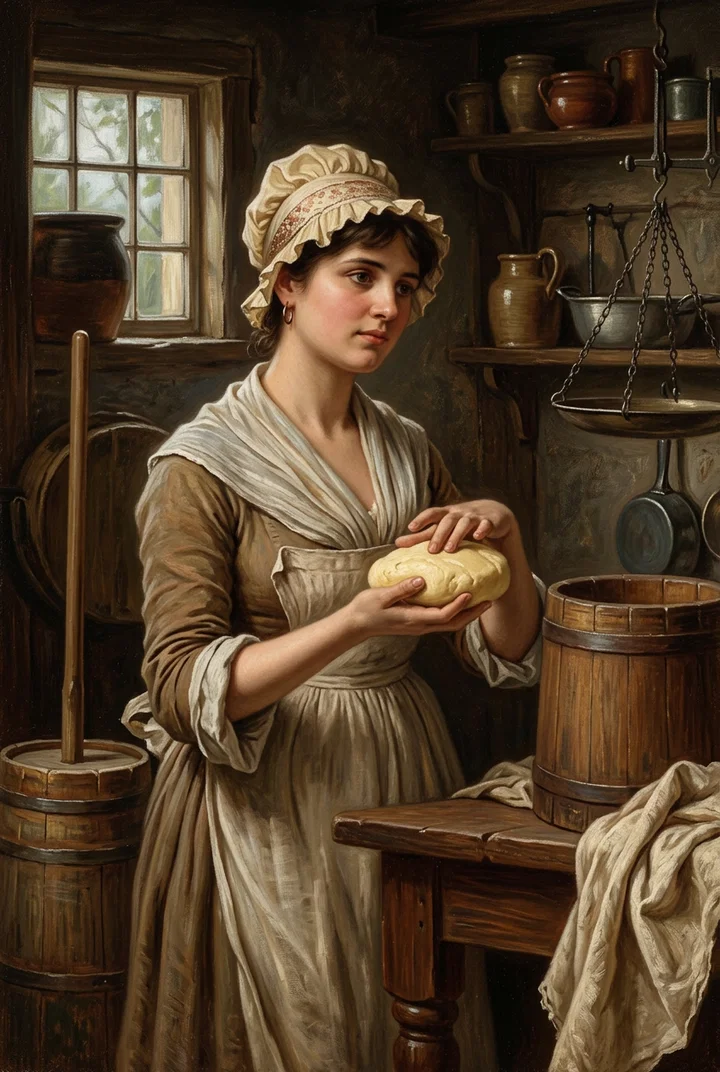
“Why,” said Alice, still sobbing, “you know I can’t have any chance like other girls. Here’s grandma sick and helpless; somebody has to take care of her, and of course there’s no one to do it except me. I’ve got to stay here from morning till night, and from night till morning. I can’t go to school. I can’t go into society. I can’t do anything but just drudge around, wash dishes, get dinner, get supper, get breakfast, feed chickens, strain the milk, and go over the same monotonous round from one year’s end to another, and I don’t see but that it is always going to be just so. I’m getting old, too, Marcus. Why, I’ll be fifteen in September. Just think of it, and I haven’t been to school for two years, ever since the accident.
“And ever since papa died, mother has to be always away from home nursing, to get the ‘wherewithal’ for us. I used to think I would do something great and good, and help lots of people. I wanted so much to be a school-teacher, like Miss Scott, and be polite and ladylike, but there is no use of thinking of anything of the kind. I’ll just have to drudge on forever and ever!”
“Alice,” said Marcus, “what does the catechism say is the object of man’s life?”
“To glorify God, and to enjoy him forever,” said Alice.
“And what does it mean?”
“Oh, I suppose it means to go to church, and sing hymns, and pray, and praise the Lord as they do in heaven. I don’t know I’m sure,” said Alice.
“Do you see that little flower in the crack of the rock?” asked Marcus.
“Yes,” said Alice, looking dolefully at the gay plant. “Well that little flower is glorifying God. It is not withering up just because it is not a great damask rose in somebody’s front yard. It is pouring out its sweet praises from the place where God bade it bloom. It is doing something good and beautiful for God, and teaching us the same lesson of humility and love that Jesus did in his life. Who knows but that God bade it bloom right there in that little meager crack just to help you and me to-day, and through us to help others? Who knows but that it will do more than all the great roses in somebody’s front yard?”
“That’s very pretty,” said Alice, “but how does it help my case? I can’t do anything for God where I am, just washing dishes and drudging around forever and ever.”
“I see it in a very different light, Alice. You are just like that flower, or may be. God has put you in a hidden place, way down here in a cleft, with only a poor, crippled grandma to wait upon, and a few simple duties to do, missing the great garden and gardener’s attention. There’s no one to train you to look or act beautifully, in the sense the world calls beautiful, but there is everything to make you beautiful in Heaven’s eyes.
“How do you suppose Moses felt away off in Midian, taking care of a flock of sheep for his father-in-law? He had been in the court of the king, and was very learned, but God took him away from all his earthly teachers, to teach him something of heavenly wisdom. By and by he gave him the leadership of his people, and Moses found that his education had not been so badly neglected, after all; for God had taught him the very things he most needed to know, away off in the mountains with his sheep.
“Do you not know that the Bible says, whom the Lord loveth he chasteneth? I expect that God is giving you a better education after all than you could get from the schooling that you so crave. As for being great and doing great things, it seems to me, Alice, that you have no need to complain of not having an opportunity.”
“Why!” exclaimed Alice, “I don’t see what you mean.”
“Suppose Jesus were here on earth,” said Marcus. “What would you do for him if he should come to your home, weary and worn out?”
Alice’s eyes brightened. “I tell you, Marcus, I’d fix up the rooms just as nice as I could. I’d make up the bed in the spare room beautifully. I’d get him the nicest supper that I could. I’d pick a bouquet of flowers from the garden, and I’d gather some of our finest grapes, and I’d—just do all I could for him, for I do love him.”
“Yes, I believe you do, and Jesus would appreciate it all, but what does he say about ‘the least of these my brethren’?”
A flush swept over Alice’s face as she repeated the words, “Inasmuch as ye have done it unto the least of these my brethren, ye have done it unto me.”
“I think you have a great work to do for God,” said Marcus, “but I must go. I am glad I have had this talk with you, Alice; for I was in about the same kind of mood when we began. I thought it hard that I had to work on the farm instead of going to college, but God makes all things work together for good to those that love him. Do you know that hymn called ‘Something for Thee’? Let’s take that song for our song, and sing it whenever we feel that we want to do something great.” And Marcus softly sang,—
“Saviour, thy dying love thou gavest me, Nor would I aught withhold, dear Lord from thee. In love my soul would bow, my heart renew its vow, Some offering bring thee now, something for thee.”
“Good-by,” said Alice, “you have helped me ever so much.” Alice picked up the dish-pan, and went into the house.
“Where have you been so long?” asked grandma in a querulous tone.
“I’ve been talking with Marcus,” said Alice.
“You seem to have forgotten how lonely it is for me, when you stay out so long.”
“That’s so,” said Alice. “But the work is nearly done now, and I’ll come and read to you, and comb your hair, and tell you what Marcus has been telling me about a little flower in a crevice.”
By the time Alice had combed grandma’s hair, read several chapters from the Bible to her, rubbed her helpless side, and got her into a comfortable doze, it was time to strain the evening milk. When she camep. 114 in again, her mother greeted her feebly; for she had come home from her place of nursing, with a sick headache. Alice was tired, but she cheerfully took up her task of caring for her sick mother. She stroked her throbbing brow, and put cold water on her weary eyes and forehead, until her mother’s eyelids drooped, and she fell asleep. How carefully Alice unbuttoned her shoes, and loosened her clothes, that she might rest! How sweet it all seemed to be doing it for Jesus and for love! It was late before Alice was through her work, but she took the lantern and found the little flower, and dug it out to put it into an empty pot and let it bloom on her window. And she asked God to help her to be like it, to be like Jesus, and take up her great work of ministering to others as he did when on earth, and do it as if it were indeed for him.
The next morning Mrs. Barber was better, but she felt too weak to go back to her patient. She watched her little daughter as she went about the house all day, singing softly the comforting words of the hymn.
“How precious Alice is growing!” said her mother to grandma. “I haven’t told her yet, but I do believe I can soon make an arrangement so that she can attend school again. And yet I almost dread to send her; for yesterday I saw a company of schoolgirls on the street in town, and they did act so bold and flirty that I felt glad in my heart that Alice was growing up in retirement; for I do value of all things her sweet modesty and innocence.”
“Yes,” said grandma, “and after all she is not so far behind in knowledge, for she is at her books every spare minute, and is gaining a good experience in life.”
“Are you talking of me?” asked Alice.
“Yes, but we didn’t say anything bad about you.”
Alice blushed with pleasure, and said, “O mamma, I’ve just been learning how to be contented in a crevice and bloom for God and grandma and you. All my irksome duties seem so different from what they did, for now I do them heartily as unto the Lord, and I know that he takes everything,—washing dishes, or sweeping, or anything else,—as something for him. Do you think, mamma, that I could make the house look any nicer if Jesus really were coming to-night?”
Alice had trimmed the table with flowers, and everything in the humble home was in good order.
“I don’t think you could,” said mamma. Alice went out with a beaming face to gather a plate of fresh grapes, and soon Mrs. Barber heard her singing among the vines,—
“In love my soul would bow, My heart renew its vow. Some offering bring thee now, Something for thee.”
“God bless the child,” she said, with a sudden burst of tears. “If she keeps on as she has begun, she won’t always be set to bloom in a crevice; Heaven has a great garden for lowly and loving souls.”
FANNIE BOLTON.