WOMAN IN INDIA

13%

S. D. A. Publishing Association · Battle Creek, Mich. · Jul 11, 1895

FromThe Youth’s Instructor, Vol. 43, No. 28.

Read the full edition

WOMAN IN INDIA.

(Letter from Bombay, India.)
The education of women is a novel institution in modern India. Although it has been stated by scholars, learned in Sanskrit literature, that women, in ancient India, received education along with men and took their position side by side with them, it is yet quite certain that such a happy state of things had ceased to exist several centuries before the advent of the British in the land. It is, however, doubtful whether this change for the worse was caused by the successive invasions and occupation of the country by the Mussulman invaders who commenced to pour into the land, from the eleventh century, for plunder and rapine. It was, however, to be expected that the Mohammedan rule in India would tend to restrict the free action of woman in the home and in society. The most enthusiastic advocate of Mohammedan civilization cannot for a moment hold that the spirit of Islam has furthered the emancipation of woman in any country on the face of the earth. It was, thus, an evil day for the people of India when the hardy Moslem races beyond the Indus gained a permanent footing in the country; and the curse fell with double fury on the women of the land, who attained their uttermost depth of degradation during this period. Perhaps most of the evil customs now found in Hindu society, and which hold it with an iron grasp defying the Herculean efforts of Western civilization and the noble principles of Christianity to extirpate them, are traceable to this accursed period. Infant marriage, the prevention of the re-marriage of widows, the burning of widows on the funeral pyres of their deceased husbands,—all these flourished to an alarming extent in those days.
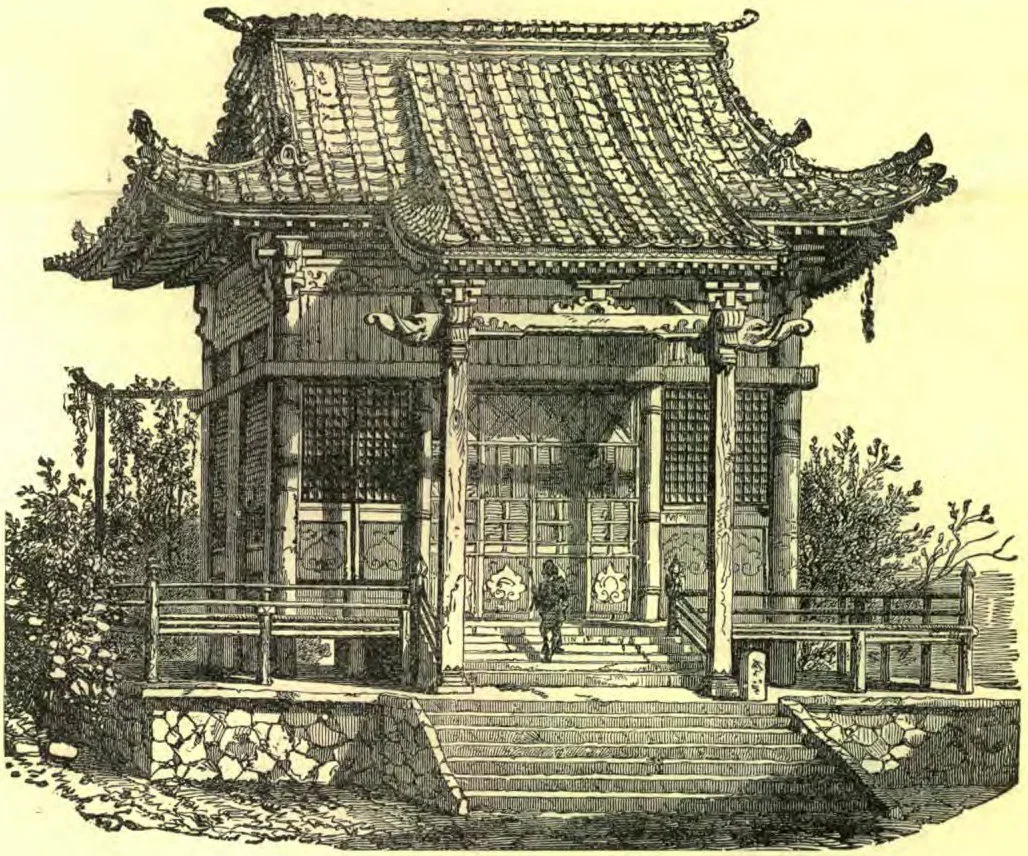
A BUDDHIST TEMPLE.
A BUDDHIST TEMPLE.
Of late it has been fashionable in Europe and America to extol Hindu civilization and Hindu institutions, and hold them up as sort of beacon-lights to the people of the Western lands. Several so-called expounders of the Hindu and Buddhist faiths seem to have partially succeeded in hoodwinking the ignorant and the credulous in the West; but we in India can hear such false representations only with mingled feelings of contempt and pity. We are the last persons to say that the West has nothing to learn from the East. Vast progress in philology and philosophy in modern times has been the outcome of a sympathetic study of the Indian languages and institutions. But to say that everything pertaining to the Hindus and the Buddhists is grand and noble and elevating, is to utter the reverse of truth; and the true patriots of India consider such misguided and misinformed admirers of their country as her enemies.
To return now to our subject: we found that woman had attained a very low condition during the Mohammedan rule; and neither the Hindu religion nor its institutions could cope with the evil, and rescue her from sinking more and more into ignorance and superstition. Such was the state of affairs when Englishmen appeared on the scene, and took the land under their protection. There has been much difference of opinion about the benefits derived by India under the English rule. There are men who see nothing but impending ruin; and every ingenious argument is advanced in trying to prove that the country is becoming poorer and poorer every day, and is on the verge of national bankruptcy. On the other hand, there are others who hold that the British-Indian government is the best rule under the sun, and that the country is entering by leaps and bounds into prosperity, and every sort of blessing. Both these ideas cannot be true. Perhaps the truth lies between the two. I shall not pause to discuss the matter. Whatever it may be, none can deny that under the fostering influence of British rule in India, the emancipation of the women of the land has commenced; and it is only a matter of time when woman in India will take her proper place in society, and every evil custom tying her down shall be abolished.
It would be absurd to suppose that all that is necessary for the emancipation of woman and her enlightenment can be done by a government. But there are other forces at work in the country, which, in unmistakable terms, point to the desired end. Western civilization, Western learning and literatures, and Christianity are working enormous changes in Hindu society, and have been the means of throwing much light into the darkness now encircling the land. The friends and reformers of India are now and then disheartened at the extremely slow progress made by the women of the country; but freedom’s battle, once begun, knows not how to stop without victory. Innumerable schools have been established throughout the length and breadth of the land for the education of girls. Most of them, however, are for giving them the most elementary education. The proportion of the school-going girls in India is, as yet, lamentably small compared with the millions who ought to be under instruction but are not. A great deal is, however, being done toward the education of girls and women by the philanthropic missionary societies from England and America, by the true patriots and reformers in India, and by the enlightened British-Indian government.
C. JESUDASPILLAI ASBURY.