II.
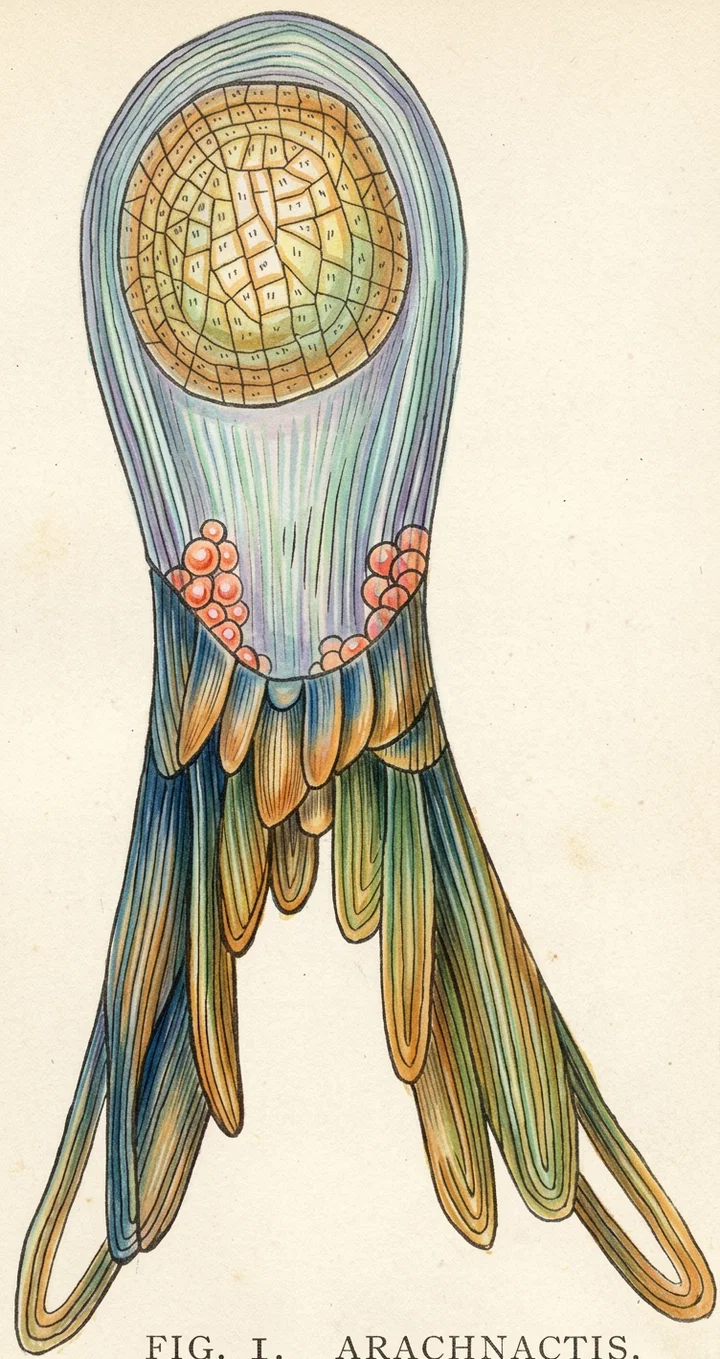
Some jellyfish are very large, while others are so small as to be almost invisible. Here is one of those small phosphorescent animals that illuminate the coast-line on still nights. It is called Arachnactis (“spider-formed”), and is a predatory animal, living upon others. It has a voracious appetite. The arachnactis is smaller than the hydroid, yet too highly organized to be the creature we are looking for, as it has a mouth, stomach, eyes, etc. See Fig. 1.
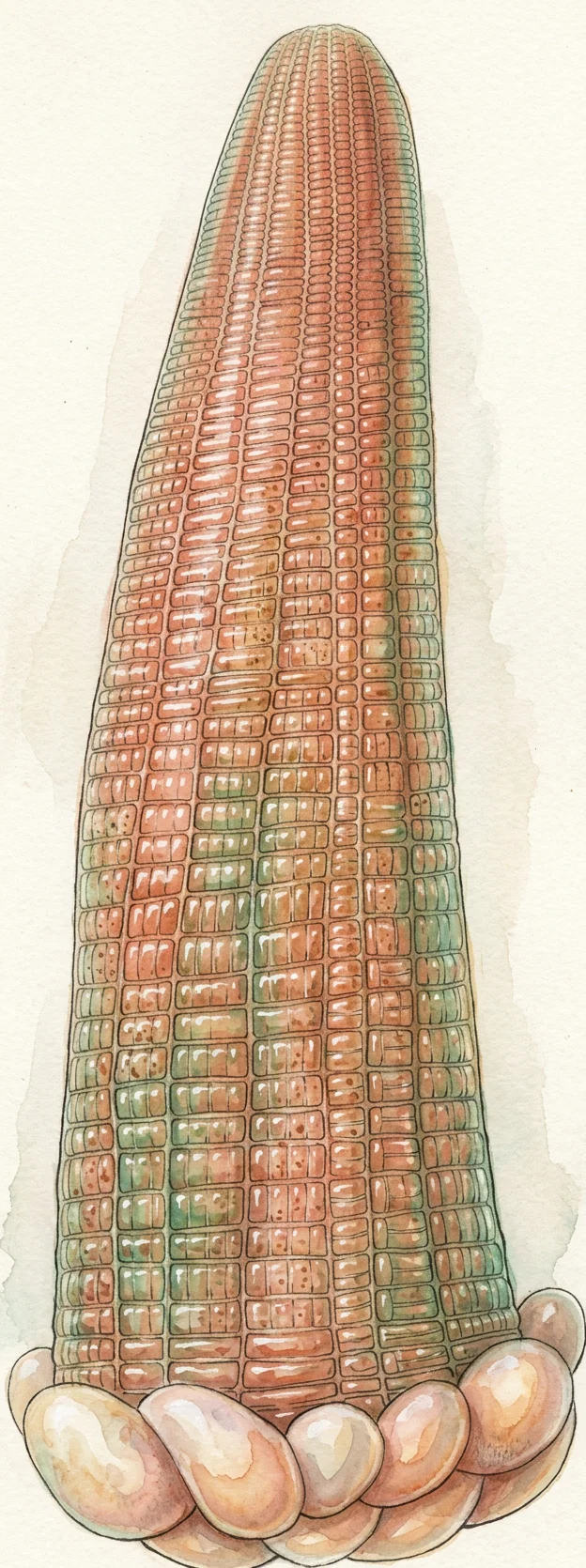
If we could catch one of the larger jellyfish, and turn it over on its back, to open its mouth, which is underneath, in the center of its body, we would find, tucked away in the corners, a tiny creature, with a big name,—Bicidiæ. This is a parasite that lives on the large jellyfish. See Fig. 2.
All these creatures are very small, but none can be the one we are looking for. Why?—One reason is that there are others yet smaller, and we are looking for the very lowest form of life. “Is it in the air?” you ask. Oh, no; those are all consumers: none of them create; they only destroy. Well, then, where can we go to resume our search? There is nothing so small upon the earth as the little creatures we have already examined, and the invisible lives of the air are all destructive agents; where, then, can we find a field for investigation?
But we have not yet exhausted the resources of the sea. So far, we have barely skimmed over its surface. Let us now descend into it for a mile or so. “A mile!” you exclaim; “why, nothing lives that deep in the ocean. The water is intensely cold, and it is dark as midnight down there. Besides, the pressure is so great that nothing could exist beyond a certain depth; even wrecks of vessels never descend far, but float on the surface of this awful depth of water.”
Yes, it was once thought that life could not exist at a greater depth in the ocean than the sun’s rays could penetrate, but it is now known that the ocean bottom teems with countless forms of life, great and small, many of them beautiful beyond power to describe, and most of them capable of casting a phosphorescent glow around them; so that the great ocean depths are illuminated with God’s living lights.
W. S. CHAPMAN.