The following graphic account of the troublous times this far-away island is now passing through was written in a personal letter to the editor by Mrs. F. E. Braucht, who, with her husband, the physician in charge of our sanitarium at Apia, went to Samoa in 1895. The accompanying illustration gives an excellent view of the sanitarium, which is situated on high ground, and is comfortable and airy.
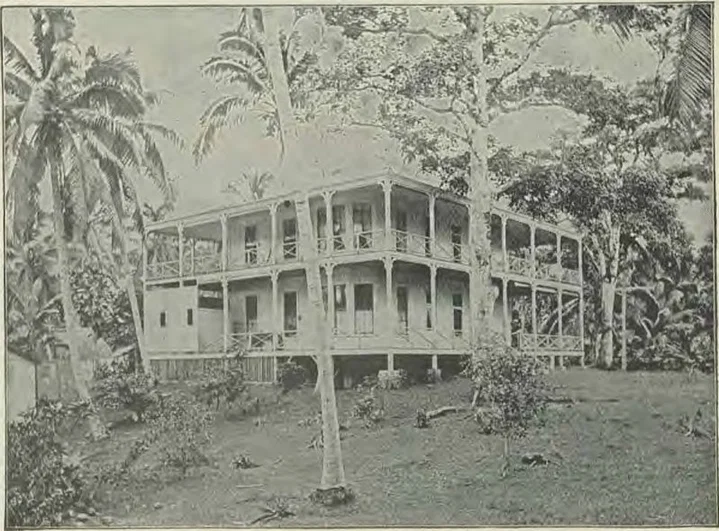
“APIA, SAMOA, Jan. 2, 1899.
“We are in the midst of very exciting times here in Samoa. The Samoans are at war, and the last few days have been uneasy ones for the white people as well as the natives.
“About five months ago King Malietoa died; and since that time the people have been trying to make a new king. There are two parties,—one for Mataafa, a high chief; and one for Malietoa Tanu, son of the old king. Mataafa is a Catholic, and Malietoa belongs to the London Missionary Society’s church. Since the war began, it has appeared that the majority of the people are for Mataafa. His side numbers about thirty-five hundred armed men, while the loyal party has only about two thousand men. They could come to no agreement among themselves; so, according to the Berlin treaty, the matter was brought before the chief justice, who is an American, to decide. For a week or more he heard the evidence on each side in the court; and December 31 at eleven o’clock was the time set for him to make public his decision. As the Mataafa party had threatened to exterminate the whites if the chief justice decided against them, and it was feared they would begin an immediate attack, you may know that Sabbath, December 31, was an anxious day for us.
“We met for a special season of prayer in the forenoon, to humble ourselves before God, and ask his protection. Shortly after eleven o’clock the news came that Malietoa was king; and though the natives had been uneasy all the morning, running to and fro with guns, axes, and huge knives, the excitement now became more intense. Many of the natives who lived near by came with their trunks, boxes, sewing-machines, and all sorts of valuables, begging us to take them into our houses. They said that as soon as the war broke out, the other party, if they came out ahead, would burn their houses and take their goods; so we let them store their goods in our buggy-shed and in the storeroom over the boiler. We had taken a number of boxes into the house several days before this, too. There was great excitement all Sabbath afternoon; but it was hoped the matter would be settled without a battle.
“Sunday morning was a little more quiet, but the two parties were stationed, and ready to fight, should a gun be fired. Each side was waiting for the other to begin. Sunday afternoon, just before five o’clock, we heard a great shouting, beating of drums, etc., and hundreds of the Mataafa party came down the road in front of our house. Theyp. 304 came like a pack of hungry wolves, howling as only savages can. The Malietoa people met them just below our house, and there the battle began. Bullets were flying in every direction. Some of the neighbor women came hurrying to us with their children for protection. We all went into an inner room, where we stayed until the thickest of the battle was over. It was awful to hear the banging of the guns and the howling of the natives. One man fell not far from our house, and the enemy immediately cut his head off. That is their custom. They get all the heads they can, to carry to their king. At first the battle was all around us, on every side of the house; but after a little the men moved on down toward Apia, and fought in the streets among the stores. The Samoans are not usually good marksmen; and although they make a horrible noise when they fight, not many are killed. They kept on fighting as long as they could see, and all night long we could hear the guns firing in every direction. I would not like to spend many such nights as last night was.
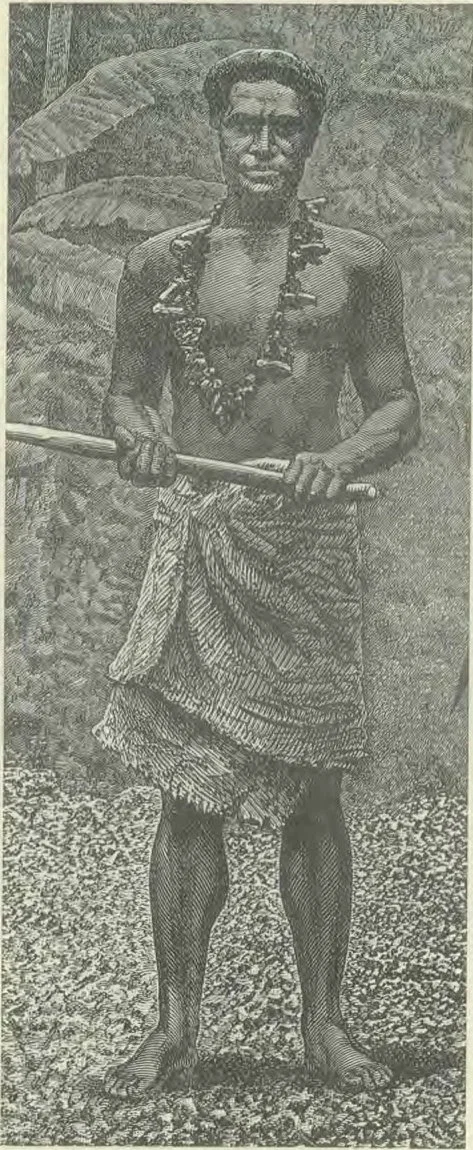
“This morning the Mataafa party came past our house again, yelling, hooting, and flourishing their guns, axes, and horrible knives. The Malietoa party, however, had gone off to the English man-of-war about twelve o’clock in the night, and were all around the vessel in their small boats. The Mataafa party did not dare go out there to attack them, for fear the man-of-war would shell them. The Malietoa people are all out there yet; and the others are having their own way on shore, burning the loyal party’s houses and plundering their stores. We have seen houses burning in every direction to-day. We are thankful indeed that thus far we are unharmed, though we do not know what moment the natives may turn against the white people. Any little thing might set them off.
“The government here is in a bad state. Samoa, you know, has been under the protection of Germany, England, and America; but Germany takes sides with the rebel party, and opposes England and America; so we do not know how the trouble will end. This morning the German consul wanted to go over and recognize Mataafa as king; but the British and American consuls said they could not do that; Mataafa and his party are rebels, and they would continue to regard them as such until they received orders from home.
“TUESDAY, January 3.
“Everything seems rather quiet this morning. The Malietoa people came on shore last night, and will be held as prisoners at Mulinu’u Point by the other party until they see fit to let them go, or something is done by the three powers. The young king, Malietoa, is still on board the man-of-war. The prisoners made some arrangements yesterday with the Mataafa people, the rebel chiefs promising not to harm the Malietoa folks. The loyal party left their firearms on board the vessel. We do not know what the day will bring forth, but hope matters will all be settled without further bloodshed. We have been quite busy thus far to-day, taking care of the wounded. The natives have been rather slow about bringing them.”
From later accounts we learn that the trouble grew till it was no longer safe for white persons to remain on the island, and they found refuge on the war-ships in the harbor.