HER MAJESTY'S COLONIES
By George B. Starr
What North America was to England and Europe a century and a half ago, Australasia is in a measure to these countries to-day. These large islands, with their vast areas of lands suited for grazing, fruit-growing, and agriculture; with mountain ranges rich in mineral wealth; and with a semitropical climate, beautiful harbors, and charming scenery, have attracted large numbers of immigrants to their shores, which are rapidly being peopled by an energetic, advancing race.
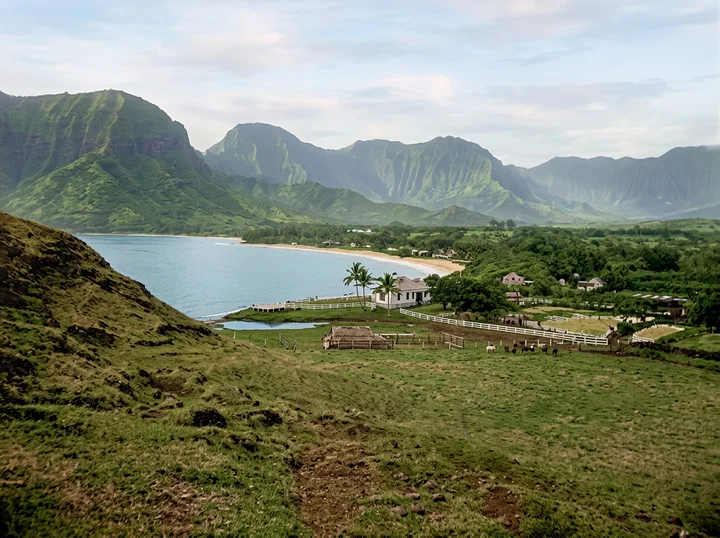
Their cities are built after the manner of the best and most beautiful in older countries; and their railways, tram-lines, steam ferries, coast steamers, hotels, and other public conveniences are all patterned after the latest and best; so much so, that the traveler is surprised and delighted, as he proceeds from city to city, at the beauty and convenience with which he everywhere finds himself surrounded.
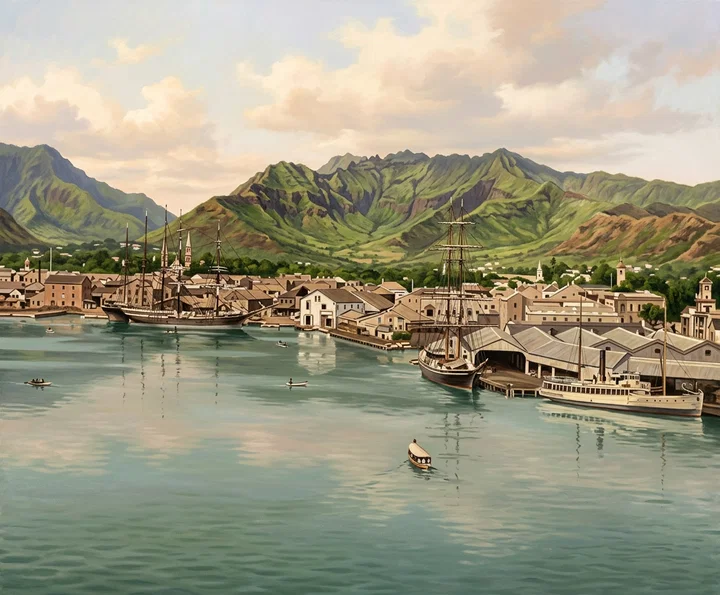
The voyage of twenty-eight days from the “Golden Gate” of San Francisco harbor to the “Heads” at Sydney harbor is a pleasant one, even to a moderately good sailor. It is broken by three pleasant stops. The first land sighted is the beautiful “Diamond Heads” at Honolulu, the capital of the Hawaiian Islands. No land ever appeared more lovely than does this to him who is on his first ocean voyage. Water, water, WATER, has been the program for seven days, —water three miles deep, and stretching out on every side as far as the eye can reach. The traveler remembers that in his first lessons in geography he learned that two thirds of the earth’s surface is covered with water; now he knows it, sees it, and is overwhelmed with its vastness. He is delighted to set foot again on land, especially in so beautiful a city as Honolulu. The day is all too short, and every moment is needed. Horses are speedily engaged for those who enjoy horseback-riding, and carriages hired for the others; and away we go to see the “Punch Bowl”—an extinct volcano overlooking the city.
On the way we pass the white, imposing government buildings, and are surprised and delighted with the sights on every hand. Beautiful palm groves, driveways of royal palms, date-palms, and cocoanut-palms, with flowering trees and banana fields, delight the eye on every side; while miles of telegraph and telephone lines inform us that although in the Sandwich Islands, once barbarous and even cannibalistic, we are now in the midst of an advanced civilization.
After a view of the crater, with its great natural amphitheater, capable of seating more than twenty thousand persons, we are invited to visit the “Pala,” three or four miles distant, over beautiful roads, along and up the mountainside. On this ride the more timid of the ladies improvise double skirts, and try the native style of riding, with the emphatic decision that it is much the best way, as they can gallop away without fear of turning in the saddle. The “Pala” is the name given the fine heights overlooking the sea and miles of sugar farms. Here, standing two thousand feet above sea-level, a scene of great beauty stretches away on every side. In years gone by, decisive battles were here won and lost by native tribes.
After dining with some old friends, we were treated to a moonlight drive past the cocoanut groves. As the moon shone full through the silvery leaves of the palms, they looked like great ostrich plumes against the blue sky, making a picture long to be remembered. At the wharf we were treated to some fine music by the native band, which seldom misses a steamer. Hawaiian music is very sweet; and as we passed along the streets, we often heard the sound of sweetly blended voicesp. 502 accompanied by the soft strains of the zither.
At Apia, Samoa, after another seven days of water, water, water, we enjoy an exciting ride over the surf. Leaving the steamer at anchor, we are conveyed to the distant shore in a canoe rowed by natives. The five hours spent on land is another agreeable change. We drink cocoanut-milk instead of water, as it is cooler and better, and have a fine run along the shore to the American minister’s house, where the familiar “stars and stripes” are waving. Along the way we see many native houses; the natives themselves in native dress, or rather undress; and beautiful half-caste boys and girls of good promise, clad in garments approaching civilized costume.
G. B. STARR.
(To be continued.)